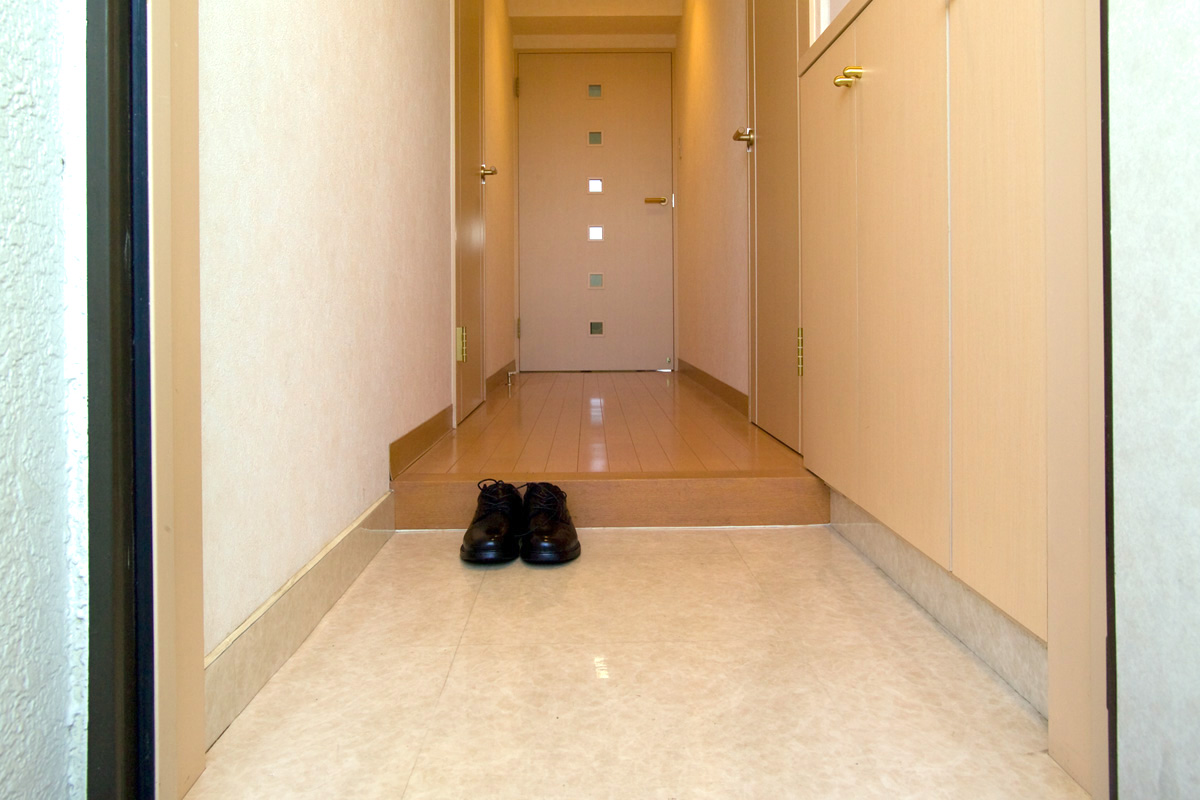
Your entryway doesn’t need a custom mudroom to work better. It needs a clear route through the door and a predictable home for the things you put down in the first few seconds after arriving.
Build around those movements and you can improve a narrow apartment hallway, a front-door corner, or the kitchen entrance your household actually uses. This is a practical planning exercise: use your own measurements, try the layout, and adjust it to the people who live with you.
Watch what happens at your real entrance
For a few normal arrivals, notice the order in which you remove or set down things. You might need both hands free for a pet leash before you deal with your shoes, while another person always carries grocery bags straight to the kitchen.
Write down the items that land nearby rather than creating a category for every object you own. Daily keys, one work bag, and your current shoes may deserve a spot here; old mail, spare cables, and last summer’s hats usually don’t.
If the front door is rarely used, don’t force your daily drop zone into that space because it looks more presentable. A small landing place beside the garage entry or a kitchen doorway can serve your actual routine better.
Ask other household members what they need to pick up on the way out. A system designed only around your handbag may work for you and fail every morning for the person who needs a badge, lunch bag, and bike helmet.
Protect the walking path first
Open the door through its usual swing and walk through carrying the largest thing you routinely bring home. Include grocery bags, a laundry basket, or mobility equipment if that applies to your household.
Mark a potential furniture footprint with painter’s tape that’s suitable for your floor finish. Walk past it from both directions, then check nearby closet doors, drawers, outlets, and switches before deciding that the piece fits.
Don’t use a single internet clearance number as permission to narrow your route. Your building’s applicable requirements, door operation, and individual access needs matter; keep exit routes clear, and ask building management about constraints when you’re unsure.

Give small essentials one obvious landing place
Choose a shallow tray, an existing drawer, or a small shelf for the things you need every day. Put it where your hand naturally goes when you enter, as long as the location is appropriate for your household and doesn’t expose sensitive items.
Keep the tray small enough that you can see its contents without moving a pile. If it fills with receipts and mystery screws, the problem may be the lack of a paper routine rather than a shortage of trays.
For shared homes, separate spaces by person or by function, whichever people will actually remember. Two simple dishes may work better than a single divided organizer with labels everyone has to stop and read.
Think carefully about keys and access cards visible through a door or window, and don’t keep medications in a public landing bowl. CPSC recommends locked storage for medicines away from children; a convenient drop zone doesn’t change that need.
Separate incoming, staying, and outgoing items
Give your layout three small jobs instead of one giant storage job. Incoming items need a short pause, daily essentials need a repeatable home, and outgoing items need a visible reminder that doesn’t block the door.
A library return can sit in a designated departure basket until your next trip, but the basket shouldn’t become permanent storage. Attach the task to a real departure, such as the next grocery run that passes the library.
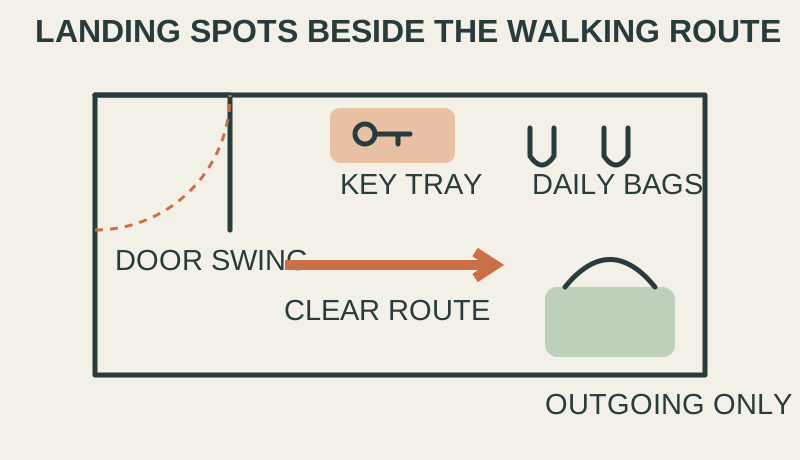
Use the same distinction for bags: today’s work bag belongs in the daily zone, while a bag of donations needs a plan to leave. If both share one hook, it’s easy to spend the week moving the donation bag without taking it anywhere.
For mail, decide where the next action happens rather than adding a decorative sorter automatically. A small incoming slot can work if you empty it regularly; paperwork that requires a longer task should move to the place where you’ll handle it.
Set a realistic shoe limit
Start with the pairs currently in use and make their storage easy to understand. A tray or one low shelf may hold the daily rotation, while occasional shoes can live in a closet rather than crowding the entrance.
Leave room for wet or dirty shoes to dry in a way that’s appropriate for the footwear and your flooring. A tight closed bin might look tidy, but it won’t be helpful if you’re putting damp boots into it every evening.
Try the arrangement with the largest pair, not just a neat pair of flats. If a boot overhangs the rack into the walking route, choose another position or reduce the number of pairs stored there.
Make the limit visible rather than relying on reminders. When the designated daily space is full, moving an unused pair back to the closet is a much smaller task than sorting a floor covered with everyone’s entire shoe collection.
Use vertical space only where it helps
Hooks can keep bags off the floor, but position matters as much as quantity. Check whether a hanging coat covers the tray, a backpack brushes the door, or a loaded tote pulls the hook away from its intended mounting surface.
Follow the specific mounting instructions and load limits for the hardware and wall construction you have. Get any permission your lease requires, and don’t treat an adhesive hook’s advertised capacity as a guarantee on an unsuitable or damaged surface.
Place everyday items at a comfortable reach for their users. A high row that looks symmetrical can make a child dependent on help or force an adult to lift a heavy bag awkwardly every time.
If you add furniture, follow its assembly and anti-tip instructions, including the specified wall attachment where required. CPSC’s Anchor It campaign explains furniture tip-over prevention; being small enough for an entryway doesn’t make a piece exempt from its instructions.
Try the system before buying the matching set
Use a spare tray, an existing basket, and a temporary furniture footprint for several ordinary days. You can learn more from one rushed morning than from repeatedly rearranging an untouched setup for a photo.
Note the specific point where people abandon the plan. Keys on the counter may mean the tray is too far from the real entrance, while bags on the floor may mean hooks are full, inaccessible, or unsuitable for those bags.
Change one feature at a time so you can tell what helped. Move the tray closer, remove an unused coat, or give outgoing items a separate container before assuming you need a larger console.
Keep the purchases tied to the failure you observed. You might need one shallow shelf with enough space beneath it for your shoes, rather than a coordinated bench, cubby wall, mail sorter, mirror, and charging station.
Make the daily reset small
Pick a moment you already have, such as putting away dinner dishes or preparing tomorrow’s bag, to clear the day’s arrivals. Return stray objects to their real rooms and check whether anything in the outgoing basket can leave on the next trip.
Review the daily shoe rotation when the weather changes, and clear out hooks before heavy coats arrive. Seasonal changes are a useful prompt because the things you need at the door can change even when the layout stays the same.
The finish line is a doorway you can use easily and essentials you can find without a search. If the space still looks like a lived-in home, that’s fine: a working landing place supports your routine without asking you to maintain a display.
Sources & approach
Researched October 22, 2026. Recommendations follow the documented features and the household scenarios explained above.