Selecting the right wood cutting board involves wood type, grain orientation, thickness, and maintenance needs. End-grain boards are generally gentler on knives and can self-heal from shallow cuts, preserving a smooth cutting surface longer. This guide reviews five well-regarded boards across common kitchen woods—acacia, walnut, mahogany, maple, and bamboo—to help you choose a durable, knife-friendly option. A quick summary table follows to compare core details at a glance.
| Product | Brand | Wood Type | Size | Key Benefit |
|---|---|---|---|---|
| Ziruma End Grain Acacia Block | Ziruma | Acacia End Grain | 16″ x 11″ | Non-toxic; self-healing surface |
| THETCHRY Walnut End Grain Board | THETCHRY | Walnut End Grain | 17″ x 13″ | Deep juice groove; self-healing |
| FANICHI End Grain Cutting Board | FANICHI | End Grain Wood | 17″ x 13″ | Multifunction; inner handles |
| SHUMARU Mahogany End-Grain Board | SHUMARU | Mahogany End-Grain | 20″ x 13″ | Handcrafted; knife-friendly |
| John Boos Maple R-Board | John Boos | Maple Edge-Grain | 24″ x 18″ | Reversible; finger grips |
Ziruma End Grain Acacia Block

The Ziruma board combines a 1.5-inch thickness with end-grain acacia wood to deliver a durable, knife-friendly surface. It is constructed from 100% natural acacia wood and is free from BPA, phthalates, and petroleum-based mineral oils, contributing to a safe meal prep environment. The end-grain structure helps reduce knife dulling by allowing blades to penetrate fibers at a gentler angle and then self-heal after shallow cuts.
- Non-toxic and food-safe: crafted from natural acacia wood with no harmful chemical treatments.
- End grain construction: protects knife edges and minimizes visible cuts over time.
- Thick and sturdy: 1.5 inches thick, designed to resist warping and cracking with daily use.
THETCHRY Walnut End Grain Board

The THETCHRY board features a large 17″ x 13″ footprint with end-grain walnut, offering both beauty and resilience. Its self-healing surface closes cuts quickly, helping to keep knives sharp. A deep juice groove helps prevent spills, while the integrated sorting space keeps chopped ingredients organized during meal prep. Rubber non-slip feet stabilize the board during use, reducing risk on slippery countertops.
- End grain walnut for durability and knife protection.
- Self-healing surface reduces visible cuts and preserves sharpness.
- Deep juice groove plus a spacious sorting area for efficient prep.
FANICHI End Grain Cutting Board
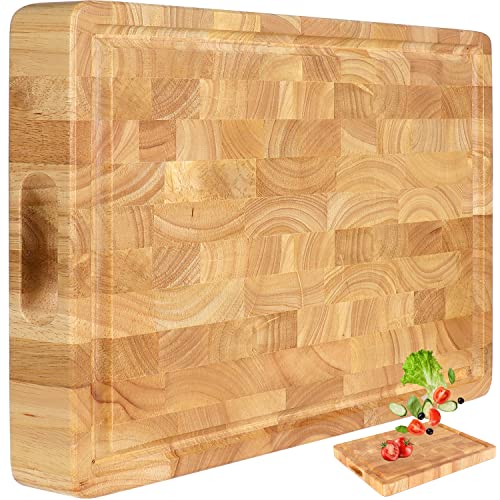
The FANICHI board is an extra-large, reversible end-grain block measuring 17″ by 13″ and 1.5 inches thick. Its multipurpose design includes a juice groove on the front, a cracker holder, and inner handles for easy handling and serving. Made from natural wood, each piece showcases unique grain patterns while offering durable performance for heavy-duty chopping and carving tasks.
- End grain construction for long knife life.
- Reversible design with juice groove and inner handles.
- Large 17″ x 13″ surface for bulk chopping and serving.
SHUMARU Mahogany End-Grain Board
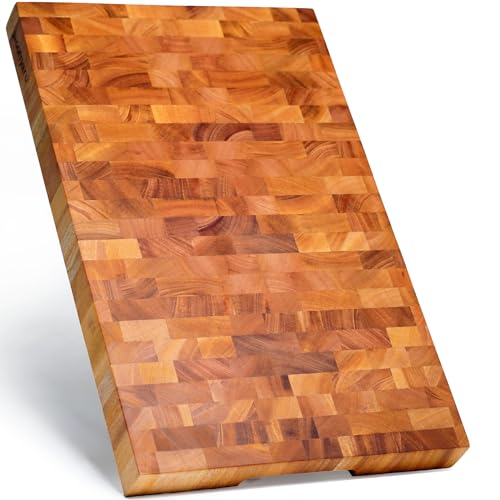
The SHUMARU mahogany board is handcrafted in Bali, offering a unique, artisanal piece with an end-grain surface. The blade-friendly finish is triple-oiled and hand-sanded for a velvety texture that helps preserve knife sharpness. A wide workspace and built-in grips support easy handling and serving, while the non-slip feet provide stability during use.
- Handcrafted in Bali with sustainably sourced mahogany.
- Knife-friendly, end-grain surface with a smooth finish.
- Built-in grips and non-slip feet for safe, stable use.
John Boos Maple R-Board

The John Boos R-Board is a classic maple cutting board known for durability and balance. This 24″ x 18″ board measures 1.5 inches thick and features edge-grain construction with reversible sides, recessed finger grips, and an oil finish. It’s designed for a lifetime of use in home kitchens and can double as an elegant charcuterie surface or serving board.
- Solid maple with edge-grain construction.
- Reversible design with recessed finger grips.
- 1.5-inch thickness for sturdy chopping and long life.
Buying Guide
Material and grain orientation
End-grain boards typically resist knife dulling best, as the knife blades slide between the wood fibers. Edge-grain boards tend to show fewer nicks but may dull faster under heavy use. For mixed duties—chopping, carving, and serving—an end-grain board provides a balance of durability and blade care, while edge-grain boards can offer a thinner, lighter option for everyday tasks.
Wood types and their properties
Acacia, walnut, mahogany, maple, and bamboo each offer distinct advantages. Acacia is durable and dense with attractive grain; walnut provides rich color and resilience; mahogany remains knife-friendly with a smooth surface; maple is hard-wearing and easy to maintain; bamboo is an eco-friendly hardwood option that resists moisture when properly finished. Consider your kitchen style, maintenance routine, and preferred wood color when choosing.
Size and thickness considerations
Common thicknesses range from 1 inch to 1.5 inches or more. A thicker board resists warping and provides a stable cutting surface, especially for heavy-duty tasks. For smaller kitchens or limited counter space, a 12″ to 16″ board may suffice. If you frequently prepare large roasts or bulk ingredients, a 17″–24″ board offers a practical workspace.
Maintenance and care
Keep boards clean with warm water and mild soap after use. Dry promptly to prevent moisture retention. Oil (mineral oil or a food-safe wood conditioner) or wax periodically to maintain moisture resistance and prevent cracking. Avoid soaking or placing boards in dishwashers, as prolonged moisture can degrade wood and finishes.
Practical features to look for
Juice grooves help manage liquids, while inner handles and non-slip feet improve handling and safety. Reversibility doubles the usable life, and a sturdy finish or oil treatment extends board life. If you frequently serve foods on the board, a visually appealing wood type and finish may be beneficial, but avoid finishes that leave residues when in contact with food.
Across these options, the best choice depends on your priorities: maximum knife protection and longevity (end grain), a broad prep surface (large dimensions), or a lightweight, easy-to-clean design (maple or bamboo). The boards listed above represent a spectrum of common kitchen woods and configurations, enabling a practical, knife-friendly selection for most American kitchens.