Choosing the right wax or oil for your cutting boards helps extend their life, prevent cracking, and keep surfaces food-safe. The five products below represent a spectrum of options—from mineral oil blends to beeswax-rich waxes and gel conditioners. This guide explains how each option works, what to expect during application, and how to pick the best match for your kitchen routine. Use the quick-reference table to compare essentials at a glance.
| Product | Brand | Key Benefit |
|---|---|---|
| Clark’s Oil And Wax Set | CLARK’S | Deep penetration with paired protection |
| Walrus Oil Kit | Walrus Oil | Food-contact safe maintenance kit |
| Rowdy Rooster Gel | Rowdy Rooster Woodworks | Dual oil-and-wax nourishment |
| The Live Edge Wax | The Live Edge | Natural beeswax and carnauba blend |
| Wood Butter Wax | Macy’s Place | Two-ingredient mineral oil and beeswax |
Clark’s Food Grade Mineral Oil And Carnauba Wax Set

The Clark’s duo is designed as a perfectly paired solution. The mineral oil provides deep, nourishing penetration into the wood, while the carnauba wax-based wax forms a durable protective layer on the surface. This combination helps prevent drying and cracking on cutting boards, spoons, and butcher blocks, making use-friendly maintenance simple. Typical use involves wiping on an even coat, allowing absorption, and buffing to a soft sheen. Regular reapplication keeps grain patterns vibrant and moisture from seeping into joints.
Users benefit from a straightforward routine: treat after heavy use or when surfaces start to look dry, and re-coat periodically to maintain a fresh, food-safe finish. The kit is suitable for a variety of cutting surfaces, including bamboo and hardwood boards, and appeals to those who want a simple, reliable maintenance system without specialized tools. The two-ingredient formula emphasizes safety and ease, with practical results for everyday kitchen work.
Walrus Oil Cutting Board Oil And Wood Wax Set

Walrus Oil offers a complete maintenance package in one kit. The cutting board oil helps prevent drying and cracking by nourishing wood fibers, while the accompanying wax adds a protective barrier against moisture and liquids. The set is marketed as 100% food-contact safe (FDA compliant), making it a practical choice for households that prioritize safety alongside performance. Application steps are straightforward: apply the oil to saturate the wood, then seal with the wax for a longer-lasting surface. This two-step approach supports long-term durability with minimal effort.
For frequent users, the kit provides a reliable routine that suits cutting boards, spoons, bowls, and countertops. The simplicity of the oil-and-wax combination reduces the likelihood of over- or under-treatment, helping maintain a balanced appearance and feel across various kitchen tools. Regular use can extend the life of wooden surfaces while preserving their natural look and touch.
Rowdy Rooster Cutting Board Gel

The Rowdy Rooster gel combines food-grade mineral oil with beeswax to deliver a dual-action conditioner. The gel format spreads evenly, allowing for uniform coverage and deep nourishment without drips. It acts as a robust surface sealer, helping surfaces resist moisture, stains, and odors over time. As a cutting board conditioner and oil in one, this product supports ongoing maintenance by preserving the board’s natural luster while reinforcing its protective layer with each application.
Users may appreciate the gel’s consistency for smaller boards and intricate utensils, where liquid oils can be harder to control. The dual-action formula aims to simplify routines: a single product can nourish and seal, reducing the number of products needed in a kitchen cabinet. Regular conditioning can help extend wood life and keep high-use boards looking new and smooth to the touch.
The Live Edge Wood Cutting Board Wax
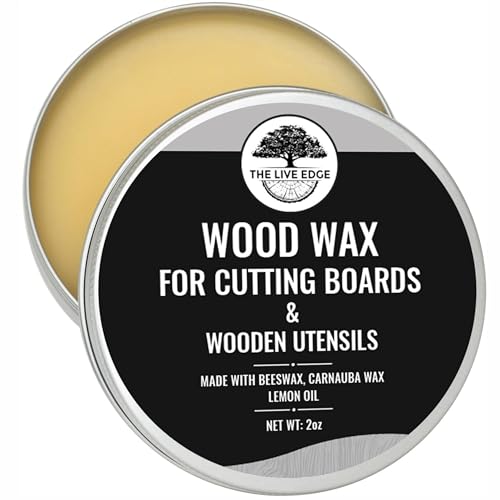
The Live Edge wax uses a pure natural blend that includes beeswax, carnauba wax, and lemon oil. This combination creates a durable protective layer while imparting a light, natural fragrance. The product is positioned as multi-purpose wood care for cutting boards, butcher blocks, utensils, and even small furniture surfaces. The lemon oil adds a fresh scent and can help uplift the appearance of tired boards by restoring a warm, polished look. The wax form provides a resilient finish that resists moisture and staining over time.
Because it relies on natural waxes, this option is well-suited for users who prefer a more traditional, hands-on maintenance approach. It’s typically applied in a thin layer, allowed to harden, and then buffed to a smooth gloss. Regular use can extend the life of wooden kitchen tools and preserve their natural texture and color without synthetic additives.
Wood Butter Cutting Board Wax

This wood butter wax from Macy’s Place focuses on a simple, protective two-ingredient formula: mineral oil plus beeswax. The product is marketed as a food-safe option for cutting boards, butcher blocks, and wooden kitchen tools. The brand emphasizes its use as a protective conditioner designed to guard wood against drying and cracking for a long-lasting finish. The packaging and messaging suggest a home-leaning craft approach, highlighting accessibility and ease of use alongside durable results for households that value safety and reliability.
For routines that favor a minimal, two-ingredient solution, this wax provides a straightforward maintenance option. It’s suitable for frequent re-application and works well on various wooden surfaces, including boards and utensils. The emphasis on American-made craft backgrounds may appeal to buyers seeking products from smaller-scale, domestic makers with a long history in wood kitchen tools.
Buying Guide
Key purchase considerations
- Safety and ingredients: Choose products labeled food-safe and free from questionable additives. Mineral oil, beeswax, and carnauba wax are common, trusted components for food-contact surfaces.
- Penetration versus barrier: Oils penetrate wood fibers for nourishment, waxes create surface protection. Gel formulations offer a balance between spreadability and sealing, while two-in-one products aim to combine both benefits.
- Board material compatibility: Hardwood boards, bamboo, and end-grain surfaces may respond differently to oils and waxes. Some formulas are marketed specifically for bamboo, while others suit a broader range of woods.
- Application and maintenance: Consider ease of use, cure time, and frequency. Shorter curing times and simple buffing steps appeal to busy kitchens; longer-term protection may require less frequent reapplication.
- Fragrance and scent: Citrus oils add a fresh aroma but may not be desirable in all kitchens. Neutral or unscented options may be preferred for those sensitive to scents.
- Origin and brand trust: Some buyers prefer domestic production or smaller brands with long histories in wooden kitchen tools. Brand transparency and clear usage directions matter for ongoing care.
Oil, wax, or gel: Pros and cons
Oil-based products tend to penetrate deeply, offering long-term nourishment but may require more frequent reapplication. Wax-based finishes build a tougher surface layer that resists moisture but can take longer to cure and buff. Gel formulas aim to simplify application and provide even coverage with less mess. For beginner users, a duo like oil plus wax can be easiest to manage, while more experienced shoppers might prefer gels for convenience and consistent results.
Application tips
- Clean and dry the board before applying any product.
- Apply a thin, even coat along the grain; let it absorb completely.
- Buff with a clean cloth to remove excess wax or oil for a smooth finish.
- Reapply based on usage, humidity, and board drying; high-use boards may benefit from monthly maintenance.
- Avoid over-saturating soft woods to prevent a gummy feel or prolonged cure times.
Maintenance frequency and scheduling
Establish a routine based on board usage. High-traffic boards used for raw meat and frequent slicing may need quarterly conditioning, whereas decorative or rarely used boards can be refreshed semi-annually. For mixed-use boards, combining an oil and wax approach can provide a balanced schedule: oil monthly or after heavy use, wax every few months to maintain a protective surface.
Brand reliability and sourcing considerations
Brand history and production practices influence long-term results. Domestic production and transparent ingredient lists can offer added assurance for food-contact products. When choosing between multiple options, consider how each product aligns with your maintenance routine, the materials in your kitchen, and your comfort with applying finishes that require curing and buffing. A consistent care plan, rather than a single product, often yields the best outcomes for wooden cutting boards and utensils.