Basements present unique moisture challenges, so selecting waterproof or highly moisture-resistant flooring is essential. This guide highlights five versatile options that pair well with basement environments, from underlayment films that block humidity to resilient, water-resistant vinyl tiles and planks. Each product below offers a practical solution to keep basements dry, comfortable, and easy to maintain, while providing stable performance under varying basement conditions.
Summary of chosen products:
| Product | Brand | Type | Moisture Solution |
|---|---|---|---|
| ROBERTS 70-115 Moisture Barricade Underlayment Film | ROBERTS | Underlayment / Vapor Barrier | 6 mil film; exceeds NWFA requirements |
| FLOORLOT BlueStep Underlayment with Moisture Barrier | Floorlot | Underlayment | Built-in moisture blocking film |
| AKOLAFE Peel and Stick Vinyl Tiles | AKOLAFE | Peel-and-Stick Tiles | Waterproof; self-adhesive with easy installation |
| Art3d Interlocking Luxury Vinyl Flooring Tile | Art3d | Interlocking Vinyl Tile | Waterproof; no-glue interlocking system |
| ATOPOSE Peel and Stick Floor Tile Waterproof | ATOPOSE GREEN SURFACE SOLUTIONS | Peel-and-Stick Tile | Waterproof; durable surface for high moisture areas |
ROBERTS Moisture Barricade Underlayment

The ROBERTS 70-115 Moisture Barricade is a high-performance underlayment film designed to control subfloor moisture beneath vinyl, laminate, SPC, and engineered wood flooring. With a 6 mil thickness, it provides a robust vapor barrier that helps prevent moisture migration from concrete slabs—an essential feature in basements prone to dampness. The film is engineered to meet or exceed NWFA standards, offering reliability for projects that require a consistent moisture control layer. When rolled out, the product covers a sizable area (approximately 10 feet by 12 feet), simplifying large-area installations in basement spaces. This barrier complements other waterproofing layers, helping to preserve flooring longevity. Its durability supports typical basement traffic and footfall while minimizing moisture-related issues that can compromise floor performance.
Applications and installation considerations for basement projects include ensuring the subfloor is clean, dry, and free of protrusions. The 6 mil thickness offers good protection without adding excessive height to the floor, which can be important when thresholds and transitions are a factor. This underlayment is well-suited for homeowners who want a straightforward moisture-control solution that doubles as a decoupling layer in some installations. While it excels at limiting vapor transmission, pairing it with appropriate surface prep and a compatible top-flooring product yields the best long-term results in damp basements.
FLOORLOT BlueStep Underlayment

FLOORLOT BlueStep Underlayment combines moisture protection with sound dampening for laminate and wood floors. The roll size is 200 square feet, providing ample material for typical basement projects or multiple rooms without frequent restocking. The built-in moisture-blocking film helps defend against subfloor moisture without requiring additional barrier layers, making installation simpler and faster. In addition to moisture control, the underlayment contributes to quieter footsteps by reducing impact noise, which is particularly beneficial in basements where spaces often double as living areas or recreation rooms. This combination of moisture and sound performance helps create a more comfortable, finished basement environment.
Practical installation tips include ensuring the subfloor is flat and dry before laying the underlayment. Align the roll carefully to minimize seams, and follow the flooring manufacturer’s recommendations for overlapping and sealing where necessary. BlueStep is suitable for a variety of top-flooring options, including laminates and wood-look products, adding versatility to basement renovation plans. When used in basements, it pairs well with a well-prepped concrete slab and a compatible waterproof flooring surface to maximize stability and reduce noise transmission.
AKOLAFE Peel And Stick Vinyl Tiles

AKOLAFE’s Peel And Stick Vinyl Tiles deliver a budget-friendly, DIY-friendly option for basement floors. Each tile measures about 11.8 x 11.8 inches, with a thickness around 1.3 mm, and the 40-tile bundle covers roughly 40 square feet. The self-adhesive design eliminates the need for additional glue, making installation quick and accessible for homeowners with limited tools. The product emphasizes ease of use and a practical approach to updating basement spaces with a wood-look or neutral gray finish. While the tiles are waterproof and designed to resist moisture, it is important to ensure the underlying subfloor is flat and dry to maximize bond and lifespan. The detachable design also allows for easy replacement if tiles are damaged in high-traffic basement areas.
Careful surface preparation is essential: clean, dry, and smooth surfaces yield the best adhesion and longevity. A peel-and-stick system can be ideal for basements with moderate moisture risk, but for consistently damp environments, pairing these tiles with a moisture barrier or underlayment can provide additional protection. The economical nature of these tiles makes them a popular choice for temporary basements or multi-room updates where cost-effective upgrades are desired.
Art3d Interlocking Vinyl Flooring Tile

Art3d Interlocking Luxury Vinyl Flooring Tiles offer a no-glue installation with a user-friendly interlocking system. The tiles come in a 36 x 6 inch format and are designed to be durable, wear-resistant, and reusable, providing a modular solution that can be disassembled and repositioned if needed. The interlocking design reduces installation time and minimizes the use of adhesives, which can be advantageous in basements where moisture and humidity can complicate traditional flooring installs. These tiles are also formaldehyde-free and odorless, contributing to a safer indoor environment. The UV-coated wear layer helps resist everyday wear, while the interlock mechanism maintains a tight seam for a continuous look. For basements, this option balances water resistance, ease of installation, and long-term performance.
When installing, ensure a dry, flat substrate and clean edges for precise interlocks. Although Art3d tiles provide water resistance, it’s wise to consider a moisture barrier or underlayment in areas with higher moisture exposure, especially over concrete. Regular cleaning and prompt drying of spills will help preserve the appearance and structural integrity of the tiles over time. This solution is suitable for basements seeking a modern, low-maintenance appearance with flexible layout options.
ATOPOSE Peel And Stick Tile Waterproof
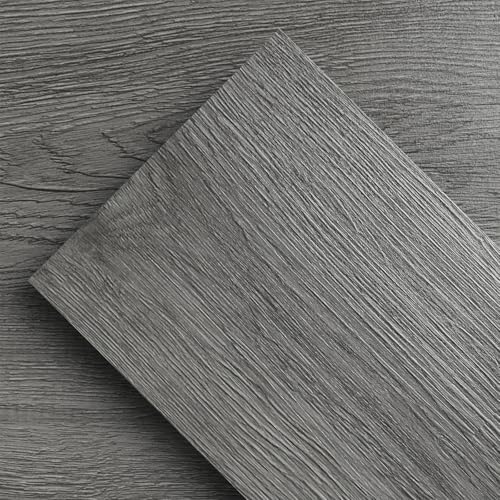
ATOPOSE Peel And Stick Floor Tile offers a 36-pack setup covering 54 square feet with a rigid surface core designed for durability in moisture-prone basements. The tiles feature a wood-grain design with a dark gray finish, providing a stylish aesthetic that resembles real wood while offering water resistance and easy maintenance. The self-adhesive backing allows for quick installation, and the product stresses slip resistance and dent resistance for busy basement areas. This option is suitable for homeowners who want a fast, DIY-friendly upgrade that can handle everyday basement activities, from laundry nooks to living spaces. For best performance, ensure the surface is clean, dry, and smooth before installation, and consider a moisture management strategy when necessary.
Maintenance is straightforward: wipe spills promptly and avoid excessive moisture accumulation. In basements with higher humidity or occasional dampness, pairing these tiles with a moisture barrier or underlayment can enhance longevity. The design versatility makes ATOPOSE a practical choice for budget-conscious projects that still aim for a durable, attractive basement floor.
Buying Guide
Key purchase considerations
- Moisture management: Basements require effective moisture control. Consider products with built-in moisture barriers, vapor retarders, or compatible underlayments to reduce moisture migration.
- Flooring type and compatibility: Choose flooring options that are inherently water-resistant or waterproof, such as vinyl tiles, vinyl planks (LVP), or interlocking vinyl. Laminate can be susceptible to moisture, so pairing with a strong moisture barrier is essential.
- Subfloor prep: A dry, flat, and clean subfloor is critical for any basement installation. Concrete slabs should be evaluated for moisture, cracks sealed, and surface irregularities addressed before layering underlayment or flooring.
- Installation method: Peel-and-stick, interlocking, and underlayment-assisted systems each have pros and cons. Peel-and-stick is quick but depends on strong adhesive bonds; interlocking designs avoid glue but require precise cuts; underlayment solutions support moisture control and can reduce impact noise.
- Durability and wear: For basements, look for wear layers and protective coatings with adequate durability. A thicker wear layer generally indicates longer life under foot traffic and furniture movement.
- Maintenance and cleaning: Water-resistance is beneficial, but regular maintenance (dry mopping, prompt spill cleanup) extends life. Heavier-duty products may require periodic resealing or deeper cleaning depending on the material.
- Safety and indoor air quality: Choose products that are formaldehyde-free or low-VOC where possible. This is particularly important for basements used as living spaces or bedrooms.
- Budget and future-proofing: Weigh upfront cost against long-term durability, maintenance needs, and potential replacement cycles. A slightly higher upfront investment may yield longer life and fewer replacements.
Comparisons and practical tips
- Underlayment options: For basements with moisture concerns, combining a vapor barrier underlayment with a waterproof upper layer (tile or plank) provides layered protection and can improve comfort.
- Styling vs. practicality: Peel-and-stick tiles offer fast DIY upgrades with flexible layouts, while interlocking tiles provide reusability and easier replacement in high-traffic basements.
- Moisture testing: If the basement has a history of moisture, perform a moisture test on the concrete before installation and consider additional moisture barriers or a dehumidification plan.
- Thresholds and transitions: Account for door thresholds and room transitions when choosing thickness, since added underlayment or wear layers can affect height differences with adjacent flooring.
- Long-term considerations: In consistently damp spaces, opt for products explicitly rated for moisture resistance and look for warranties that address basement moisture exposure.
These selections illustrate a spectrum of basement-friendly options—from vapor barriers that block humidity to self-adhering vinyl tiles designed to withstand basement moisture. When planning a basement renovation, combine moisture control with a durable, easy-to-maintain flooring surface to achieve a comfortable, stylish, and resilient result.