The best water filter for drinking depends on how much water you need and which contaminants you want to reduce. The DREO countertop reverse-osmosis system is best for shoppers seeking multi-stage filtration and TDS monitoring; large Brita and PUR dispensers suit households that prioritize capacity. Waterdrop’s 10-cup pitcher offers a smaller daily-use option, while Brita’s 6-cup pitcher is better for compact spaces. Compare the listed filtration claims, capacity, and maintenance needs before choosing.
| Product | Best For | Capacity |
|---|---|---|
| DREO Reverse Osmosis System | Advanced filtration features | Pitcher included; capacity not specified |
| Brita UltraMax BritaPlus | High-capacity household use | 27 cups |
| PUR Countertop Dispenser | Large-volume dispensing | 30 cups |
| Waterdrop Lucid Pitcher | Everyday pitcher use | 10 cups |
| Brita Metro Pitcher | Dorms and small refrigerators | 6 cups |
DREO Countertop Reverse Osmosis Water Filter
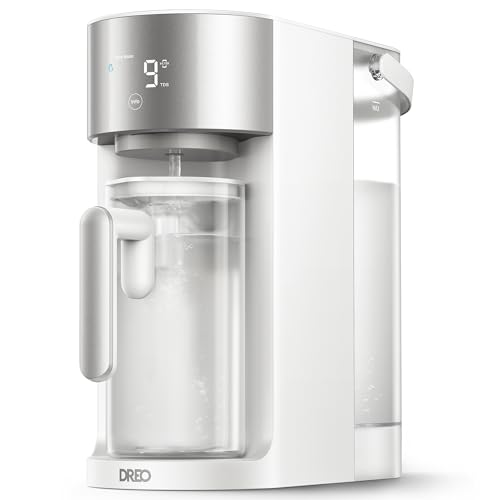
Best for: Buyers who want reverse-osmosis filtration with built-in water-quality and maintenance information. The listed seven-in-one system claims to filter out 99.9% of possible contaminants, including PFOA, PFOS, chlorine, and fluoride. The product description says it was tested by SGS to meet NSF/ANSI 58 standards.
Real-time TDS monitoring displays readings for incoming and filtered water, and the system provides filter-life reminders. Its auto-fill pitcher and self-cleaning function are useful if you want fewer manual refills and cleaning steps. The stated pure-to-drain ratio is 3:1, a helpful comparison point for shoppers considering water use.
Limitation: The provided details do not state the pitcher capacity or replacement-filter schedule. Check those requirements before buying.
Brita UltraMax 27-Cup BritaPlus Dispenser
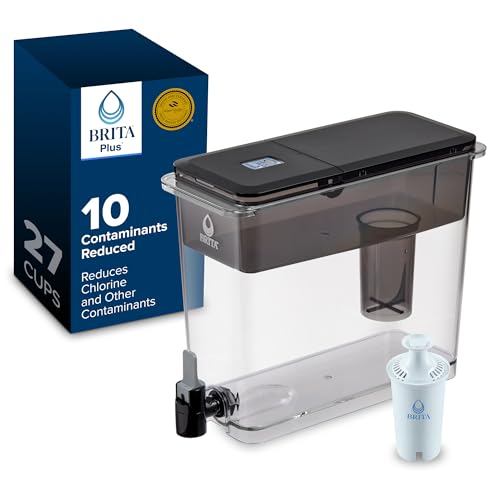
Best for: Families and other households that want a large supply of filtered water ready to dispense. The BPA-free UltraMax holds 27 cups and has a spigot for pouring. Its listed BritaPlus filter is described as trapping twice as many contaminants as Brita’s Standard filter, including chlorine, mercury, cadmium, copper, and zinc.
The product description also says the filter helps retain minerals and electrolytes naturally present in water. This model is better for shared household use than a small pitcher because of its larger capacity, and it can be placed on most countertops or in the refrigerator, according to the listing.
Limitation: Its larger footprint may be less suitable for kitchens or refrigerators with limited space. Filter replacement timing is not provided in the supplied product details.
PUR 30-Cup Countertop Water Filter Dispenser

Best for: Households that value dispensing capacity and convenient handling. This 30-cup dispenser includes one genuine PUR filter, which the listing says lasts up to 40 gallons or two months of regular use. A pull-down spout supports easy pouring, while the carrying handle helps with refilling.
The slim design is intended to take up less refrigerator space than a bulkier container, and the dispenser is dishwasher safe for easier cleaning. Choose it if you want a larger reservoir and clearly stated filter-life guidance.
Limitation: The listed filter life depends on usage, and the supplied details do not identify which specific contaminants the included filter reduces. Review the filter’s full documentation if reduction of a particular contaminant is important.
Waterdrop Lucid 10-Cup Filter Pitcher

Best for: Apartment residents, office users, and households wanting a mid-size pitcher for everyday drinking water. The product listing says the pitcher has NSF/ANSI 42 and 372 certifications and that third-party testing found it helps reduce PFOA/PFOS, odor, iron, mercury, copper, and other metal ions.
Its 10-cup capacity is a practical middle ground between compact pitchers and large dispensers. The listing names PF-01A replacement filters and advises buyers to confirm their pitcher model when ordering.
Limitation: This system does not lower TDS, according to the product details. Choose a different type of filtration if reducing TDS is a requirement.
Brita Metro 6-Cup Water Filter Pitcher

Best for: Dorm rooms, small kitchens, and people who want a pitcher that fits in most mini-fridges. The BPA-free 6-cup pitcher has an easy-fill lid and a SmartLight filter indicator. Its listed filtration reduces chlorine taste and odor, copper, mercury, cadmium, and other substances.
The indicator helps track when to replace the Standard filter; the listing recommends replacement every 40 gallons or about two months. This compact option is better for one or two people than a high-capacity dispenser.
Limitation: Its 6-cup capacity means more frequent refills for households that drink a lot of water.
Buying Guide: How to Choose a Water Filter
Which filter type fits your water needs?
Start with the substances you want to reduce. Pitchers and dispensers in this list focus on claims such as reducing chlorine taste and odor, metals, or PFOA/PFOS. The DREO system is the reverse-osmosis choice here and lists additional contaminant-reduction claims. Compare the exact product documentation with your needs; a general “filtered” label does not mean every system targets the same substances.
How much capacity do you need?
A 6-cup pitcher takes less space but needs more frequent refilling. A 10-cup pitcher offers a middle-ground option. Dispensers holding 27 or 30 cups are more suitable when several people share filtered water, provided you have room for the unit.
What should you check about maintenance?
Compare filter replacement intervals, replacement-filter model numbers, and indicator features. The Brita Metro listing specifies 40 gallons or about two months for its Standard filter; PUR lists up to 40 gallons or two months of regular use. Water conditions and usage can affect filter life, so follow the product’s instructions.
Does a filter need to reduce TDS?
Not necessarily. TDS is a measure of dissolved substances, and the Waterdrop Lucid listing explicitly says its system does not lower TDS. If TDS reduction is a priority, look for a system that specifically states that capability and review its supporting documentation.
Frequently Asked Questions
What is the best water filter for drinking water?
The best choice depends on capacity and filtration priorities. The DREO is the option here with reverse-osmosis features, while Brita and PUR provide large dispensers and pitcher options.
Do all water filter pitchers reduce the same contaminants?
No. Filtration claims vary by product and filter. Check the exact substances listed for the model and replacement filter you plan to use.
How often should I replace a pitcher filter?
Follow the manufacturer’s guidance. For example, the Brita Metro listing recommends every 40 gallons or about two months for its Standard filter.
Does the Waterdrop Lucid pitcher lower TDS?
No. Its product details state that the system does not lower TDS.
Is a dispenser better than a pitcher?
A dispenser generally offers more capacity for shared use, while a pitcher is easier to choose when refrigerator or counter space is limited.