Hard water can cause mineral buildup in pipes, appliances, and fixtures, reducing efficiency and increasing maintenance. Descaler systems offer salt-free, chemical-free options to reduce scale without softening water. This guide highlights five well-regarded whole-house descalers suitable for American homes, focusing on salt-free and electronic-descaler options that preserve minerals while protecting plumbing. Each product below is designed to shield pipes, extend appliance life, and improve overall water performance without ongoing salt-based costs. The buying guide at the end compares options across key factors like hardness, installation, and maintenance to help you choose the best fit for your home.
| Product | Brand | Model / Descriptor | Key Benefit |
|---|---|---|---|
| AO Smith Salt-Free Descaler System | AO Smith | AO-WH-DSCLR | Salt-free, chemical-free scale prevention for moderate hardness; long-life protection (6 years / 600,000 gallons). |
| iSpring ED2000 Descaler | iSpring | ED2000 | Electronic, salt-free descaler; reduces lime scale with no chemicals or maintenance; energy-conscious design. |
| YARNA Capacitive Electronic Descaler | YARNA | CWD24 | Capacitive electronic pulses; DIY installation; suitable for pipes up to 1 inch; targets limescale buildup. |
| WaterBoss Whole House Descaler | Water Boss | WB-WH-DSCLR | Salt-free, chemical-free scale control; no maintenance; designed for city or well water with moderate hardness. |
| H&G Lifestyles Salt-Free Descaler | H&G Lifestyles | 700,000 Gl | Salt-free descaler with NSF-like features; suitable for well and city water; protects against calcium and magnesium buildup. |
AO Smith Salt-Free Descaler System

A.O. Smith’s descaler relies on salt-free, chemical-free technology to reduce scale formation inside pipes and plumbing. It is designed for moderate hardness levels, avoiding water softening and mineral removal. The system works without cleaning cycles, backwashing, salt bags, or electrical energy, making it a low-maintenance option. It is particularly suited for households of four or more people and targets incoming hardness values under 15 grains per gallon, alkalinity under 250 mg/L, pH under 8.3, and iron under 0.3 ppm. Note that it does not reduce total dissolved solids (TDS), sulfur, or iron, and it will not soften water.
Ideal for homes using city or well water where the priority is preventing scale while preserving minerals. Because it does not remove minerals, you can expect water to feel similar to your tap water, with reduced buildup on faucets, showerheads, and appliances. Installation is straightforward for standard pipe configurations, and no salt storage is required. This model is paired with a substantial capacity claim (600,000 gallons) over a long service life, reducing maintenance burden for busy households.
iSpring ED2000 Descaler
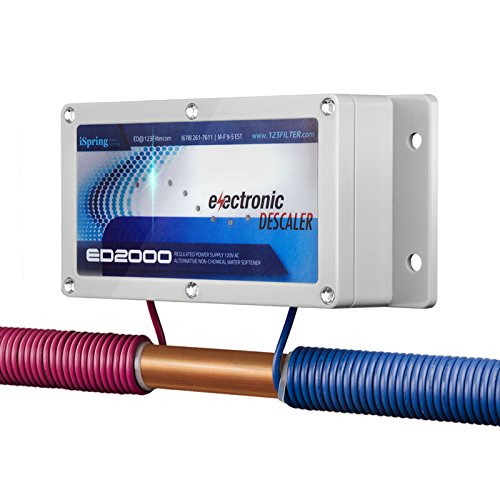
The iSpring ED2000 is marketed as an electronic, salt-free descaler designed to solve hard water problems without chemicals, salt, or ongoing maintenance. It aims to keep minerals in the water while preventing scale buildup from forming on pipes and appliances. Proponents highlight potential energy savings, with an estimated payback period around one year, and note environmental friendliness. It is described as suitable for homes dealing with hard water regions (10–19 grains per gallon) and is positioned as a robust, whole-house solution that supports both everyday use and longer-term appliance protection.
Customers can expect descaling of the entire water system and a reduction in scale formation across plumbing and appliances. The system touts reliability and a comprehensive approach to treating hard water without changing the mineral content of the water. This option is often appealing to households seeking a low-maintenance, eco-friendly alternative to traditional salt-based softeners, while still helping to minimize scale-related inefficiencies.
YARNA Capacitive Electronic Descaler

YARNA’s capacitive electronic descaler uses patented electronic pulses transmitted via Ultra Flat Impulse Bands to disrupt mineral crystals that would otherwise form scale. This approach treats the water without removing minerals, reduces limescale on pipes and appliances, and may deliver cleaner pipes, fresher-tasting water, and lower descale costs over time. Installation is designed to be DIY-friendly with minimal tools, requiring access to at least 10 inches of free pipe space and a maximum pipe diameter of 1 inch. Some users report noticeable improvements over a few months, depending on current plumbing conditions.
The system is designed to work with various pipe configurations up to 1 inch and emphasizes a no-salt, non-chemical method. Benefits include easier maintenance, compatibility with both well and city water, and a straightforward upgrade path for homeowners seeking an electronic descaler without the need for a traditional water softener. As with all descalers, results can vary based on existing scale and plumbing setup.
WaterBoss Whole House Descaler

WaterBoss offers a salt-free descaler designed for whole-house use, with a focus on scale prevention rather than softening. The system requires no ongoing maintenance, backwashing, or chemical replenishment, and it works with both city and well water supplies. It targets moderate hardness levels and notes that it does not reduce TDS, sulfur, or iron. Its design suits families of four or more, providing a straightforward solution to reduce mineral buildup on pipes and appliances while keeping water minerals intact for everyday use.
By avoiding salt-based conditioning, WaterBoss emphasizes ease of use and long-term reliability. Homeowners considering this option should assess their water’s hardness and alkalinity to ensure compatibility, while also weighing the absence of TDS removal and iron reduction against the desire to minimize scale formation across the home’s plumbing network.
H&G Lifestyles Salt-Free Descaler

H&G Lifestyles promotes a salt-free descaler that uses a polyphosphate-based approach to prevent scale buildup, protecting plumbing and appliances without altering mineral content in your water. The system is designed for well and city water and is effective when incoming hardness is under 18 grains per gallon, alkalinity under 250 mg/L, pH below 8.5, and iron under 0.3 ppm. A notable feature is its silver-enhanced construction, which may contribute to additional benefits in corrosion resistance and long-term durability. The descaler does not reduce TDS or iron, focusing on preventing scale formation.
As with other salt-free options, installation is a critical consideration—confirm pipe size compatibility and space for the device. This model is positioned for households that need a low-maintenance, chemical-free method to curb mineral buildup while maintaining the minerals already present in their water for drinking and cooking.
Buying Guide
Choosing a water descaler involves balancing your home’s water hardness, plumbing, and maintenance preferences. Descalers come in several approaches, but the two most common are salt-free descalers and electronic (pulsed) descalers. Salt-free systems rely on polyphosphates or magnetic-like effects to inhibit scale formation without removing minerals, while electronic descalers use electromagnetic pulses to disrupt crystal growth in the water stream. Each type has its strengths and limitations, and your selection should align with your water quality and goals for appliance life, energy use, and ease of maintenance.
Descaler Types And How They Work
Salt-free descalers do not soften water or reduce total hardness. They aim to prevent calcite scale from forming on pipes and surfaces, keeping minerals in the water. Electronic descalers, including capacitive and other pulse-based systems, also avoid salt and aim to disrupt scale formation. Both approaches prioritize maintenance-free operation and environmental considerations, making them attractive alternatives to traditional salt-based water softeners.
Key Purchase Considerations
- Water hardness and composition: Systems often specify hardness ranges (in grains per gallon) for effective performance. If your water is very hard or high in iron, verify that the descaler is rated for those conditions.
- Household size and water usage: Larger households may require higher capacity or longer service life between maintenance checks.
- Descaler type: Salt-free vs electronic; consider whether you prefer a chemical-free, maintenance-free approach or are comfortable with an electronics-based solution.
- Pipe size and installation: Some units are designed for specific pipe diameters (for example, up to 1 inch). Confirm compatibility with your home’s plumbing and space for installation.
- Impact on minerals and TDS: Descalers do not remove minerals or reduce TDS. If you want mineral-free water or lower TDS, a different system would be required.
- Maintenance and warranty: Most salt-free descalers require little to no maintenance, while electronic models may include warranties and installation considerations worth reviewing.
- Environmental and energy considerations: Salt-free systems incur no ongoing salt or chemical costs, and some electronic models emphasize energy efficiency or long-term durability.
Comparing Common Descaler Options
Salt-free descalers (AO Smith, WaterBoss, H&G Lifestyles) offer a maintenance-free, chemical-free approach that preserves minerals. Electronic descalers (iSpring, YARNA) use pulses to inhibit scale and can be DIY-friendly, with some models noting a potential payback period through energy savings. When evaluating, consider your water hardness and iron levels, as well as whether you value a straightforward, low-maintenance installation or a potentially longer installation process with a technologically advanced system.
Installation And Practical Considerations
Many descalers are designed for straightforward installation by a homeowner with basic plumbing skills, especially those that emphasize DIY-friendly setups like YARNA’s model. Review space requirements, whether the system needs a power source or just water line installation, and the existence of any warranty or service commitments. For homes with very high mineral content or iron, verify that the selected unit’s specifications match those conditions to maximize effectiveness and minimize the chance of scaling in other parts of the system.
Bottom Line For Selecting A Descaler
For households seeking a salt-free, low-maintenance approach, salt-free descalers from AO Smith, WaterBoss, and H&G Lifestyles provide straightforward protection against scale formation without altering your water’s mineral content. If you prefer an electronic approach with pulse-based treatment, models from iSpring and YARNA offer alternatives that emphasize energy efficiency, DIY installation, and long-term protection. In all cases, verify hardness ranges, pipe compatibility, and installation requirements to ensure the descaler aligns with your water quality, home layout, and maintenance preferences.