Choosing the right upflow water softener can mean softer water, reduced mineral buildup, and cleaner appliances. Upflow designs push hard water through resin and filtration media, using less backwash and waste compared to traditional downflow systems. This guide highlights five highly compatible options that pair upflow softening with carbon filtration or advanced media. Each model includes a digital valve, reliable warranties, and installation essentials for a typical American home. Use the summary table to compare capacity, media, and key benefits at a glance, then read detailed product sections to understand how they fit your household needs.
| Product | Brand | Capacity (Grains) | Media Type | Key Benefit |
|---|---|---|---|---|
| AFWFilters Fleck 5600SXT 48K Upflow With Purolite C100E | AFWFilters | 48,000 | Purolite C100E Resin + Carbon | Upflow carbon filtration with US-made resin |
| AFWFilters Fleck 5600SXT 48K Upflow With 10% Resin | AFWFilters | 48,000 | 10% Resin + Carbon | Includes resin with carbon media |
| AFWFilters Fleck 5600SXT With Upflow Line Adapter | AFWFilters | 48,000 | 10% Resin + Carbon | Line adapter included |
| Oceanic Water Systems Fleck Upflow Carbon Filtration | Oceanic Water Systems | 32,000 | Carbon Filtration | Upflow carbon filtration in a 9×48 tank |
| Premier Whole House 64K + Upflow Carbon + RO | Premier Soft | 64,000 | 2 cu ft Carbon | Includes drinking water RO system |

AFWFilters Fleck 5600SXT 48K Upflow With Purolite C100E
The AFWFilters package uses a 48,000-grain capacity softener controlled by the Fleck 5600SXT digital meter valve. It features upflow carbon filtration with Purolite C100E resin media, designed to reduce hardness while providing cleaner water. This complete kit targets households of 2–5 people and emphasizes a compact, efficient filtration pathway that minimizes backwash. The system supports up to 12 GPM service flow, aligning with typical residential needs. Included are an installation manual, technical support, silicone lubricant, and hardness test strips for a precise setup. The valve carries a 5-year warranty; the tank, 10 years.
With upflow filtration, water moves through media before the resin, reducing waste and energy use compared to传统 backwash designs. The resin and carbon media are designed to tackle common contaminants while softening minerals. This model is ideal for homes seeking a robust, all-in-one solution that combines hard-water reduction with carbon filtration for improved taste and odor. Regular maintenance and monitoring are straightforward thanks to the digital meter valve.
AFWFilters Fleck 5600SXT 48K Upflow With 10% Resin
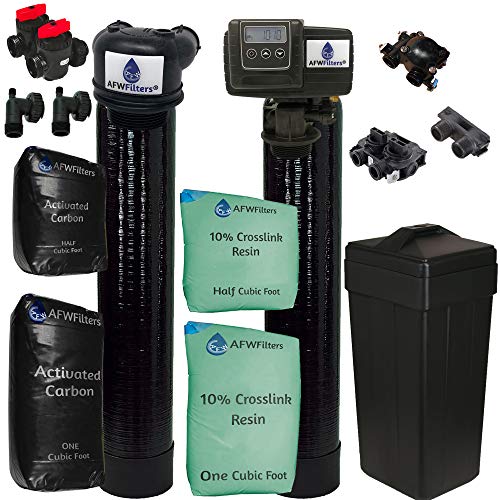
This 48,000-grain system uses a 10% crosslinked resin paired with upflow carbon filtration. The included AFW Filters water bottle, sanitizer pack, silicone lubricant, and hardness test strips support a smooth installation. The Fleck valve remains the control center, delivering efficient regeneration cycles and a reliable 5-year valve warranty, along with a 10-year tank warranty. The upflow carbon media works to improve taste and odor while softening minerals, making it suitable for households that want both mineral reduction and carbon filtration in one package.
Resin type matters: 10% resin often offers enhanced durability and compatibility with coconut-shell carbon media for broader contaminant removal. The upflow arrangement is designed to cut down backwash-related water waste, aligning with eco-conscious home upgrades. This option prioritizes compact installation and a straightforward maintenance routine, making it a solid pick for homes needing reliable performance with integrated filtration.
AFWFilters Fleck 5600SXT With Upflow Line Adapter

This variation packages a 48,000-grain softener with a 10% resin and upflow carbon filtration, plus a line adapter for easier installation in challenging plumbing layouts. The system includes an installation manual, silicone lubricant, sanitizer pack, and hardness test strips to ensure a clean setup. The Fleck control valve provides dependable regeneration scheduling, backed by a 5-year valve warranty and a 10-year tank warranty. The upflow carbon media continues to deliver cleaner-tasting water while reducing mineral scale buildup.
Having a line adapter can simplify retrofits in tight spaces or non-standard configurations, enabling a snug fit under sinks or in utility rooms. The upflow approach minimizes wastewater and electricity needs, aligning with sustainable home improvements. This option is well-suited for households upgrading from a standard downflow softener who want a compact, carbon-enhanced solution with strong support materials.
Oceanic Water Systems Upflow Carbon Filtration System

Oceanic Water Systems offers a complete upflow softening solution with a Fleck control digital valve and a 32,000-grain capacity in a 9×48 tank, paired with a carbon filtration stage. The media media setup supports a basic yet effective approach to reducing water hardness and removing common contaminants. While the exact resin crosslink is not specified, the upflow carbon filtration design is touted for efficiency and reduced backwash requirements. This option is ideal for homes seeking an approachable, mid-capacity system with integrated filtration for everyday use.
Installation considerations include tank sizing and plumbing layout, especially when combining with existing filtration or drinking water setups. The Oceanic system aims to deliver cleaner water through an uncomplicated package that emphasizes ease of use and dependable operation. It is suitable for smaller to mid-sized homes looking to add upflow filtration without a heavy retrofit.
Premier Whole House 64K With Upflow Carbon Filtration

This Premier system combines a 64,000-grain water softener with upflow carbon filtration in a 2 cu ft carbon bed, delivering robust hardness reduction and enhanced contaminant removal. The multi-media approach, including a drinking water RO system, aims to provide a comprehensive home filtration solution in one package. The upflow carbon design supports efficient filtration without backwashing, reducing energy and wastewater. A high-capacity resin bed and an integrated filtration stage make this an attractive option for larger homes with greater water demands.
Key considerations include the additional RO system for drinking water, which can simplify overall water quality improvements. The 12″ x 52″ tank size, carbon bed capacity, and the overall footprint should be assessed against available space in the utility room or garage. This package is suitable for households prioritizing a complete, centralized filtration and conditioning solution with premium capacity and filtration depth.
Buying Guide
- Upflow vs Downflow design: Upflow systems push water through resin or media before release, reducing backwash and water waste. They are typically more efficient and can provide better contaminant contact with media, but may require careful installation to ensure proper flow paths.
- Grain capacity and service flow: Choose capacity based on household size and water hardness. Common residential options range from 32,000 to 64,000 grains. Service flow (GPM) should align with the home’s peak water use to maintain effective softening during simultaneous draws.
- Media and resin types: Resin like Purolite C100E and crosslink percentages (e.g., 10%) affect durability and performance. Carbon media, often coconut-shell based, enhances deodorization and taste, complementing softening for better overall water quality.
- Integrated filtration features: Carbon filtration in upflow designs targets taste, odors, chlorine, and some organics. Some packages include RO systems for drinking water, consolidating filtration steps in one purchase.
- Control valves and automation: Digital meter valves (such as Fleck 5600SXT) optimize regeneration cycles based on actual water use, improving efficiency and reducing salt waste. Check warranty terms and service support for peace of mind.
- Installation considerations: Space, plumbing layout, and electrical access influence which model fits best. Some systems come with adapters or installation kits to ease retrofits in tight spaces.
- Maintenance needs: Regular salt replenishment, resin bed replacement intervals, and filter media checks affect long-term performance. Look for replacement media availability and clear maintenance guidance from the manufacturer.
- Environmental impact: Upflow designs typically reduce wastewater compared with traditional backwash systems. Consider overall water and energy use when comparing models.
- Warranty and support: Longer warranties on tanks and control valves reduce ownership costs. Verify included installation assistance and access to customer support for troubleshooting.
- Cost vs value: While prices vary, evaluate total cost of ownership, including media replacement, maintenance, and potential salt savings from efficient regeneration schedules.
Across the selected options, the common thread is an emphasis on upflow filtration paired with dependable valve technology and robust media. For families prioritizing taste, odor, and mineral reduction in a single package, models that combine upflow softening with carbon filtration—and even RO drinking water systems—offer a comprehensive approach. For smaller homes with moderate hardness, mid-capacity upflow units deliver efficient performance with manageable installation requirements. When evaluating, align capacity, media type, and installation constraints with your home’s water usage pattern and long-term maintenance expectations.