Enhancing a racing simulator setup starts with a sturdy, well‑positioned display. The right TV stand or monitor mount can improve visibility, reduce neck strain, and keep equipment secure during intense sessions. This guide highlights five top options designed for racing rigs, including universal rolling carts, triple monitor frames, and cockpit‑specific mounts. Each selection prioritizes VESA compatibility, height and angle adjustability, and solid construction to meet demanding sim environments.
Summary of Selected Products
| Product | Brand | VESA Range | Max Weight |
|---|---|---|---|
| Marada Racing Sim Monitor Frame | Marada | 75x75mm to 400x400mm | 110 lbs |
| Supllueer Racing Simulator Display Bracket | Supllueer | Varies by model; generally supports up to 60 inches | Not specified in features |
| Dardoo Single Monitor Stand with Brake Casters | Dardoo | Compatible with 27″–65″ screens (VESA up to 400×400 likely) | Not specified in features |
| Dardoo Sim Racing Triple Monitor Stand | Dardoo | 75x75mm to 400×200/400×400 | Not specified in features |
| AX WABER Mobile TV Cart Stand | AX WABER | VESA up to 400×400 | 88 lbs |
Marada Racing Sim Monitor Frame
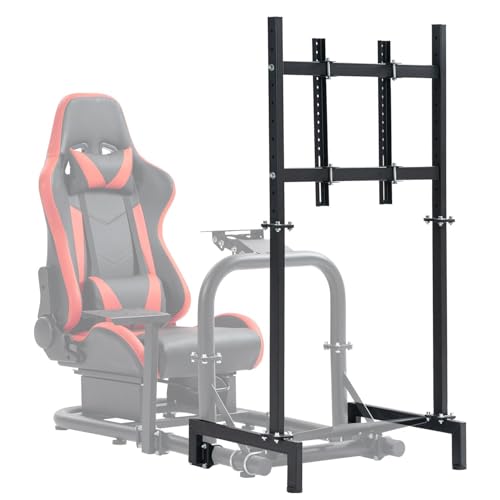
The Marada monitor frame is designed for sim racing with a focus on adjustable height and position. It supports 24 to 60 inches and up to 110 pounds, fitting VESA patterns from 75x75mm to 400x400mm. Its design emphasizes compatibility with round tube racing cockpits and provides flexible height and positional adjustments to align the screen with the driver’s line of sight. The sturdy square steel tube frame is intended to deliver reliable support in dynamic racing environments, where vigorous movement and quick cockpit adjustments are common. This option suits users building a mid‑ to high‑end cockpit with multiple mounting possibilities.
Key considerations include verifying VESA patterns and the overall footprint to ensure the stand fits your cockpit architecture. The setup is well-suited for users who want a stable mounting solution that stays aligned during aggressive cornering or sudden course changes. If your rig utilizes standard VESA patterns and you value adjustability plus a robust build, the Marada frame provides a solid balance of rigidity and flexibility.
Supllueer Racing Simulator Display Bracket

Suppllueer’s display bracket is designed for large round tube cockpits and supports a wide range of 24–60 inch monitors. It emphasizes customizable width and height to accommodate different monitor sizes and configurations. The stand is marketed for easy DIY adjustments, including pre‑drilled holes and options for additional drilling or welding if needed. The emphasis on stability is reinforced by a non‑slip base, aiming to minimize monitor movement during intense racing sessions. This option is ideal for builders who want to tailor the mounting to an existing cockpit frame and appreciate flexibility in installation.
Consideration should be given to the installation process, especially if you plan to modify or drill new mounting points. While the bracket offers substantial adaptability, users should ensure that the chosen monitors’ weights and dimensions stay within the provided tolerances. For those seeking a versatile, DIY‑friendly solution that supports a variety of monitors within the specified range, this bracket provides a practical path to a personalized racing cockpit display setup.
Dardoo Single Monitor Stand With Brake Casters

This single monitor stand focuses on mobility and stability for racing cockpits. It features lockable casters for smooth positioning and a full motion range, including height, tilt, and distance between brackets. The stand supports screens within the 27–65 inch range, making it compatible with many popular racing displays. Its design supports quick repositioning alongside the cockpit, providing an efficient workflow for lane changes, pit stops, or practice sessions. The frame emphasizes secure placement and adaptable viewing geometry to deliver an immersive driving experience.
When evaluating this option, consider the weight limits and mounting patterns of your display. The stand’s mobility is advantageous for arranging and rearranging your cockpit, especially in spaces that double as entertainment areas or classrooms. For users prioritizing easy movement plus precise depth and angle control, this Dardoo model offers a balanced approach suitable for many sim rig configurations.
VIVO STAND-RACE1B Racing Simulator Monitor Mount

The VIVO STAND-RACE1B mount is designed specifically for the STAND-RACE1B racing cockpit. It accommodates 32–50 inch screens with a VESA pattern of up to 400×400, balancing visibility and cockpit integration. This mount locks into the cockpit frame to deliver a flush, immersive display experience that aligns with the driver’s perspective. It supports a variety of mounting patterns, enabling a customized fit for different monitor brands and configurations. If you own a VIVO racing cockpit, this mount offers a precise, cockpit‑integrated display solution.
Key considerations include compatibility with the STAND-RACE1B frame and ensuring the weight rating matches your display. While not a universal stand, the targeted compatibility ensures seamless integration with the cockpit, reducing the risk of misalignment. For sim racers using a VIVO cockpit, this mount provides a tidy, high‑fidelity viewing setup that remains stable during demanding sessions.
Dardoo Sim Racing Triple Monitor Stand

The Dardoo triple monitor stand is designed for racing simulators that require a broad, multi‑screen display setup. It supports three smaller displays (24–32 inches) or one large monitor (24–65 inches) when mounted on round tube cockpits. Height and angle adjustments enable precise alignment for optimal panoramic coverage and reduced neck strain during long practice sessions. Compatibility extends to VESA patterns from 75×75 mm to 400×400 mm, broadening the range of monitor brands and models that can be used.
Consider the space and weight distribution when choosing this triple stand. It is particularly suitable for users who want an expansive field of view across multiple screens, which can be critical for surround simulation. The solution’s versatility makes it a strong candidate for competitive setups where screen real estate and ergonomic positioning are priorities. If your cockpit supports round tubes and you plan to run three displays or a large center screen, this stand offers a comprehensive mounting system.
Buying Guide: Key Purchase Considerations for Racing Simulator Displays
- Monitor size and weight: Verify the maximum supported screen size and weight for each stand or mount. Sim rigs often combine heavy center displays with lighter side panels, so a balanced load rating is essential to prevent sagging or shifting.
- VESA compatibility: Check the VESA patterns (e.g., 75×75, 100×100, 400×400) supported by the stand. The widest compatibility reduces the risk of incompatibility with your preferred monitor brands and models.
- Adjustability: Prioritize height, tilt, and, where possible, swivel or extension options. A good range of adjustment helps achieve optimal eye level and viewing angle from different seating positions and cockpit configurations.
- Cockpit integration: Some mounts are designed specifically for certain racing cockpits. If you own a cockpit brand, verify compatibility to ensure a clean, secure fit with minimal extra hardware.
- Mobility vs. stability: Rolling stands offer easy relocation, but they must lock securely to prevent movement during driving sessions. Fixed mounts optimize stability but lack portability.
- Footprint and room layout: Measure the space around your rig to ensure the stand or mount does not encroach on pedals, wheel bases, or seating areas. A compact footprint is often beneficial for home setups.
- Assembly and customization: Some options require DIY adjustments or drilling. Consider your comfort level with modification and whether you prefer plug‑and‑play solutions.
- Durability and materials: Look for steel frames or reinforced brackets, especially for multi‑monitor systems. A strong base reduces wobble and improves long‑term reliability in intense sessions.
- Cable management: Choose stands with built‑in cable channels or routes to maintain a clean, safe cockpit and avoid tripping hazards or loose cables during racing.
- Future scalability: If you plan to upgrade to larger displays or add more screens, pick a modular solution that can accommodate growth without a full replacement.