Choosing the best sharpener for Japanese knives can impact edge retention and safety in a busy kitchen. Japanese blades excel when maintained with the right stone, whetstone, or multi-stage sharpener. This guide highlights five reliable options that pair well with traditional knives, from compact diamond/ceramic tools to complete whetstone sets. Each selection is described with its design, grit range, and practical benefits for home cooks in America. Use the Buying Guide at the end to compare options and identify the best fit for your blade collection and cooking style.
| Product | Brand | Grit / Type | Why It Stands Out |
|---|---|---|---|
| Goodjob Japanese Whetstone Kit | goodjob | Dual grit 400/1000 whetstones | Affordable bundle with angle guide and flattening stone; Japanese origin; water sharpening |
| Kai Seki Magoroku Sharpener | KAI | Diamond & Ceramic (3 media) | Three sharpening media in one; no angle adjustment required; compact storage |
| Mitsumoto Sakari 5-Angle Sharpener | MITSUMOTO SAKARI | 5-angle adjustable; 3-stage (diamond, ceramic, steel) | Angle-lock technology with versatile wheels; anti-slip handle |
| Mitsumoto Sakari 1000/3000 Whetstone | MITSUMOTO SAKARI | 1000/3000 double-sided | High-quality Japanese sharpening stone; non-slip wooden base; soak-and-sharpen |
| King 1000/6000 Sharpener | KING | 1000/6000 grit | Made in Japan; durable dual-sided whetstone; instruction card included |
Goodjob Japanese Whetstone Kit

This kit combines dual-grit 400/1000 whetstones with a white flattening stone, a fixed-angle guide, and a non-slip silicone base. The 100% carborundum stones are designed to deliver solid edge refinement for everyday kitchen use. The angle guide helps beginners maintain a consistent sharpening angle, reducing guesswork. Water sharpening keeps cleanup straightforward and supports food safety. The included flattening stone maintains a flat surface for even contact. Maintenance is simple: rinse, wet, and sharpen as needed to preserve edge quality.
Rooted in Japanese sharpening tradition, Goodjob emphasizes durability and reliability. The stones are described as fired at high temperatures to enhance grinding strength and resilience. A compact manual provides practical sharpening tips, making this kit suitable for home cooks who want steady performance without complex setup. It’s especially effective for routine maintenance of chef knives, Santoku blades, and general kitchen tools.
Kai Seki Magoroku Sharpener

The Kai Seki Magoroku Diamond and Ceramic Sharpener blends three sharpening media—two types of diamonds and ceramic—so blades can be rejuvenated without changing angles. The design emphasizes ease of use, letting you restore edge quality quickly. Its compact footprint stores easily in a sink drawer or under a cabinet, making it an ideal option for apartment kitchens or limited counter space. The device’s fixed-angle approach simplifies sharpening for busy cooks who prefer a straightforward, reliable routine.
Users benefit from a versatile, all-in-one tool that can address various blade conditions. The combination of diamond and ceramic media provides rapid material removal when needed and refined finishing strokes for a sharper edge. With a small footprint and simple operation, it fits well into a modern American kitchen while accommodating both Western and Japanese knives alike.
Mitsumoto Sakari 5-Angle Sharpener

This adjustable sharpener offers five angles and a precision guide rail, featuring a three-stage sharpening system with diamond, ceramic, and steel wheels. Angle-lock technology helps maintain accuracy, delivering consistent results for both professional chefs and home cooks. The coarse stage repairs blunt blades, the fine stage sharpens, and the polishing stage finishes with a razor-like edge. An anti-slip ergonomic handle enhances control and safety during use.
Designed for versatility, this tool supports a range of blades, from kitchen knives to scissors. The fixed guide and multiple wheel materials enable tailored sharpening depending on blade condition and metal hardness. For households that frequently switch between blade tasks, this model provides a practical balance of speed, control, and finish quality.
Mitsumoto Sakari 1000/3000 Whetstone
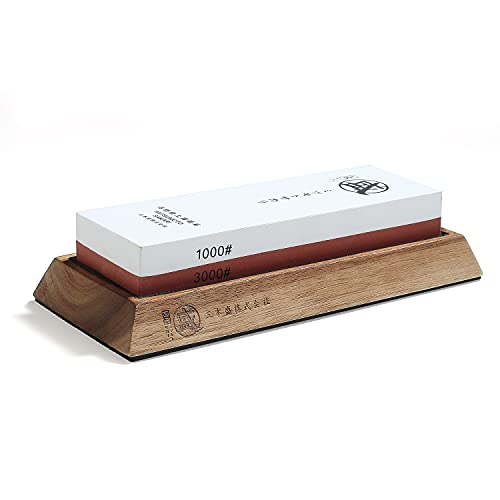
This professional-grade whetstone features a double-sided 1000/3000 grit combination designed to repair dull edges and provide a fine finish. The kit includes a non-slip wooden base with rubber strips to stabilize sharpening strokes and maintain a consistent angle. Soaking the stone in water for five minutes primes it for sharpening, and the base keeps the stone steady as you work. The dual-grit format makes it a versatile option for chefs who want a single stone that can both restore and refine knives.
With a durable white corundum composition, this stone supports reliable edge restoration and smoothing. The non-slip base helps sustain a comfortable, steady sharpening angle—typically around 15°–20°—for most Western and Japanese-style blades. Its simple, traditional approach makes it a strong choice for users prioritizing authenticity and long-term durability in a single kit.
King 1000/6000 Sharpener
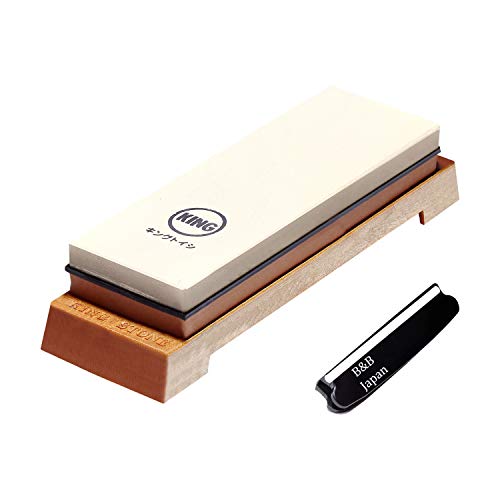
The King 1000/6000 Sharpener mirrors traditional Japanese whetstone practice with a 1000 grit side for sharpening and a 6000 grit side for finishing. Made for durable performance, it provides a clear progression from edge repair to a refined, polished edge. The instruction card in English helps users understand the recommended technique and angle ranges, making it accessible for both beginners and experienced cooks. This two-sided stone suits daily kitchen use and supports prolonged knife life when used with proper water sharpening technique.
Designed for longevity, this sharpener is well-suited for stainless steel cutlery and pointed carvers commonly found in American kitchens. The Japanese craftsmanship behind the KING brand emphasizes reliability and consistent results, making it a practical choice for households that value a straightforward, time-tested sharpening method without needing extra tools.
Buying Guide
Grit Range And Blade Type
Grit choice determines how aggressively a blade is sharpened and how smooth the final edge feels. Low grits (e.g., 400) remove material quickly and restore heavily dulled edges, while mid grits (1000–3000) refine and level the edge. Very fine grits (6000–8000) polish the edge for feather-slices. For Japanese knives, which often have harder steel, a combination set (1000/3000 or 1000/6000) provides both repair and finishing. Consider your typical blade mix—chef knives, Santoku, paring knives—to pick the right pairing of grit ranges.
Stone Type And Use
Whetstones come in different materials and configurations. Traditional whetstones require soaking and water lubrication, offering tactile control and a true edge for durable blades. Diamond and ceramic sharpeners deliver fast results and are less maintenance-heavy but may remove material more quickly. Combination kits with dual or multiple grits offer convenience for households that want a single solution. Your choice should align with blade hardness, maintenance tolerance, and how much time you want to dedicate to sharpening.
Angle Guides And Ease Of Use
Angle guides help maintain consistency, especially for beginners. Some products provide fixed angles (e.g., 15°–20°), while others offer adjustable, 5-angle or multi-stage systems. If you frequently sharpen a variety of knives, an adjustable system can be advantageous; for common kitchen blades, a reliable fixed angle paired with a high-quality stone often suffices. Safety features such as anti-slip bases also improve control and reduce accidents during sharpening.
Safety And Stability
Stability is crucial when sharpening sharp blades. Look for non-slip bases, rubber feet, or wooden stands that secure the stone and your hands. A flat, stable surface minimizes the risk of slips, which can be dangerous with sharp blades. If space is limited, consider compact, low-profile designs that still provide a solid grip and stable stance during use.
Maintenance And Longevity
Most whetstones require occasional flattening to maintain flat contact with the edge. Worn areas or grooves reduce sharpening efficiency. Some kits include flattening stones or strops to extend life. Materials like high-quality corundum or ceramic composites tend to resist cracking and maintain edge-holding ability longer. Proper storage away from extremes of heat and moisture also preserves performance.
Brand Reputation And Value
Brands with a history in Japanese cutlery, such as Goodjob, KAI, Mitsumoto Sakari, and King, often emphasize craftsmanship and blade compatibility. While price is a factor, value comes from long-term performance, ease of use, and the breadth of grit options. For many cooks, investing in a reputable brand with clear instructions and durable construction yields better results over time than cheaper, lesser-known options.
Quick Comparison At A Glance
- Best for beginners: Goodjob kit with angle guide and flattening stone.
- All-in-one media: Kai sharpener with diamonds and ceramic; minimal setup.
- Versatile control: Mitsumoto Sakari 5-Angle Sharpener for multiple blades and angles.
- Traditional care: Mitsumoto Sakari 1000/3000 whetstone for restoration and finishing.
- Classic two-sided stone: King 1000/6000 for sharpening and polishing with clear instructions.