Vaulted ceilings pose unique ventilation challenges. To keep a kitchen comfortable and odor-free, choose ceiling-mounted or attic-blower designs that place the motor away from the cooking area while delivering strong airflow. The following selections maximize airflow, minimize noise, and offer flexible ducting options suitable for tall, expansive spaces. Each option includes key specs, control features, and direct links for easy comparison.
| Product | Brand | Vent Type | CFM |
|---|---|---|---|
| Awoco Split Ceiling Insert Range Hood, 800 CFM | Awoco | Ceiling insert with attic blower, 6″ vent | 800 |
| FIREGAS Island Range Hood, 700 CFM | FIREGAS | Ceiling-mounted island, ducted/ductless convertible | 700 |
| FIREGAS Black Island Range Hood, 700 CFM | FIREGAS | Ceiling-mounted island, ducted/ductless convertible | 700 |
| Awoco 30-Inch Ceiling Insert Split Quiet Hood | Awoco | Ceiling insert with attic blower, 8″ top vent | 1000 |
| Tieasy 30-Inch Ceiling Mount Island Hood | Tieasy | Ceiling-mounted island, ducted/ductless | 700 |
Awoco Split Ceiling Insert Range Hood, 800 CFM

This model is designed for vaulted or tall ceilings by placing the blower unit in the attic and the hood in the ceiling. It features a durable 1 mm stainless steel construction with a brushed finish and a 6″ round top vent for external venting. The system operates through four speeds, delivering up to 800 CFM, and includes LED lighting plus a wireless remote control. Noise levels are described as 40 dB at the low setting and 52 dB at high power, balancing performance with comfort in open-concept layouts. The kit is ducted to the outside; wall switch controls are not compatible, so operation relies on the remote and the built-in controls. Ducts and related hardware are not included, so check your existing duct configuration before purchase.
Key features in practice include a quiet-start concept that moves the blower away from the kitchen area, helping to reduce vibration and noise transfer. The unique split design is well-suited for vaulted ceilings where traditional inline blower placements can be cumbersome. The 12 ft split control cord and power cord with plug are included to simplify initial setup. Maintenance centers on standard farming of the included mesh filters and straightforward LED lighting, ensuring ongoing efficiency with minimal effort.
FIREGAS Island Range Hood, 700 CFM

The FIREGAS 30-inch island range hood provides 700 CFM with a three-speed fan, designed for versatile installation in either ducted or ductless configurations. This flexibility is especially useful for vaulted kitchens where exterior vent routing can be challenging. The hood uses two baffle filters and oil cups to capture grease, while two charcoal filters help neutralize odors. Four energy-saving LED lights illuminate the cooking surface, ensuring clear visibility from all angles. The unit is designed for ceiling-mount installation and does require appropriate ducting hardware (not included). Noise levels reach about 55 dB at high speed, a typical range for island units with strong airflow.
As a convertible system, it accommodates homes where external venting is unavailable or impractical. The included filters and simple maintenance approach make routine cleaning straightforward. For vaulted ceilings, the island configuration can be aesthetically appealing and provide ample clearance above the cooking area, while still delivering robust ventilation when needed.
FIREGAS Black Island Range Hood, 700 CFM

This 36-inch black island hood delivers 700 CFM and supports both ducted and ductless configurations for adaptable vaulted installations. The hood features gesture control, a remote, and touch control options, enabling convenient operation from across the room. It includes a three-speed fan to tailor ventilation to cooking intensity and an LED lighting system to brightly illuminate the cooktop. A practical 1–60 minute time-delay feature lets users extend ventilation after cooking, helping to clear lingering smoke and odors. The design emphasizes a modern, minimal profile with performance to match larger kitchen spaces.
For vaulted kitchens, the combination of high airflow and flexible control methods makes this model a strong option. The ability to switch between ducted and ductless setups means it can adapt to homes with existing ducting or to spaces where external ducting is impractical. The listed features also suggest straightforward maintenance through accessible filters and simple operation to maintain consistent air quality over time.
Awoco 30-Inch Ceiling Insert Split Quiet Hood
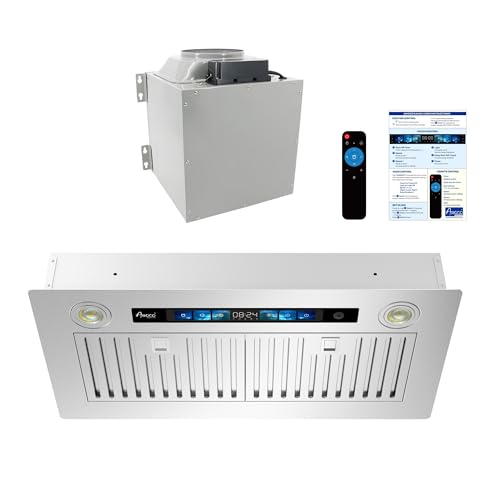
This 30-inch ceiling insert model features a split quiet design, with the blower mounted in the attic and the hood installed in the ceiling to reduce kitchen noise and improve overall airflow. The unit uses an 8″ round top vent for outside exhaust and does not include ducts. It delivers up to 1000 CFM across four speeds, supported by four LED lights for enhanced visibility. Controls include voice, gesture, touch, and remote options, providing flexible operation in busy kitchens. The kit uses dishwasher-safe baffle filters for easy cleaning, and there are two magnets and magnetic instruction stickers included to support quick setup and use.
This Awoco model emphasizes noise reduction and advanced user interaction, which can be especially valuable in vaulted kitchen designs where higher ceilings may contribute to different acoustic dynamics. The split configuration helps keep the fan noise away from the primary cooking zone, while robust airflow supports effective capture of steam, smoke, and odors during heavy cooking sessions.
Tieasy 30-Inch Ceiling Mount Island Hood
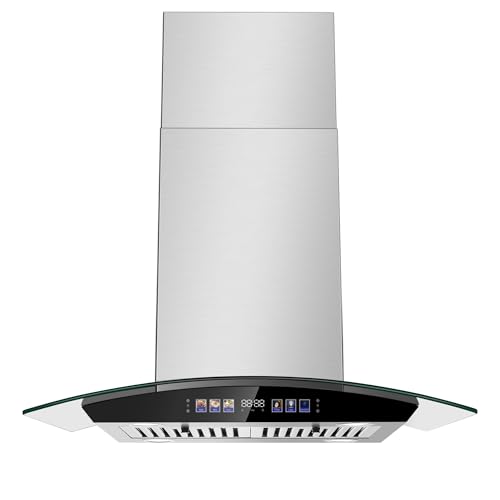
The Tieasy 30-inch island hood delivers 700 CFM through a three-speed fan and features a color touch screen along with gesture control for hands-free operation. Four LED lights provide bright, even illumination of the cooking surface, while the unit’s ducted/ductless convertible design allows installation in kitchens with or without external venting. Included 5-layer aluminum grease filters capture grease and smoke efficiently, contributing to easier maintenance. The ceiling-mount design and modern controls make this hood well-suited to vaulted spaces seeking both contemporary aesthetics and strong ventilation.
In practice, the combination of a responsive touch and gesture interface with quiet operation—typical for a modern high-CFM hood—provides an intuitive user experience. The option to convert between ducted and ductless configurations further extends its applicability across different home layouts, and the integrated lighting helps ensure cooking areas remain well-lit during operation. When selecting for a vaulted ceiling, consider the height of the venting run and whether a ducted installation best aligns with your home’s architecture and existing ductwork.
Buying Guide: Key Considerations For Vaulted Ceilings
Choosing a range hood for vaulted ceilings involves balancing airflow, venting options, noise, and control features. Here are core considerations to inform your decision:
- Ventilation power and space: Higher ceilings and open floor plans benefit from higher CFM ratings to maintain effective smoke and odor removal. In vaulted spaces, a 700–1000 CFM hood is common for island or ceiling-insert designs, while split attic-blower configurations can provide strong performance without transferring noise to the living area.
- Ducted vs. ductless: Ducted hoods vent air outside and generally offer more effective odor and grease removal with less ongoing filter maintenance. Ductless models rely on filters to recirculate air and are useful when external venting is impractical but require more frequent filter replacement.
- Ceiling height and mounting method: Vaulted ceilings often require attic-mounted blowers or ceiling inserts to minimize sound transfer and ensure proper exhaust routing. Ensure the vent diameter (6″ vs 8″) and duct path align with your home’s structure and local building codes.
- Noise levels: Noise is a major factor in open-plan kitchens. Look for models with lower dB ratings at typical operating speeds. Split designs that place the blower in the attic typically offer quieter operation near the cooktop.
- Controls and features: Hands-free operation (gesture or voice control), remote control, and timing features (delay shut-off) add convenience in busy kitchens. LED lighting improves visibility on the cooking surface, and dishwasher-safe filters simplify maintenance.
- Filters and maintenance: Baffle filters are durable and easy to clean. Charcoal filters are essential for ductless setups to neutralize odors. Confirm whether filters are dishwasher-safe to simplify cleaning schedules.
- Installation considerations: Vaulted ceilings may require professional assessment for duct routing, attic access, and mounting hardware. Some models split the blower and hood to reduce noise and facilitate installation in tall spaces.
- Energy efficiency and lifecycle: Higher CFM units consume more power. Consider models with efficient motors and LED lighting to minimize energy use while maintaining performance.
Across the evaluated options, attic-blower split designs and ceiling-insert hoods provide practical solutions for vaulted ceilings. The choice between island and wall/ceiling configurations depends on kitchen layout, ceiling height, and whether external venting is feasible. In addition to airflow, consider control options (voice, gesture, touch) and maintenance needs when selecting a hood that fits both the architectural and functional requirements of a vaulted kitchen.