Propane tankless water heaters provide on-demand hot water, compact footprints, and energy-efficient performance for homes, cabins, RVs, and remote setups. This guide spotlights five top models that balance flow, BTU output, safety, and ease of installation. Each option delivers hot water instantly when you need it, while reducing standby energy waste common with storage systems. Whether you need indoor reliability, outdoor ruggedness, or RV-ready portability, these units represent strong value and dependable performance across common American households and outdoor adventures.
| Product | Brand | Flow (GPM) | BTU | Installation | Notes |
|---|---|---|---|---|---|
| Nessxa Tankless Water Heater Propane With Digital Display | Nessxa | 3.66 | 85,300 | Indoor / Camping | Digital display; six safety protections; energy-saving tech |
| Rinnai V53DeP Propane Tankless Water Heater | Rinnai | 5.3 | — | Outdoor | High flow capacity; energy-efficient with scale detection |
| Ranein Propane Gas Tankless Water Heater Indoor | Ranein | 3.6 | 80,000 | Indoor | Unlimited hot water on demand; four operating modes |
| VELPAX Propane Tankless Water Heater Indoor | VELPAX | 4.74 | 68,000 | Indoor | LED digital display; dual safety protections; durable body |
| 2025 GEN II Ranein Propane Tankless Water Heater | Ranein | 3.6 | 80,000 | Indoor | LED temperature control; stable on-demand performance |
Nessxa Propane Tankless Water Heater Details

The Nessxa model combines compact heat-on-demand with a digital display for real-time monitoring. It delivers up to 85,300 BTU per hour and can reach hot water temperatures up to 113°F (with a minimum of 17°F inlet) while producing up to 3.66 gallons per minute. Advanced combustion minimizes gas usage and noise, providing efficient operation in both indoor and camping scenarios. The unit includes six safety protections, such as overheating protection and dry combustion safeguards, plus low-flow protection that prevents ignition unless water pressure meets the minimum threshold. A built-in energy-saving mode is rated to reduce energy consumption by about 10%.
Key considerations for Nessxa include proper venting, sufficient water supply pressure, and a stable gas line capable of delivering 85300 BTU/hour. The dual-use capability makes it suitable for cabins or mobile setups where electricity may be limited but propane is readily available. Regular maintenance of the heat exchanger and venting will help sustain performance and prolong service life.
Rinnai V53DeP Propane Tankless Water Heater
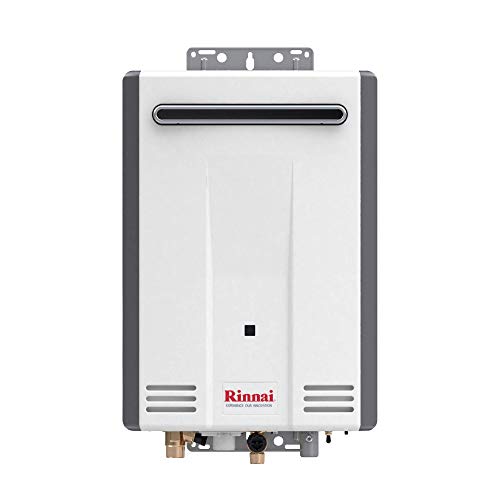
The Rinnai V53DeP is designed for outdoor installation and provides a strong 5.3 GPM flow rate, suitable for busy households with multiple simultaneous hot-water demands. This unit emphasizes energy-efficient on-demand heating, reducing energy waste by heating only as needed. Improved scale detection helps extend the unit’s lifespan and maintain efficient operation. Its compact outdoor footprint is ideal for spaces where indoor installation isn’t feasible, such as patios or exterior utility alcoves, enabling reliable hot water delivery without occupying indoor living space.
When evaluating Rinnai V53DeP, consider climate exposure, venting requirements, and installation clearances. Outdoor models still require proper weatherproofing, durable venting solutions, and accessible service points for maintenance. Routine flushing to remove mineral buildup will support consistent performance over time.
Ranein Indoor Propane Tankless Water Heater

Ranein’s indoor model delivers 3.6 GPM at up to 80,000 BTU, providing continuous hot water for two to three points of use—bathroom, kitchen, and a small bar area. The on-demand design eliminates the wait associated with storage tanks and reduces standby energy. It offers four modes, including dish, fruit, elderly, and infant settings, tailoring water temperature to specific needs. This versatility makes it suitable for households with children or sensitive users, while consistent heating helps prevent sudden temperature fluctuations during showers or chores.
Practical installation should account for proper gas supply sizing, venting, and adequate space for service panels. Routine inspections and proper water pressure management help ensure stable performance and safety during operation.
VELPAX Indoor Propane Tankless Water Heater

VELPAX offers a compact, high-output propane tankless heater with 4.74 GPM and up to 68,000 BTU per hour. It features a Fahrenheit/Celsius LED digital display for precise temperature control and boasts multiple safety protections (including a flame-failure device, anti-freeze, and overheating protection). The unit operates at low water pressures around 3.6 PSI and uses a stainless steel body with an oxygen-free copper heat exchanger to minimize heat loss and resist corrosion. The LED display makes it easy to set and monitor temperatures from roughly 95°F to 149°F, supporting comfortable, safe indoor use.
For best results, ensure proper venting and a stable water supply. The combination of robust protections and on-demand heating helps reduce energy costs while preserving equipment longevity in everyday household scenarios.
Nessxa 14L Tankless Water Heater With Fahrenheit Digital Display
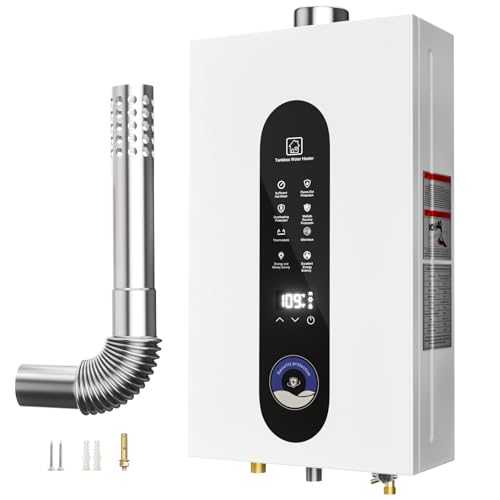
This Nessxa model delivers 14L/min (3.7 GPM) with a 95,540 BTU input, offering instant hot water on demand for indoor showers or kitchen tasks. It uses a dual-unit Fahrenheit/Celsius digital display for precise temperature control and a broad 25°C rise (≈77°F) to 49°C (120°F) or higher with quick heating. The system supports safe operation with automatic overheating protection at 125°F (52°C) and robust industrial-grade materials, including UL-certified venting and a rust-resistant heat exchanger. The design emphasizes quick temperature adjustment and reliable indoor performance, making it suitable for family homes seeking steady on-demand hot water.
Key setup considerations include correct venting orientation with a slight downward slope to prevent condensate, and ensuring gas supply and intake air meet the unit’s high BTU demand for consistent flow at higher temperatures.
Buying Guide
Flow Rate And Demand
Choose a unit whose GPM rating meets your peak hot-water needs. Homes with multiple bathrooms or busy kitchens typically require 3–5 GPM, while compact spaces or cabins might function well with 2–3 GPM. In cooler climates, higher BTU inputs help maintain warm output as incoming water temperature drops. For RVs or off-grid situations, prioritize compact, portable units with reliable on-demand performance.
BTU Output And Efficiency
BTU (British Thermal Units) indicates a heater’s heating power. Higher BTU enables faster hot-water delivery and higher temperatures, especially with lower inlet water temperatures. Look for models around 60,000–80,000 BTU for moderate homes, and 80,000 BTU or more for larger needs. Efficiency improvements reduce gas consumption and operating noise, contributing to lower utility bills over time.
Installation And Space
Indoor installations require adequate ventilation, venting routes, and wall or cabinet space for panels and connectors. Outdoor models demand weatherproofing, frost protection, and protection from temperature extremes. RV or portable units must balance weight, battery or gas supply, and secure mounting. Always follow manufacturer clearances and local codes, and plan for service access for routine maintenance.
Safety Features
Top safety features include overheating protection, flame-failure devices, dry-combustion protection, anti-freeze protection, and low-flow protection (which prevents ignition if water flow is insufficient). Digital temperature displays help prevent accidental scalding by allowing precise setting of safe water temperatures. Ensure a unit’s venting and gas connections are rated for the intended duty cycle to minimize risk.
Durability And Maintenance
Durable materials such as stainless steel housings and copper heat exchangers resist corrosion and heat loss. Look for units with easy maintenance access, clear diagnostic indicators, and simple flush or descaling procedures. Regular venting, water quality management, and periodic professional inspections help preserve performance and lifespan.
Cost, Service, And Warranty
Prices vary with GPM, BTU, and features like LED displays or advanced safety protections. Consider total lifetime costs, not just upfront price, including gas usage, potential savings on energy, and maintenance needs. Check warranty terms for heat exchangers, ignition components, and electronics to understand coverage during the heater’s lifespan.