Choosing the right paint for brick walls can be challenging due to texture, porosity, and the aged look of mortar. This guide highlights five top options and related tools to help you achieve a durable, attractive finish—whether you want a whitewashed brick look, a solid color, or a textured brick pattern. Each product below is well-suited for brick surfaces in homes, whether indoors or on exterior façades. Consider finish, coverage, odor, drying time, and whether you need priming or a direct-to-brick solution as you compare choices.
| Product | Brand | Best For |
|---|---|---|
| Giani Brick Whitewash Paint Kit | Giani | Whitewashed brick walls and fireplaces |
| KILZ Self-Priming Masonry Paint | KILZ | Interior/exterior brick, masonry, stucco |
| GLAINTE Brick Transformation Paint Kit | GLAINTE | Brick, fireplaces, walls and concrete |
| Real Milk Paint | Real Milk Paint | Brick, stone and porous surfaces with no-VOC finish |
| THE ONE All-in-One Paint & Primer | THE ONE | Brick, wood, metal, concrete surfaces with one coat |
Giani Brick Whitewash Paint Kit

The Giani Brick Transformations Whitewash Paint is designed to deliver a light, authentic whitewashed brick look while preserving surface texture. The kit notes that full coverage requires water dilution, enabling a practical 200 square foot result when following the included Brick Transformations instructions or the product video. This approach minimizes heavy coatings and helps maintain the natural brick character. The finish is described as safe with low odor and reduced VOCs, making it suitable for interior brick surfaces such as living room features or fireplaces. Proper use involves adhering to the dilution guidance to achieve the intended translucence and color depth.
Application starts with surface preparation per the kit’s guidelines, then applying the diluted plaster-like layer to brick, mortar, or masonry. The kit emphasizes a controllable, light-to-medium veiling rather than a solid opaque layer, which many homeowners prefer for brick’s texture. After initial passes, you can build opacity gradually, allowing the underlying brick to show through in a controlled pattern. Regular spacing, even strokes, and consistent dilution help achieve a cohesive, natural look that resembles traditional whitewashed brick without masking its character.
KILZ Self-Priming Masonry Paint

KILZ Self-Priming Masonry, Stucco and Brick Paint is a versatile, acrylic-latex, water-based solution designed for interior and exterior use on textured masonry surfaces, including brick. It offers strong hiding properties and excellent adhesion with water repellency, reducing the need for a separate primer on properly prepared surfaces. The paint is described as alkali-resistant up to pH 12.0, which helps when painting masonry with higher alkalinity from old mortar. It can be rolled, brushed, or sprayed on and is suitable for a range of masonry materials, including brick, making it a practical choice for both renovation projects and new brick installations.
The product’s self-priming capability and robust adhesion contribute to durable finishes that resist cracking and blistering on masonry surfaces. For brick walls, prepare the area by cleaning and scraping loose materials. Apply in even coats, allowing adequate drying time between passes. Because this paint is water-based and easy to clean with soap and water, it offers a convenient option for busy homes or spaces where maintenance matters. It’s well-suited for mid-to-high traffic areas where durability is important.
GLAINTE Brick Transformation Paint Kit
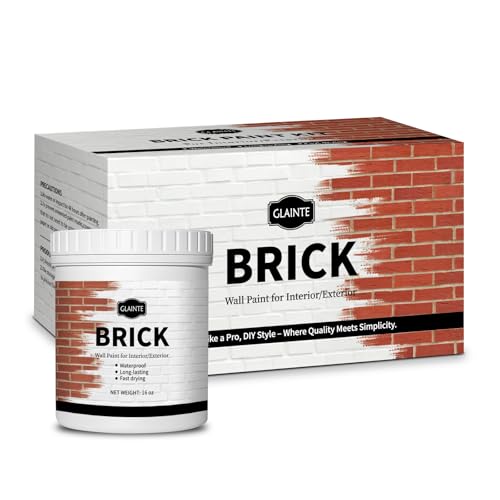
The GLAINTE Brick Transformation Paint Kit is marketed as a multifaceted white paint system suitable for brick, fireplaces, walls, and concrete. The kit emphasizes direct application without priming steps in many cases, and it highlights strong sun and waterproofing properties for outdoor use when dry. The formula is water-based, designed to minimize VOCs and odor, which supports use in enclosed spaces. It provides adjustable opacity through water dilution, with guidance suggesting a 1:1 ratio for light veiling and a 1:2 ratio for a bolder, textured finish. The product also mentions using a cloth to help blend and layer finishes to mimic natural brick patterns.
Outdoor and indoor projects benefit from its versatility; however, outdoor works should be scheduled during sunny windows to avoid rain interference while the paint cures. The kit includes tools for a smoother application, reducing the need for additional primers or sealers. For brick surfaces seeking a fresh, modern look or a traditional brick texture, GLAINTE offers a convenient path to consistent results with careful dilution and layering.
Real Milk Paint For Brick And More

Real Milk Paint is a water-based, no-VOC option noted for matte finishes with historical or antique character. The product is described as versatile across multiple surfaces, including brick, stone, plaster, drywall, and unsealed brick, with good adhesion and the option to distress for vintage looks. The formula is compatible with porous surfaces and does not require primer on raw wood or similar substrates. The product’s characteristic matte finish can suit rustic or farmhouse aesthetics on brick walls and accents, especially when paired with a protective finish such as wax or natural sealants to enhance durability without altering the textural feel of the brick surface.
The no-VOC claim makes it attractive for interior projects with limited ventilation. Real Milk Paint emphasizes a traditional approach to painting and patina, which can appeal to homeowners seeking an authentic, soft look on brick while allowing easy distressing to achieve cracks, chips, or a worn appearance that mirrors aged brickwork.
THE ONE All-in-One Paint & Primer

THE ONE All-in-One Paint & Primer is designed as a durable, 2-in-1 product intended to simplify interior and exterior projects. Marketed as a finish that requires little prep, it promises good coverage and long-lasting durability for furniture, cabinets, doors, walls, and brick surfaces. The product highlights its versatility across multiple substrates, including brick, stone, concrete, metal, and plastic, which can be advantageous for homeowners tackling diverse renovation tasks in a single project. The thick, luxurious formulation aims to deliver solid opacity and reduced application steps, saving time while delivering a finished look on brick walls and other surfaces.
As a finish that combines paint and primer, THE ONE can streamline projects where brick walls are part of larger rooms or feature walls. Users should still prepare the surface by cleaning and addressing any loose mortar or rough spots. Although it offers convenience, some brick surfaces may benefit from additional sealing or a follow-up protective coat depending on indoor humidity, traffic, and the desired level of sheen. Overall, it presents a strong option when a robust, low-maintenance brick finish is the goal.
Buying Guide
When choosing paint for brick walls, consider these key purchase factors to ensure the result meets your goals:
- Surface suitability: Confirm whether the product is designed specifically for brick, masonry, or concrete, and whether it’s intended for interior, exterior, or both. Some kits are optimized for fireplaces or feature walls, while others target all masonry surfaces.
- Finish and appearance: Decide between a whitewash or semi-opaque look, a solid color, or a textured brick pattern. Neutral tones can highlight texture, while rich colors can create bold statements. Matte finishes emphasize texture, while slight sheens can reduce the appearance of surface imperfections.
- Coverage and dilution: Some brick paints require dilution with water to reach full coverage, while others are ready-to-use. Estimate the project area and factor in number of coats for your chosen opacity.
- Primer considerations: Determine if the paint is self-priming or if a separate primer is needed. Self-priming products save time but may require surface preparation for best adhesion on older brick.
- Durability and weather resistance: Exterior brick benefits from UV resistance and water repellency. For interior brick, odor and low VOCs may be more important for a comfortable living space.
- Application method: Assess whether you plan to roll, brush, or spray. Some products are designed to work well with rolling and layering for a textured finish, while others suit spray systems for smooth results.
- VOC content and odor: Low-VOC and water-based formulas are preferable for enclosed spaces or rooms with limited ventilation. Cleaning ease and user safety are important considerations in homes with children or pets.
- Drying time and climate: Indoor humidity and ambient temperature influence drying and curing times. Plan project timelines accordingly, especially for exterior projects that require dry weather windows.
- Maintenance and sealing: Some finishes pair well with wax, oil, or sealants to protect the brick surface. Consider whether you want a finish that can be easily cleaned or a patina that ages gracefully with time.
- Budget and availability: Compare product prices per liter or gallon and check availability in your region. Durable, multi-surface products may offer long-term savings despite a higher upfront cost.
Choosing the right brick paint depends on your priorities—whether you want a low-odor option for indoor spaces, a direct-to-brick kit for faster coverage, or a flexible product that doubles as a primer. The five options covered above provide a range of approaches from whitewashed finishes to solid colors and textured results. Always follow the manufacturer’s instructions for surface preparation, dilution ratios, application technique, and curing times to ensure optimal performance and a long-lasting brick finish.