Choosing the right natural gas boiler or gas-fired water heater is essential for reliable heating, steady hot water, and energy efficiency. This guide highlights five top performers that cover wall-mounted boilers, compact condensing models, and versatile tankless options. Each entry provides a snapshot of key features and practical considerations to help American homes balance comfort with economical operation. Whether you want a compact boiler for space savings or a high-capacity tankless unit for endless hot water, these picks demonstrate trusted brands and solid performance.
Summary of Selected Products
| Model | Brand | Type | Max BTU | Notable Feature |
|---|---|---|---|---|
| Rinnai i060CN | Rinnai | Condensing Boiler | 60K | Space-saving wall-mount with smart controls |
| Rinnai M090SN | Rinnai | Condensing Boiler | 90K | Self-cleaning heat exchanger and multizone control |
| Noritz NRCB180DV-NG | Noritz | Indoor Direct Vent Boiler (Combination) | 180K | Built-in pump and DHW with direct vent |
| Rinnai RXP199iN | Rinnai | Condensing Tankless | 199K | Indoor/outdoor install, Versa Vent, high GPM |
| Rinnai RE140iN | Rinnai | Non-Condensing Tankless | 140K | Compact indoor model with long warranty options |
Rinnai i060CN Condensing Boiler (60K BTU)
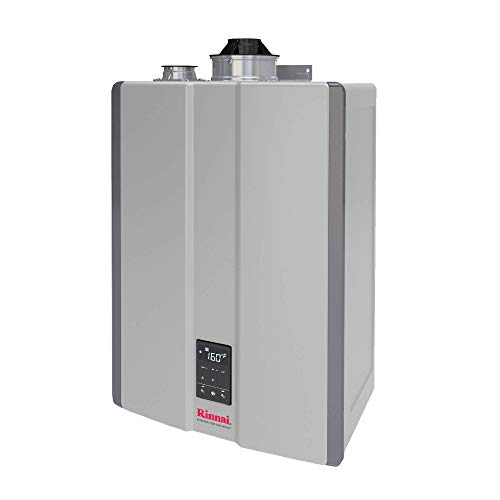
The Rinnai i060CN is a compact, wall-mountable condensing boiler designed for whole-home heating with integrated domestic hot water. With a 60,000 BTU input, it combines a stainless-steel heat exchanger and a modulating wire mesh burner to optimize efficiency and space. The built-in domestic hot water plate heat exchanger supports showers and faucets, enabling a streamlined, two-in-one solution for smaller homes or retrofit projects. Its smart features connect thermostat controls and pumps directly to the boiler for centralized management, while safety and ease of use are enhanced by a child-lock and a digital main screen.
- Wall-mounted, space-saving design ideal for compact layouts
- Stainless-steel heat exchanger with modulating burner for efficiency
- Built-in domestic hot water plate heat exchanger for shower and faucet use
- Multi-zone control compatibility with direct-connection to thermostat and pumps
For operation, you can adjust space heating (CH) temperatures in a range from 104°F to 180°F and domestic hot water (DHW) temperatures from 98°F to 140°F. A dedicated outdoor reset sensor and user-friendly interface streamline setup and ongoing management, making it a practical choice for homes that require reliable warmth without occupying excess wall space.
Rinnai M090SN Condensing Boiler (90K BTU)

The Rinnai M090SN is a mid-range condensing boiler designed to balance performance and efficiency for larger homes or multi-zone layouts. It features a self-cleaning stainless-steel heat exchanger with a modulating ceramic burner and a secondary flat plate heat exchanger to ensure consistent hot water for showers and taps. Like other modern Rinnai models, it includes smart capabilities that support multizone control and direct thermostat integration, enabling efficient, programmable heating across different living areas.
- Self-cleaning stainless-steel heat exchanger with modulating ceramic burner
- Secondary flat plate heat exchanger for reliable DHW
- Multizone control allows thermostat/pumps to connect directly to the boiler
- Digital display with temperature/pressure readouts and outdoor reset sensor
Temperature can be fine-tuned from 68°F to 185°F, giving flexibility for varied climates and household needs. The M090SN is well-suited for homes that require solid, dependable heat across multiple zones while delivering comfortable domestic hot water with a compact footprint.
Noritz NRCB180DV-NG Indoor Boiler (180K BTU)
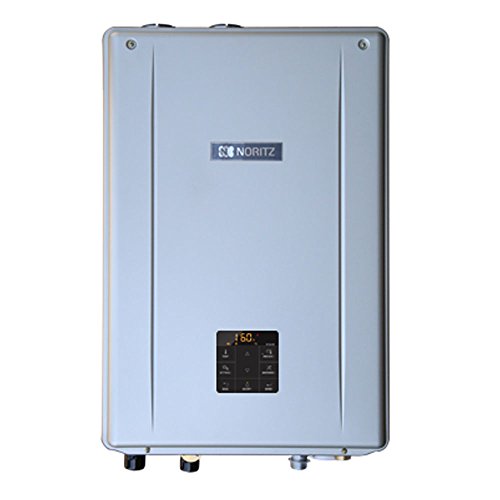
The Noritz NRCB180DV-NG is an indoor direct-vent combination boiler with a robust 180,000 BTU capacity and built-in pump. This model is designed for households that require simultaneous space heating and domestic hot water, offering strong DHW stability and reliable performance even during peak demand. Its direct-venting configuration helps accommodate modern ventilation setups, and the unit can be adapted to various venting requirements, making it a flexible choice for retrofits and new installations alike.
- Simultaneous domestic hot water and space heating
- Direct vent configuration for flexible installation
- Built-in pump reduces additional components
- Stable domestic hot water temperatures for reliable showers
With high-capacity output, the NRCB180DV-NG is best for homes with larger heating zones or higher DHW needs. It combines reliability with a streamlined venting approach, helping to simplify installation while maintaining solid performance across heating and hot water needs.
Rinnai RXP199iN Condensing Tankless (199K BTU)

The Rinnai RXP199iN represents a high-capacity condensing tankless option that can be installed indoors or outdoors with Versa Vent compatibility. This unit delivers up to 11.1 GPM and is powered by a flexible Smart Sense gas control system compatible with propane or natural gas. Its compact footprint makes it suitable for tight spaces, while its modern design includes a Quick Flush feature for easy maintenance and a high energy efficiency factor of about .98 UEF. A ControlR module enables WiFi control, though it is not included with the base unit.
- Indoor or outdoor installation with Versa Vent
- Up to 11.1 GPM, suitable for multiple fixtures
- Condensing efficiency with high UEF, compact form
- Smart, efficient design with Quick Flush and optional WiFi control
For homes needing abundant hot water without a storage tank, the RXP199iN offers rapid on-demand heating and scalable performance. The model is ideal for larger households or busy households with simultaneous hot water needs across multiple outlets, all while maintaining a space-saving configuration.
Rinnai RE140iN Non-Condensing Tankless (140K BTU)

The Rinnai RE140iN is a compact indoor non-condensing tankless unit designed for steady, on-demand hot water in moderate-demand homes. With up to 140,000 BTU and approximately 5.3 GPM, it serves well in spaces where water usage is spread across a few fixtures at once. The model includes a residential warranty structure for the heat exchanger, labor, and parts (15-, 5-, and 1-year respectively). A ControlR module is available for WiFi control (not included), and professional installation is strongly recommended due to the complexities of venting and setup.
- Indoor installation with reliable on-demand heating
- Up to 5.3 GPM for multiple fixtures
- Includes multiple warranty coverage levels
- Weighs the option of WiFi control via ControlR module (not included)
Non-condensing models like the RE140iN are often preferred where lower upfront costs are important or when venting constraints are a primary consideration. While they may offer lower efficiency than condensing boilers, they remain a solid, space-efficient option for smaller households seeking dependable hot water without a storage tank.
Buying Guide
Key purchase considerations
When selecting a natural gas boiler or gas-fired tankless system, consider the balance between space, capacity, and efficiency. Condensing models typically deliver higher efficiency by reclaiming heat from exhaust gases, which can translate to lower operating costs over time. Non-condensing options may present lower upfront costs but can be less energy-efficient and require more attention to venting and combustion air. Identify whether your needs are primarily space heating, domestic hot water, or a combination, and choose a model with appropriate BTU capacity or GPM rating to meet peak usage without oversizing.
Efficiency, sizing, and capacity
Efficiency is often expressed as AFUE for boilers or UEF for tankless units. Condensing boilers like the Rinnai i060CN and M090SN offer high efficiency and reduced energy waste, especially in moderate climates with consistent demand. Tankless models, such as the RXP199iN, provide high instantaneous throughput (GPM) and can scale to handle multiple fixtures. Correct sizing is essential: a low BTU unit may struggle in cold winters or with simultaneous hot water draws, while an oversized system can incur unnecessary costs. Always perform or consult for proper load calculations based on climate, home size, and hot water usage patterns.
Ventilation, installation, and space
Vent requirements vary by model. Condensing boilers often vent with PVC or dedicated high-efficiency venting, while non-condensing units may require standard venting. Indoor installations generally demand adequate combustion air and safe clearance, whereas outdoor or direct-vent configurations enable flexible placement. Space-saving options, such as wall-mounted boilers and compact tankless units, are advantageous in retrofit projects or smaller homes where floor space is limited. A professional installer can assess existing flue, venting, and clearances to ensure compliant and safe operation.
Smart features, controls, and integration
Modern natural gas boilers and tankless heaters increasingly offer digital interfaces, outdoor reset sensors, and thermostat or control-pump integration. Many models support optional WiFi controls, remote monitoring, and multi-zone operation, which can optimize comfort and energy use across different rooms and zones. When considering smart features, verify compatibility with your home’s thermostat ecosystem and whether the control components are included or sold separately.
Reliability, warranty, and maintenance
Reliability is closely tied to heat exchanger design and material quality. Condensing models frequently employ corrosion-resistant stainless-steel heat exchangers, which can extend service life. Warranty coverage for heat exchangers, parts, and labor varies by brand and model; read the warranty terms carefully and consider maintenance requirements such as periodic descaling or flushing, especially for tankless units with mineral-rich water supplies. A reputable installer can outline maintenance steps and recommended service intervals to preserve efficiency and performance.
Practical recommendations
- For compact homes with modest heating needs, a 60K–90K BTU condensing boiler (like the i060CN or M090SN) can provide efficient warmth with space savings.
- Homes with large hot water loads or multi-zone layouts may benefit from higher-capacity condensing boilers or high-GPM tankless options (like the NRCB180DV-NG or RXP199iN).
- Indoor-versus-outdoor installation should align with venting constraints and climate; outdoor units require weather protection and freeze considerations.
- Consider future expansion, such as adding zones or integrating with smart thermostats, to maximize long-term efficiency and comfort.