Finding the right mattress for a camper bunk can transform road trips and van life into comfortable, restful nights. This guide explores five top options designed for compact spaces, bunk beds, and RV setups. Each product includes material details, durability, and suitability for travel sleep environments. Read on to compare types, thickness, and support to fit your bunk configuration.
| Product | Size | Type | Key Benefit |
|---|---|---|---|
| FoamRush 3-Inch Bunk (28″ x 72″) | 28″ x 72″ | High Density Foam | Lightweight, durable support |
| Zinus 6 Inch 75″ x 30″ Narrow Twin | 75″ x 30″ | Memory Foam | Compact space efficiency |
| FoamRush 3-Inch Bunk (28″ x 75″) | 28″ x 75″ | High Density Foam | Medium firm, versatile fit |
| FoamRush 7-Inch Bunk (30″ x 72″) | 30″ x 72″ | Gel Memory + High Density Foam | Pressure relief with cooling layer |
| Camping World Cozyway RV Corner Angle Cut Bunk Mattress | 73″ x 50″ | Memory Foam | Custom fit for corner bunk spaces |
FoamRush 3-Inch Bunk (28″ x 72″) High Density Foam RV Mattress Replacement

The FoamRush bunk mattress uses high-density foam designed for durability and comfort in compact RV bunks. It features a density of 1.8 with a 44 ILD compression rating, offering a firm yet comfortable feel that can withstand heavy use in travel environments. It is CertiPUR-US certified for safety and tends to last in the 7–12 year range with proper care. The mattress is described as versatile enough to fit on various bunk frames, platform beds, or sleeper sofas, making it a practical option for limited-space RVs, campers, or trailers.
Fit is a key consideration for camper bunks. This model is built without a cover, allowing owners to select a preferred protector or cover style. Given the 28″ width, ensure your bunk frame provides adequate depth for edge support and rotation during sleep. The foam’s recovery and durability point to stable performance across seasons and road trips, while the USA-made construction aligns with standards many campers value for longevity and safety.
Zinus 6 Inch Narrow Twin Green Tea Mattress

This model is tailored for compact sleeping spaces, including bunk beds in RVs. With a 6-inch profile, it offers a balance of support and comfort while maintaining a smaller footprint suitable for narrow bunk frames. The Green Tea memory foam construction emphasizes a comfortable contouring feel, while the zoned pressure relief technology helps target common pressure points, potentially reducing aches in the shoulders and hips by morning. The box-friendly packaging also aids in easy transport to your camping setup.
Consideration points for bunk use include how the mattress handles heat buildup, edge support, and how well it fits with surrounding bunk rails. The zoned support aims to reduce night-time stiffness, which can be a deciding factor for travelers who spend extended periods in a bunk. If your bunk dimensions align with the 75″ length and 30″ width noted, this option can be a strong fit without sacrificing sleep quality.
FoamRush 3-Inch Bunk (28″ x 75″) High Density Foam RV Mattress Replacement
This slightly longer 28″ x 75″ bunk mattress from FoamRush shares the same high-density foam construction and CertiPUR-US certification as the shorter variant. The longer length increases compatibility with bunk frames that require a tad more sleeping surface while maintaining the same firm feel and resilience. With the same density and ILD figures, it offers predictable performance in terms of support, durability, and recovery, making it a practical upgrade for campers who want a longer sleeping surface without increasing overall height too much.
Durability in RV environments matters, as bunks are frequently loaded and unloaded during trips. The foam is designed to hold its shape for years, and the coverless design allows for easy cleaning or the addition of a favorite protective cover. If your bunk space tolerates the length, this is a suitable option for improving nightly comfort without adding bulk to the bed frame.
FoamRush 7-Inch Bunk (30″ x 72″) Gel Memory Foam RV Mattress
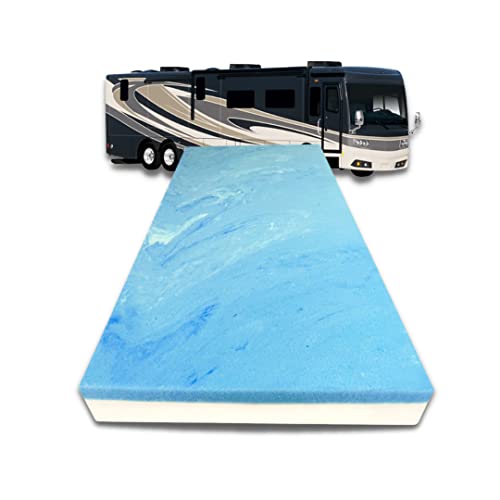
This 7-inch bunk mattress blends a top layer of ventilated gel memory foam with a base layer of high-density support foam. The gel layer promotes cooling and reduces heat buildup, which can be beneficial for bunk bed sleepers who tend to overheat at night. The multi-layer design offers improved pressure relief and a cushioned feel, suitable for those who want more comfort on longer trips or for side sleepers who need a little extra contouring around the hips and shoulders.
Thicker bunk mattresses can affect clearance in tight bunks, so confirm your clearance height before selecting this option. For RVs with little headroom, the added thickness may matter. The fabric-free construction notes suitability for customization with a cover or protective sheet, and its USA origin aligns with preferences for domestic manufacturing and quality control often highlighted by travelers.
Camping World Cozyway RV Bunk Mattress – 4″ Thick Memory Foam

The Cozyway bunk mattress from Camping World emphasizes a reversible design with a 4-inch thickness, aiming to provide flexible comfort for campers who want to tailor the feel of the bunk on a per-night basis. Memory foam adapts to body shape, offering noticeable pressure relief and reducing tossing and turning. Its compact dimensions help it fit into many RV bunk frames, and the reversible feature supports preferences for softer or firmer sleep surfaces without needing a separate topper.
In bunk configurations where space is constrained, a 4-inch option can be a good balance between weight, height, and comfort. The reversible design can be an appealing feature for households with different sleepers, especially on family trips where bunk usage varies from night to night. Always verify your bunk width and length to ensure the mattress aligns with the frame geometry and corner post dimensions for a secure fit.
FoamTouch 6-Inch Custom Size Camper/RV Bunk Mattress

FoamTouch offers a 6-inch bunk mattress with a 1-inch gel memory foam layer atop a 5-inch high-density base. The gel memory foam portion aims to provide cooling and contouring comfort, while the dense base ensures reliable support for all-night sleeping. Availability in custom sizes can help campers tailor the mattress to unusual bunk dimensions, making it a flexible option for various RV layouts or DIY installations.
Key considerations include the balance between memory foam comfort and the durability of the base layer under repeated bending or flexing in travel. The 1.8 density, 44 ILD-like feel supports a long-lasting shape, while the overall thickness must be matched to the bunk’s clearance and your preferred sleeping surface. For those who want a semi-custom approach, this option offers adaptable sizing and a solid middle-ground feel.
Milliard Memory Foam 5 Inch Narrow Cot Mattress (2 Pack)

This option comes as a 2-pack of five-inch memory foam cot mattresses designed for narrow bunk or cot setups. The design integrates four inches of durable base foam with one inch of memory foam on top for pressure relief and improved contouring. The compact width and two-pack option can be cost-efficient for families or group trips where extra sleep surfaces are needed for guests or bunk expansions.
Versatility is a plus here: these can serve as guest cots indoors, floor mattresses for sleepovers, or compact RV bunk replacements. The set provides a soft-to-medium feel that caters to varying sleeper preferences, with washable covers for easy maintenance. Ensure your bunk’s inner dimensions align with the cot mattress width and length before purchasing multiple units.
Buying Guide: Key Considerations For Camper Bunk Mattresses
Choosing the right bunk mattress for a camper involves assessing space, durability, and sleep quality. Below are essential factors to compare across options:
- Size and fit: Bunk dimensions vary widely. Measure width, length, and available height to prevent misfits or bulkier mattresses from interfering with lofts, safety rails, or ladder access.
- Foam density and ILD: Higher density foams tend to last longer and resist sagging, which is important in moving RVs. ILD affects the firmness; balance support with comfort based on preferred sleeping position.
- Layer composition: Gel memory foam adds cooling and contour, while a dense base foam provides support. Multi-layer designs can improve pressure relief without excessive thickness.
- Durability and safety: Look for CertiPUR-US or equivalent certifications to ensure low VOC emissions and safe materials for enclosed spaces common in campers.
- Cover and maintenance: Removable, washable covers simplify upkeep in travel conditions. Consider whether a cover is included or if you’ll need to source one separately.
- Weight and installation: Lighter mattresses are easier to handle during setup and breakdown. However, weight may impact bunk stability and vehicle load.
- Cooling and temperature: For hot sleepers, consider gel-infused foams or ventilated layers to reduce nighttime heat buildup in compact bunks.
- Budget and longevity: Durable bunk mattresses may have a higher upfront cost but can last longer across many trips, offsetting frequent replacements.
- Customization options: Some brands offer cut-to-size or adjustable thickness, which can be helpful for unique bunk frames or corner cut bunk designs.
Comparative Takeaways
- For space-limited bunks, narrow or 4–6 inch profiles provide a practical balance between comfort and clearance.
- Gel memory layers improve cooling in bunk environments, particularly for shared bunks where two sleepers may have different temperature preferences.
- High-density foams boast longevity and support but may feel firmer; consider pairing with toppers if softer surfaces are desired.
- Custom or corner-fit bunk mattresses can maximize space in non-standard bunk layouts but ensure compatibility with mounting hardware and edge rails.
Across these options, the goal is to align mattress thickness, material feel, and bunk dimensions with travel needs, ensuring comfortable nights on the road without sacrificing bunk accessibility or safety.