Choosing the right material for knives affects performance, durability, and care. From premium kitchen blades to customizable handles, the material you select shapes edge retention, cutting feel, and long-term maintenance. This article spotlights five Amazon options that showcase popular knife materials used in blades and handles today. Whether upgrading a chef’s knife trio or refining a personal collection with stand-out handle components, the choices below illustrate how material science translates into real cooking and crafting benefits for American home cooks and hobbyists alike.
| Product | Primary Material | Notable Feature |
|---|---|---|
| Material Knife Trio | Heat-treated and cryogenically tempered; 13-degree edge for razor-like sharpness | |
| Cool Hand G10 Handle Scales | High hardness; excellent insulation; easy to shape and engrave | |
| Camel Bone Knife Scales | Natural material with ready-to-trim potential for unique handles | |
| Tinlade G10 Spacer Sheets | Durable, heat- and moisture-resistant; suitable for various knife builds | |
| Kathfly G10 Spacer Sheets | Multi-color options; versatile for decorative and functional spacers |
Carbon Stainless Japanese Knife Trio

The Material Knife Trio combines premium Japanese steel with a three-layer construction that emphasizes strength and resilience. The blades are heat-treated at 300°F before cryogenic tempering at -250°F, altering the steel’s molecular structure to improve hardness, edge retention, and durability. A 13-degree edge profile was engineered after extensive testing to deliver razor-sharp precision with every cut. This set reflects a thoughtful blend of craftsmanship and everyday functionality, making it a compelling option for home chefs who value performance and style in the kitchen.
Care considerations align with high-carbon Japanese steel: hand washing is recommended to minimize corrosion risk, and a proper honing schedule helps maintain edge integrity over time. The trio is designed for chopping and cutting tasks typical in home kitchens, offering a balance of lightweight maneuverability and robust cutting power. While the materials deliver notable performance, users should monitor moisture exposure and promptly dry blades after cleaning to sustain longevity.
G10 Knife Handle Scales

These Cool Hand handle scales are made from G10, a robust epoxy resin and fiberglass composite known for its high hardness and abrasive resistance. G10 functions well in demanding environments—offering excellent insulation and moisture resistance while remaining lighter than most metal options. The material is easily processed by hand, with potential for sandblasting or laser engraving to create custom finishes. Because G10 holds sharp edges well and resists warping, it is a favored choice for knife handles that require long-term stability and a comfortable grip in varied conditions.
G10’s durability comes with practical handling considerations: while it resists heat and moisture, it can be somewhat brittle if subjected to extreme impact. For handle-making projects, these scales provide a stable foundation for shaping, drilling, or pairing with liners and spacers. Hobbyists often appreciate G10’s versatility, ease of customization, and professional appearance, especially when designing personalized knife sets or restoring worn grips.
Camel Bone Knife Scales

These Malayan Products camel bone knife scales offer a natural material option for custom handle crafting. The scales are 5 inches long with a width of about 1.5 inches and a thickness profile around 0.3 inches at the peak, providing a comfortable grip and a distinctive natural pattern. They are pre-cut and ready to trim and shape to the desired handle profile, making them appealing for knife makers seeking traditional, organic aesthetics. Camel bone has long been valued for its tactile feel and warmth, contributing to a classic, collectible knife appearance.
Care guidance for natural bone includes conditioning to prevent drying and potential cracking over time. While bone scales can present attractive color and patina, they may require more attentive maintenance in humid environments compared with synthetic materials. Proper sealing and gentle handling help preserve the bone’s look and performance for years of use.
Tinlade G10 Knife Handle Spacer Sheets
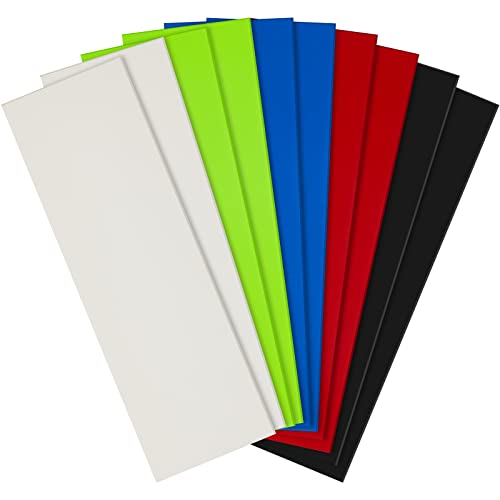
The Tinlade spacer sheets are made from G10, a composite material combining epoxy resin and fiberglass. The sheets are designed as spacers for knife handles, offering sturdy structure that resists deformation and remains waterproof across a range of temperatures. Each package includes 10 pieces, sized at 6.3 x 2 x 0.04 inches, suitable for various sharpening and handle-building tasks. The material’s density supports precise alignment of scales, pins, and bolsters, improving overall knife handling and balance in custom builds.
Practical notes include the ability to drill, saw, sand, or polish these spacers to fit custom handles. When working with G10 spacers, engineers and hobbyists should use appropriate safety gear to manage dust during cutting, and confirm compatibility with the chosen handle scales to ensure a snug, durable fit that maintains blade alignment and grip comfort.
Kathfly G10 Knife Spacers

The Kathfly spacer kit provides 30 pieces of G10 knife handle spacers in eight color options. Each spacer measures 6.3 x 1.97 x 0.04 inches, and the kit enables builders to customize knife handles with color-coded or decorative liners. Like all G10 spacers, these are made from a durable glass fiber and epoxy resin composite that remains stable in high and low temperatures, resists moisture, and holds up to cutting and drilling work. The color variety supports both functional and aesthetic design goals for hobbyists and professional makers alike.
When integrating spacers into knife builds, consider color coordination with handle scales and blades, as well as the spacer thickness to maintain proper blade alignment. G10 spacers are highly adaptable for a wide range of scales and liner configurations, making them a versatile choice for personalizing knives without sacrificing strength or longevity.
Buying Guide
Material choice drives knife performance, ergonomics, and care requirements. This guide outlines key considerations to help buyers compare blade materials, handle substrates, and customization components across the featured products.
- Edge retention and hardness: Materials like premium Japanese steel offer strong edge retention, but require proper care to prevent corrosion. Carbon content and tempering processes determine how long a blade stays sharp under regular use.
- Corrosion resistance: G10 and other synthetic composites excel in moisture-prone environments, making them ideal for handles and spacers that see frequent water exposure. Natural materials like camel bone or camel bone scales require sealing and drying to minimize moisture-related issues.
- Durability and weight: Handle materials vary from dense G10 to bone and wood. G10 provides excellent rigidity and weight balance for heavy-duty use, while bone and wood offers warmth and aesthetics but may demand more maintenance.
- Workability and customization: For hobbyists, G10 spacers and handle scales are highly adjustable with common tools (drill, saw, sander, laser), enabling personalized handles and precise blade assembly without specialized equipment.
- Maintenance and care: Stainless and carbon steel blades need drying, oiling, and occasional honing. Natural handles require conditioning or sealing to prevent cracking or drying, especially in fluctuating humidity or temperature.
- Cost and availability: Material availability affects project scope. G10 parts are widely available and affordable, while natural bone scales may be more decorative and require careful sourcing and curing for consistent results.
When choosing between blade materials and handle components, consider the intended use (kitchen cooking, hobby knife building, or display), environment (moisture, temperature, and cleaning frequency), and maintenance willingness. A balanced approach—combining a durable blade with a compatible, comfortable handle material—tends to yield the most reliable performance over time. The selected products demonstrate common material categories used in knives today, from high-performance steels to versatile G10 composites and natural bone options for customization.
Comparison Of Common Knife Materials
| Material | Pros | Cons | Best For |
|---|---|---|---|
| Carbon Stainless Steel | Strong edge retention; versatile; relatively easy to sharpen | Prone to rust if not dried and oiled | Everyday kitchen knives and professional blades |
| G10 (Composite) | Excellent durability; moisture and heat resistant; easy to work with | Can be brittle under extreme impact; some may prefer wood for feel | Handle scales and spacers; outdoor and hobby knife builds |
| Camel Bone | Natural material with warm feel and distinctive look | Requires care to prevent drying/cracking; less durable than synthetic options | Decorative handles; traditional or collectible knives |