Choosing the right geotextile fabric can dramatically extend the life of a gravel driveway by reducing weed growth, preventing soil intrusion, and promoting proper drainage. This guide highlights five leading options designed for American driveways, focusing on durability, permeability, and installation ease. Whether you’re building a new gravel path or replacing worn underlayment, the right fabric helps stabilize the base and preserve a smooth, long-lasting surface. Below are concise product overviews, followed by a practical buying guide to help you compare options and select the best fit for your driveway situation.
| Product (Brand / Model) | Size / Coverage | Weight (oz) | Key Benefit |
|---|---|---|---|
| VEVOR 6×100 Non-Woven Geotextile | 6 ft x 100 ft | 8 | High strength non-woven with erosion, damp, and tear resistance; excellent drainage and weed control |
| Super Geotextile Woven Fabric | 4 ft x 100 ft | 4 | Dimensionally stable woven fabric for long-term stabilization; up to 50-year performance when buried |
| Happybuy Driveway Fabric | 13 ft x 60 ft | 5 | Large coverage with strong tensile strength; weed suppression and soil stabilization |
| EXTRAEASY Driveway Fabric | 13 ft x 115 ft | 3.2 | Extensive coverage with easy installation and robust permeability |
| mychoiii 13×60 Ft Geotextile | 13 ft x 60 ft | 5 | Commercial-grade underlayment with high tensile strength for road stabilization |
The following sections describe each product in more detail, including material construction, installation considerations, and the types of gravel driveways they are best suited for. All descriptions reference the features provided by each manufacturer to help you compare performance characteristics side by side.
VEVOR Heavy-Duty Geotextile For Gravel Driveways

The VEVOR fabric uses an 8 oz non-woven polypropylene construction designed to serve as a robust separation layer under gravel. With approximately 350N tensile strength, it resists tearing and erosion while allowing water and air to pass. This permeability supports drainage and soil health, while the non-woven structure enhances filtration and weed suppression. The fabric is described as erosion-proof, damp-proof, and tear-proof, making it a reliable underlayment for gravel driveways and garden paths.
Installation is straightforward: roll out the fabric, cut to length, and place it over the prepared surface. Its heavy yet flexible material handles uneven ground, helping to maintain gravel alignment and minimize rutting. Because it is soil-friendly, it promotes nutrient retention below the surface while enabling water to reach the subgrade. This makes it well-suited for driveways with variable slopes where effective drainage is critical.
Super Geotextile Woven Fabric For Driveway And Road Stabilization

This product is a true 4 oz woven polypropylene geotextile designed for driveway and road stabilization. The woven construction provides high tensile strength and dimensional stability, which helps resist shifting and deformation under load. It’s optimized for easy installation, with the ability to cut one piece to exact dimensions to minimize seams and waste. The manufacturer notes long-lasting performance, stating that it can last up to 50 years if properly buried, offering a durable solution for long-term projects.
The fabric supports gravel bases by providing effective separation and filtration while reducing weed intrusion. It is suitable for larger driveways and roadbeds where heavy vehicles may pass over the surface. The combination of strength and stability makes it a solid choice for homeowners seeking a long-term stabilization layer with straightforward installation and reliable performance.
Happybuy Driveway Fabric, 13x60ft Commercial Grade
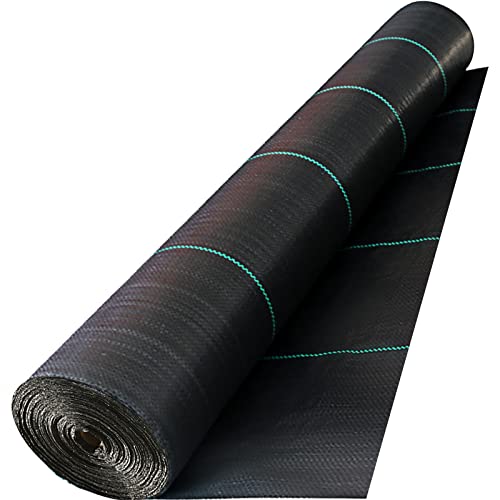
The Happybuy fabric measures 13×60 ft, providing 780 square feet of coverage with a 5 oz high-density woven polypropylene construction. It is designed for durability, featuring strong tensile strength (listed at 600 lbs) to support gravel and heavy loads while maintaining soil and moisture permeability. The width is shipped folded for transport, which may require careful unfolding and cutting to fit irregular driveway shapes. Nevertheless, the material’s durability and weed suppression capabilities make it suitable for long-lasting driveway stabilization and garden drainage projects.
Applications span driveway stabilization, general landscaping, and drainage works. The fabric helps protect subgrade integrity by reducing soil erosion and weed growth, while still allowing adequate water flow to prevent pooling. Its commercial-grade composition is aimed at homeowners undertaking heavier-duty yard or property improvements, where a larger area coverage and higher pull strength are beneficial.
EXTRAEASY Driveway & Landscape Fabric 13×115 Ft

The EXTRAEASY product offers a large coverage area at 13×115 ft, with a 3.2 oz woven polypropylene construction that emphasizes tear resistance and durability. Its heavy-duty design is paired with good air and water permeability, ensuring gravel filtration and drainage while maintaining a stable base under heavy loads. The large size reduces the number of seams, helping to minimize movement and weed passage along driveways with long expanses.
Installation is described as straightforward: unroll, cut to fit, and lay down. The fabric is designed for easy handling on large-scale landscaping and driveway projects, with reliable weed control and drainage characteristics. This makes it a practical option for those needing broad coverage with dependable performance in both residential and commercial gravel applications.
mychoiii 13×60 Ft Geotextile Underlayment

The mychoiii geotextile measures 13×60 ft and uses a 5 oz woven polypropylene fabric, delivering about 780 square feet of coverage with an impressive 800 lbs tensile strength. This heavy-duty underlayment is designed for ground stabilization, road foundation, and weed suppression. The product is described as tear-proof and corrosion-resistant, making it suitable for long-lasting driveways, riprap bases, and other heavy-duty landscaping projects where stability and rock placement are critical.
Its role as a separation layer helps prevent rutting and pothole formation by maintaining a consistent base. The fabric’s permeability supports drainage and moisture exchange with the subgrade, contributing to healthier soil conditions beneath gravel layers. It is well-suited for commercial-grade driveway projects and other large-scale stabilization tasks where durability and load-bearing capacity are essential.
Buying Guide
When selecting geotextile fabric for a gravel driveway, several factors influence long-term performance. This guide highlights the key purchase considerations, compares common fabric types, and provides practical installation tips to help you choose the best option for your site conditions and traffic loads.
- Weighing options: Non-woven vs woven. Non-woven fabrics (like VEVOR) excel at filtration, weed suppression, and drainage, creating a good separation layer between the subgrade and gravel. Woven fabrics (such as Super Geotextile or mychoiii) offer high tensile strength and dimensional stability, making them ideal for long-term stabilization under heavy traffic. For very heavy loads or uneven ground, a heavier non-woven (8 oz) or a heavy woven (4–5 oz) is often preferred.
- Permeability and drainage: High permeability helps water move through the bed, reducing puddling and frost-related heave. Permeability also preserves soil moisture balance and supports plant root health in nearby areas. Ensure the product description notes breathable and water-permeable properties.
- Size and coverage: Larger areas reduce seams and potential weed intrusion at joints. Measure the driveway precisely and consider buying slightly more material to accommodate curves, slopes, and overlaps. Note that some products ship folded or folded width for shipping efficiency; plan for unfolding and trimming during installation.
- Durability and lifespan: Durability depends on material (non-woven vs woven) and thickness (oz). Some products claim multi-decade lifespans when buried, while others are designed for shorter-term weed control in lighter-duty installations. Consider the expected traffic and climate when estimating lifespan.
- Unseamed transitions and overlaps: Plan to overlap seams by several inches to maintain a continuous barrier. Secure with landscape staples or pins where appropriate, particularly on slopes or high-wind sites. Larger roll-out during installation minimizes seam alignment issues.
- Weed suppression and soil separation: Almost all geotextiles serve as weed barriers and soil separators. Choose a product with sufficient strength to resist puncturing and tearing from gravel shifting. For gardens and beds adjacent to driveways, select fabrics that balance weed suppression with adequate water flow.
- Installation practicality: Some fabrics come with convenient features like included staples, easier rolling, or clear cut lines. For large driveways, a wide, continuous piece reduces seams and simplifies maintenance. Always follow manufacturer guidelines for cut lengths and overlap.
In practice, the best choice will depend on driveway size, expected vehicle loads, climate, and whether weed suppression or long-term stabilization is the primary goal. For residential driveways with moderate traffic, a 5 oz woven or an 8 oz non-woven option offers solid performance with good drainage. For larger areas or higher loads, a heavier non-woven or thicker woven fabric provides additional margin against ruts and shifting. Evaluate the five products above against these criteria to identify the optimal balance of coverage, strength, and permeability for your project.