Gas-powered tankless water heaters deliver on-demand hot water with a compact footprint, helping households reduce standby losses and improve efficiency. This guide highlights five strong options that balance high flow, safety, and versatility for American homes. Use the summary table below to compare core specs at a glance, then dive into detailed overviews to help you choose the right model for your most-common hot-water needs.
| Product | Brand | Max Flow (GPM) | BTU | ||
|---|---|---|---|---|---|
| FOGATTI 7.5 GPM Gas Tankless On Demand | FOGATTI | 7.5 | 170,000 | Indoor | High-capacity for multitasking households; precise temperature control |
| Rinnai V75IN Tankless Water Heater | Rinnai | 7.5 | — | Indoor | Compact, energy-efficient with strong flow to multiple points |
| Orbek Natural Gas Tankless Water Heater | Orbek | 4.3 | 100,000 | Indoor | CSA certified; multiple safety protections; three heating modes |
| Rinnai RX199iN Condensing Tankless | Rinnai | 11.1 | 199,000 | Indoor/Outdoor | Smart Sense control; Versa Vent; up to 7 fixtures; high efficiency |
| Rheem RTG-95DVLN-3 | Rheem | 9.5 | — | Indoor | High-efficiency non-condensing; saves water with setting |
FOGATTI 7.5 GPM Gas Tankless On Demand
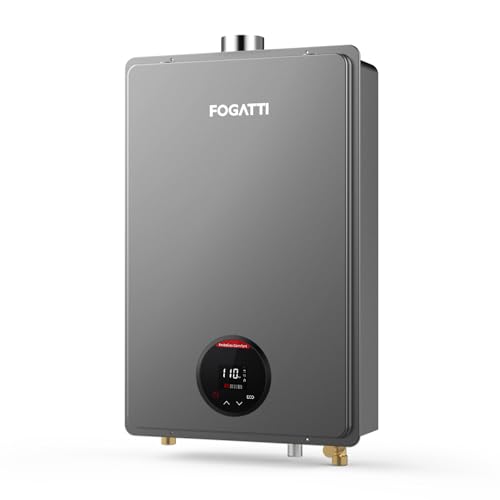
FOGATTI’s model delivers robust on-demand hot water with a substantial heating capacity and a steady 7.5 GPM output. It relies on a high input of 170,000 BTU to quickly raise water temperature as it flows through your fixtures. Designed for indoor installation, it supports multiple outlets simultaneously, making it well-suited for kitchens, bathrooms, and small-to-mid-sized homes. The unit emphasizes precise temperature control, aided by a four-stage combustion system and built-in sensors that help maintain consistent comfort across a range of conditions.
- Heating capacity: 170,000 BTU
- Max flow: 7.5 GPM
- Indoor installation
- Four-stage combustion with sensors
- Accurate temperature control (±1°F typical, depending on supply)
For households with moderate to high hot-water demand, this model offers dependable performance across showers, sinks, and appliances without the wait associated with storage heaters. It is suitable for homes where you want fast response and reliable hot water for several outlets at once, though installation should account for venting and space considerations typical of gas tankless systems.
Orbek Natural Gas Tankless Water Heater

Orbek’s gas tankless model provides up to 4.3 GPM with a 100,000 BTU input, designed to serve 2-3 fixtures at once. It emphasizes safety with CSA certification and multiple protective features, including dry combustion, overheat protection, water leakage protections, flame failure protection, and high-water-pressure protection. The unit also offers three heating modes, giving flexibility to adapt heat delivery to seasonal needs and energy considerations. Its robust heat exchanger made from oxygen-free copper supports reliable heat transfer and corrosion resistance.
- Max flow: 4.3 GPM
- BTU input: 100,000
- CSA certified
- Six safety protections (dry combustion, overheat, leakage, flame failure, high pressure)
- Three heating modes for seasonal efficiency
Ideal for smaller homes or apartments where space and reliability matter, Orbek offers a safe, compact solution that delivers dependable hot water without the complexity of larger high-BTU units. Installation should consider venting and clearances typical of gas-powered tankless systems.
Rinnai RX199iN Condensing Tankless

The RX199iN stands out with a high 11.1 GPM capacity and a formidable 199,000 BTU input, making it a premier option for larger homes or properties with significant simultaneous hot-water needs. It is rated for indoor or outdoor installation thanks to the Versa Vent system and supports dual-fuel operation (propane or natural gas) via its Smart Sense control. The unit emphasizes efficiency with a UEF of .98 and offers smart features like Quick Flush for easier maintenance. A Controlr module enables WiFi control when purchased separately.
- Max flow: 11.1 GPM
- BTU input: 199,000
- Indoor/outdoor with Versa Vent
- Propane or natural gas (Smart Sense gas control)
- UEF .98, Quick Flush; optional Controlr WiFi module
For homes with multiple bathrooms or large households, RX199iN provides ample capacity and modern controls to optimize comfort. Installation involves adequate space, venting, and a reliable power supply; wireless control options add convenience for future-smart-home integration.
Rheem RTG-95DVLN-3

Rheem’s RTG-95DVLN-3 is a high-capacity indoor tankless unit designed for robust, steady hot water supply with a 9.5 GPM deliverable flow. It emphasizes high efficiency and practical use by offering a built-in setting that can help conserve water—potentially saving thousands of gallons per year when used with other energy-saving practices. While non-condensing, it remains a solid choice for homeowners prioritizing reliability, straightforward installation, and steady performance for typical family needs without requiring outdoor exposure.
- Max flow: 9.5 GPM
- Indoor installation
- High efficiency non-condensing design
- Water-saving setting; reduces water waste
Rheem’s model fits homes where a strong, consistent hot-water stream is essential across several fixtures. It blends straightforward operation with dependable efficiency, suitable for indoor installs where venting and space permit a dedicated gas line and proper clearance.
Buying Guide
Choosing a gas tankless water heater involves balancing flow needs, space, and installation considerations. Start by estimating your peak hot-water demand—think about shower time, laundry, and dishwasher usage simultaneously. A unit’s GPM rating should align with the number of outlets you expect to operate at once. Condensing models typically offer higher efficiency and lower operating costs but can come with a higher upfront price and more complex venting. Non-condensing units tend to be simpler and cheaper to install but waste more energy over time.
Gas type and venting are critical. Most models support natural gas, some also accept propane, but you must match the appliance to your home’s fuel source and venting strategy. Indoor installations usually require venting to the outdoors; outdoor or dual-vent designs require weather-resistant venting and protection from the elements. Proper vent sizing and clearances affect performance and safety. Check for CSA or equivalent certifications for safety and reliability, and review warranty terms to understand service expectations if issues arise.
Efficiency metrics like the energy factor (EF) or the newer uniform efficiency rating (UEF) help forecast operating costs over time. Condensing units recover more heat from exhaust gases, improving efficiency, but they may demand more precise installation and maintenance. Regular flushing and annual inspections keep scale and mineral buildup at bay, preserving flow rates and longevity. If you expect to run many fixtures at once, prioritize higher GPM ratings (8–11 GPM range) and consider models with smart controls or diagnostic features for better management.
Other considerations include space and noise levels, warranty length, and compatibility with your home’s electrical and plumbing systems. For larger households, a high-output model like RX199iN or similar 11+ GPM units may be worthwhile, while smaller homes may be well-served by mid-range options such as the FOGATTI or Orbek. Always plan for safe installation by consulting a licensed plumber or a gas technician to ensure venting, gas supply, and gas line sizing meet local codes and the unit’s requirements.