Basesments often face moisture, cold concrete, and high-traffic use, so choosing the right flooring is essential. The options below offer durable, easy-to-clean surfaces that perform well in American basements—whether you’re finishing a workshop, gym, laundry area, or family play space. From tough epoxy coatings to cushioned foam tiles and drainage-ready mats, these picks balance protection, comfort, and installation simplicity. The table after this paragraph highlights each product’s strengths for basement environments, helping you compare at a glance.
| Product | Brand | Why It Fits Basements |
|---|---|---|
| Rust-Oleum Epoxy Shield Basement Kit | Rust-Oleum | Durable, two-part epoxy on interior concrete; satin finish that resists stains and wear; quick walk-on and foot-traffic readiness |
| Epoxy Floor Kit – Good Full Kit | Epoxy-Coat | All-in-one epoxy kit with decorative flakes; high-build coating for lasting basement protection; low-odor, VOC-conscious |
| Drainage Interlocking Floor Tiles | EVANCENT | Interlocking PVC tiles with drainage holes to prevent pooling; ideal for damp basement zones and showers |
| Sorbus Wood Grain Foam Tiles | Sorbus | Cushioned, easy-to-install foam tiles with a wood-like look; suitable for basements used as gyms or playrooms |
| Home Aesthetics Foam Tiles | Home Aesthetics | Interlocking foam mats with a wood-grain pattern; broad coverage and border pieces for clean edging |
Rust-Oleum Epoxy Shield Basement Kit

Rust-Oleum Epoxy Shield is a durable, two-part epoxy designed for concrete basement floors. The water-based formula creates a tough, chemical-resistant surface that stands up to stains, wear, and moisture common in basements. The satin finish offers a professional look that’s easy to clean and maintain over time.
- Two-part epoxy formula suitable for interior concrete floors.
- Satin finish simplifies cleaning and maintenance.
- Resists stains, abrasion, and general wear typical in basements.
- Walk-on ready in about 8 hours; regular foot traffic in 24 hours.
Epoxy Floor Kit – Good Full Kit

This complete all-in-one epoxy kit provides a professional-grade coating designed for garage and basement floors. It includes color resin, hardener, decorative flakes, a non-slip additive, cleaning granules, a mixing bucket, and a stir stick. The result is a single-coat coating with substantial thickness for a durable finish that’s resistant to moisture and everyday abuse.
- All components needed for one installation in a single kit.
- About 9.7 mils of coating thickness for solid protection.
- Zero or low odor with eco-conscious materials.
- Suitable for garages, basements, and other concrete surfaces.
Drainage Interlocking Tiles

EVANCENT drainage tiles are non-slip and interlock securely to create a floor that drains efficiently. Made from commercial-grade PVC, these tiles tolerate damp conditions and daily use while remaining comfortable underfoot. They’re particularly well-suited for walk-in basements, laundry areas, or spaces where moisture management matters.
- Interlocking design with drainage holes to prevent pooling.
- Non-slip surface enhances safety in damp areas.
- Interlocks snap together easily and can be cut to fit edges.
- Durable plastic construction designed for long-lasting basement use.
Sorbus Wood Grain Foam Tiles

Sorbus wood-grain foam tiles deliver a cushioned surface with a classic, wood-like aesthetic. The tiles interlock like puzzle pieces for a secure, seamless floor that’s easy to expand as spaces change. They’re well-suited to home gyms, basements used for playrooms, or workspaces where floor comfort matters.
- Wood grain foam tiles provide cushion and warmth on hard basement floors.
- Interlocking design creates a secure, seamless surface.
- Detachable borders allow edge customization for wall-to-wall layouts.
- Expandable and easy to disassemble for storage.
Home Aesthetics Foam Tiles
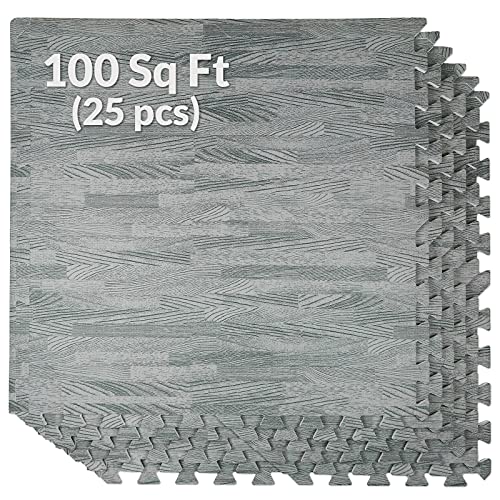
Home Aesthetics offers 100 square feet of foam tiles with a printed wood grain pattern, combining a natural look with soft, protective cushioned flooring. The 24×24 inch tiles snap together quickly and include border pieces for edging. This option is especially popular for basements used as playrooms, craft spaces, or light-duty work zones that benefit from comfort underfoot.
- 100 square feet total coverage with 24″ x 24″ tiles.
- Printed wood grain finish adds aesthetic appeal to basements.
- Interlocking puzzle edges for a secure fit and easy expansion.
- Includes border pieces to create clean perimeters.
Buying Guide
Key Purchase Considerations
When selecting basement flooring, consider moisture control, subfloor condition, and the intended use of the space. Epoxy coatings provide a durable, moisture-resistant surface ideal for workshops or laundry areas, but may require surface preparation and proper ventilation during application. Foam tiles offer comfort and quick installation, making them suitable for finished living spaces, playrooms, or home gyms. Drainage mats help manage damp floors by guiding moisture away and reducing standing water. Vinyl tiles offer a budget-friendly option that’s easy to install in utility rooms, while still providing a wipeable surface. Budget, maintenance, and long-term durability should guide your choice.
Types At A Glance
| Floor Type | Best For | Pros | Cons |
|---|---|---|---|
| Epoxy Coatings | Basement workshops, laundry rooms, garages | Durable, chemical resistant, easy to clean | Requires prep and ventilation; longer cure times |
| Foam Interlocking Tiles | Basement living spaces, playrooms, gyms | Comfortable, easy to install, expandable | Less durable under heavy furniture; may indent |
| Drainage Tiles | Damp or wet basements, showers, entryways | Excellent drainage, slip-resistant | Not a fully sealed surface; may require edge trimming |
| Vinyl Peel-and-Stick Tiles | Utility rooms, mudrooms, more budget-conscious basements | Easy DIY install, affordable | Less long-term durability; may not handle heavy moisture without proper underlayment |
DIY Versus Professional Installation
Epoxy coatings often benefit from professional prep and application to ensure even coverage and proper adhesion, particularly on troubled concrete. Foam tiles and peel-and-stick vinyl tiles are typically DIY-friendly, with straightforward interlocking or adhesive methods and minimal tools. Drainage mats are also DIY-friendly but may require careful layout planning to ensure consistent drainage and edge finishing. Consider your comfort with home improvement tasks and the space’s moisture level when deciding between DIY and professional installation.
Maintenance And Longevity
Maintenance should align with the flooring type. Epoxy surfaces are easy to wipe down and resistant to many chemicals, but they can require occasional re-coating after wear. Foam tiles require periodic cleaning and may need edge replacement over time. Drainage tiles are low-maintenance but should be kept dry to prevent mold growth. Vinyl options are simple to sweep and mop but should be protected from sharp impacts. For basements, prioritize moisture protection and a surface that remains comfortable underfoot, especially in areas you’ll spend time in.