Choosing the right floor mat for exercise equipment helps protect floors, reduce noise, and stabilize machines during workouts. This guide highlights five durable mats that suit treadmills, bikes, rowers, and home gyms, with objective specs to aid comparison and decision-making for American homes and garages.
| Product | Brand | Material / Size | Key Benefit |
|---|---|---|---|
| Marcy Fitness Equipment Mat and Floor Protector | MARCY | 1/4″ EVA foam; 78″ x 36″ x 0.25″ | High-impact cushioning and machine stabilization |
| ProsourceFit Puzzle Exercise Mat ½ in | ProsourceFit | ½” EVA foam; 24″ x 24″ tiles | Interlocking, versatile padding for home gyms |
| Cycleclub Exercise Bike Mat | Cycleclub | 6 mm thickness; approx. 30″ x 60″ | Tailor-made for bikes; protects floors from sweat and scratches |
| ProsourceFit Puzzle Exercise Mat ½ in (12 tiles) | ProsourceFit | ½” EVA foam; 24″ x 24″ tiles | Larger coverage with modular tiles; dampens noise |
| Sunny Health & Fitness Floor Protector Mat | Sunny Health & Fitness | High-density EVA foam; multiple size options | Heavy-duty protection with moisture resistance |
Note: The table above showcases a cross-section of mats designed for common home gym setups, balancing thickness, coverage area, and ease of cleaning. When choosing, consider floor type, equipment footprint, and noise tolerance to ensure the mat fits both the space and workout needs.
Marcy Fitness Equipment Mat For Treadmills And More
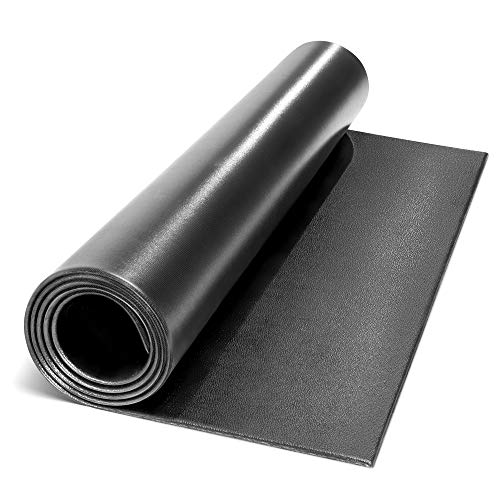
The MARCY mat uses a high-impact 1/4-inch EVA foam surface to absorb shocks caused by dropping equipment such as barbells and kettlebells. It provides a stable, non-slip surface that helps stabilize machines and reduce noise in home gyms. The mat is designed to protect floors from heavy equipment movement and vibration, while offering cushioning for floor-based exercises.
ProsourceFit Puzzle Exercise Mat ½ In, 24×24 Tiles
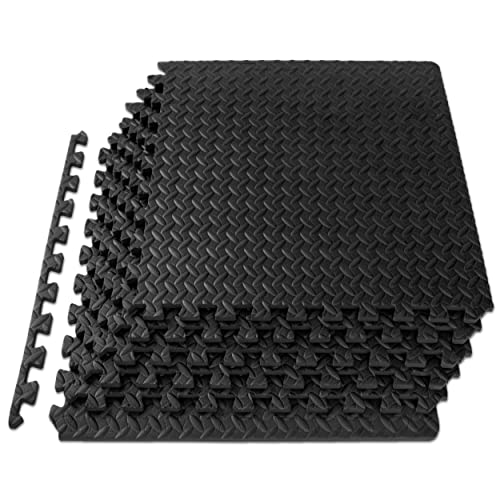
This ½-inch-thick EVA foam tile set offers durable, non-skid protection for home gyms. The interlocking tiles create a smooth, cushioned surface that reduces floor impact under workouts and provides a clean, flat area for exercises. Each tile is designed to be easy to clean and is suitable for various indoor spaces, including garages and playrooms.
Cycleclub Exercise Bike Mat For Indoor Trainers
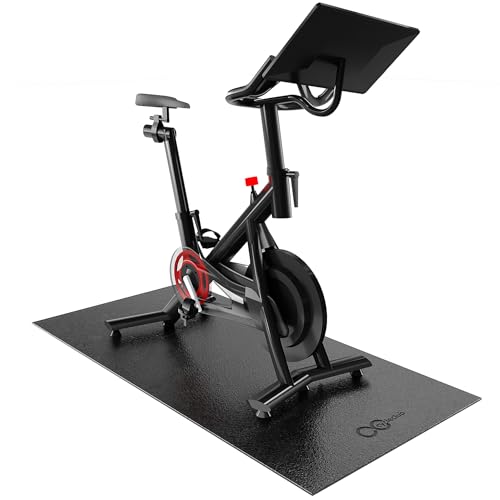
The Cycleclub mat is designed for exercise bikes and small treadmills, with a 30″ x 60″ footprint and about 6 mm thickness. It protects floors from sweat and scratches and can be cut to fit custom shapes. It emphasizes durability, non-slip performance, and a simple setup that fits most home bike trainers and compact cardio equipment.
Treadmill Mat And Bike Mat By EVEME

The EVEME mat offers a 47.3″ x 23.6″ footprint with 0.2″ thickness, designed to stay in place under large treadmills and ellipticals. It uses non-absorbent recycled NBR for resistance to water, sweat, and other liquids, making it suitable for high-use fitness areas. It helps protect both carpet and hard floors from noise, vibration, and wear.
Sunny Health & Fitness Floor Protector Mat

Sunny Health & Fitness offers a high-density EVA foam mat that provides heavy-duty protection against vibrations and scratches. It is versatile for yoga, Pilates, aerobics, and general machine use, and designed to be easy to clean and maintain. The mat minimizes floor damage while maintaining comfort during exercise sessions.
Buying Guide
- Mat thickness and density: Thicker mats (½ inch) offer more cushioning and noise reduction but can be bulkier to store. For heavy gym equipment, 1/4 inch to ½ inch EVA foam balances protection with usability.
- Size and coverage: Measure your equipment footprint and available floor area. Larger treadmills or bikes require mats with wide coverage, while interlocking tile systems can be tailored to fit odd spaces.
- Material and durability: EVA foam is common for its cushion and moisture resistance. Look for non-slip surfaces and edge-to-edge protection to prevent rolling or shifting during workouts.
- Water resistance and cleaning: Machines generate sweat, so choose mats with water resistance or easy-clean surfaces to maintain hygiene between sessions.
- Installation and maintenance: Interlocking tiles offer customizability but require assembly. Non-slip, self-adhesiveback mats reduce movement but may be harder to reposition later.
- Noise and vibration: Mats with dense foam and tight seams reduce noise and vibration transfer, which is helpful in shared living spaces or apartments.
- Compatibility with equipment: Some mats are specifically designed for bikes or treadmills, while others are universal. Assess whether your primary equipment type is covered and if you plan to expand.
- Storage and versatility: Interlocking systems provide modularity, enabling easy storage when not in use and reconfiguration for new workout layouts.
- Maintenance of safety: Ensure the mat provides a non-slip surface and edges-free for tripping hazards. Regularly check seams and connectors for wear.
Across these options, buyers should balance durability, floor protection, and space constraints. In homes with high-intensity workouts or heavy equipment, mats with robust cushioning and wide coverage offer the best long-term protection for both floors and devices. For compact spaces, interlocking tile systems can maximize protection without overwhelming available room.