Choosing a range hood with an external or remote blower can dramatically affect both venting performance and noise levels. This guide focuses on high-output, external-venting options that suit American kitchens—from island setups to wall-adjacent inserts. Remote or dual blowers place the motor away from the cooktop, often reducing perceived noise while maintaining strong airflow for heavy cooking. Below you’ll find five top-rated models designed for ducted, outside venting, along with practical buying considerations to help you compare performance, installation needs, and long-term maintenance.
| Product | Brand | Type | Max CFM | Size (inches) |
|---|---|---|---|---|
| ZLINE 721-RD-34 | ZLINE | Insert with Remote Dual Blower | 1200 | 34 |
| ZLINE KECOMi-RD-36 | ZLINE | Island Mount With Remote Dual Blower | 1200 | 36 |
| Awoco Split Insert | Awoco | Split Insert with 6″ Blower | 800 | 30 |
| Awoco RH-C06-42 | Awoco | Under-Cabinet 4 Speeds | 900 | 42 |
| Broan-NuTone BCSQ130SS | Broan-NuTone | Under-Cabinet Glacier | 375 | 30 |
ZLINE 721-RD-34 External Dual Blower Insert

The 721-RD-34 is designed for powerful, quiet venting with a ducted exterior setup. It features a remote dual-blower arrangement that concentrates the motor away from the cooking zone, helping to lower noise while delivering high airflow. Four speeds (from 280 to 1200 CFM) let you tailor extraction to the kitchen task, whether searing, stir-frying, or simmering. The 34″ width fits standard 36″ cabinets and offers robust coverage for larger ranges. Easy push-button controls manage fan speed and lighting, making operation straightforward during busy weeknights or weekend cooking marathons.
Key features include a powerful 1200 CFM maximum and a remote motor configuration that minimizes noise near the cooktop. Because it uses external venting, proper duct planning is essential to realize its full potential. Consider professional installation if your existing ductwork requires modification. The unit’s design emphasizes durability, with stainless construction and reliable lighting, supporting long-term use in busy American kitchens.
ZLINE KECOMi-RD-36 Island Mount With Remote Blower
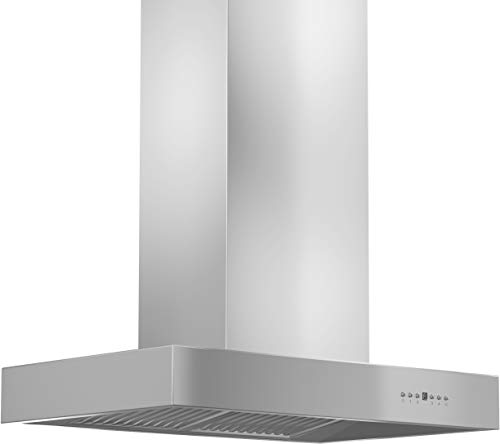
The KECOMi-RD-36 delivers serious power for island installations with a remote dual blower system. Its 36″ design provides extensive capture area for spacious cooking islands, reducing odors and heat buildup across larger kitchens. Four-speed control (280/460/670/1200 CFM) gives flexibility for everything from quick sautéing to high-heat broiling. The external motor configuration keeps noise away from the cooking zone, supporting a quieter kitchen environment during peak cooking times. The 36″ footprint pairs with many island setups, while the included lighting helps illuminate the cooking surface for safer, more precise work.
As with remote blowers, proper ductwork is essential. The external motor allows for quieter operation, but it imposes greater requirements on installation. The 1200 CFM capability is ideal for larger kitchens, but consider decoupling the hood from nearby walls to maximize sound attenuation. Maintenance remains straightforward with standard filters and accessible components, ensuring dependable performance over years of daily use.
Awoco Split Insert With 6″ Blower

Awoco’s 14-1/2”D Super Quiet Split Insert uses a two-piece design: a hood insert mounted above the stove and a separate blower unit mounted in the attic or ceiling. This split configuration isolates the noisy blower from the cooking area, delivering a calmer kitchen experience. It supports ducted venting to the outside through a 6″ exhaust and offers four speeds up to 800 CFM, paired with energy-saving LED lighting. The split setup is particularly well-suited to kitchens seeking a near-silent operation without sacrificing power. It includes a 12-ft power cord and a straightforward electrical connection, though installation requires attention to attic routing.
Pros here include substantial airflow with elevated quietness due to placement of the blower away from the cooktop. Cons involve more complex installation and the need to verify attic or overhead space can accommodate the blower assembly. Aesthetically, the unit emphasizes modern stainless styling and practical LED lighting to enhance the cooking surface without overpowering the room.
Awoco RH-C06-42 Under-Cabinet 900 CFM
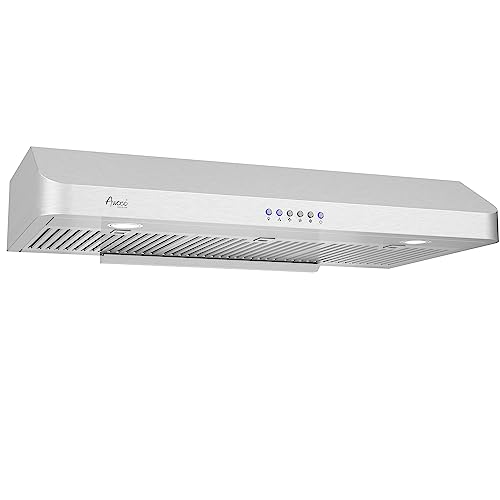
The Awoco RH-C06-42 combines a slim, 6″ profile with robust airflow for under-cabinet installations. It features four speeds reaching up to 900 CFM and top vents that facilitate ducted exterior exhaust. The 42″ width offers generous coverage for wider stoves, while two LED lights illuminate the cooking area for better visibility. This model emphasizes a sleek stainless finish and practical control with a multi-speed push-button interface. If your kitchen layout allows a slim hood with a strong exhaust, this unit provides a balanced blend of performance and space-saving design.
When planning installation, ensure adequate cabinet clearance and vent duct compatibility. The 6″ top vent interfaces with common ductwork, but some kitchens may require adapters or custom duct routing. Regular filter maintenance helps sustain performance, and the solid build quality supports daily use for years to come.
Broan-NuTone BCSQ130SS Glacier Under-Cabinet

The Broan-NuTone BCSQ130SS focuses on quiet operation and practical under-cabinet design. This 30″ model offers an ADA-friendly 1.5-sones performance at 375 CFM through a three-speed push-button control. LED lighting provides bright illumination of the cooking surface, and the Power Pack concept simplifies integration with standard cabinet configurations. The 30″ width makes it suitable for mid-size kitchens or spaces where a sleeker profile is preferred. It is designed for ducted venting to the outdoors, making it a solid choice for reliable daily use in traditional kitchen layouts.
Buying Guide: Key Purchase Considerations For External Blower Hoods
When evaluating external blower range hoods, consider how airflow, noise, installation, and maintenance intersect with your kitchen layout. The following factors cover common scenarios and help you compare different configurations—remote blowers, island mounts, and under-cabinet or insert designs.
- Required CFM and kitchen size: Larger kitchens or high-heat ranges demand higher CFM. Use a practical rule of thumb: aim for roughly 1 CFM per square foot of kitchen space, or higher for professional-style ranges. Remote blowers can push more air with lower noise, but require proper duct routing.
- Remote vs built-in blowers: Remote dual blowers place the motor away from the cooktop, reducing noise and vibration. Built-in blowers consolidate components but may generate more noise near the cooking zone. Your tolerance for sound and your ducting options will guide the choice.
- Island, wall, or under-cabinet installation: Island hoods suit open kitchens with an exposed cooktop; wall-mounted hoods work best against a wall with straightforward ducting; under-cabinet and insert models fit compact spaces but still rely on external venting to the outdoors.
- Ducting and vent size: External venting typically uses 6″ or larger ducts. Larger ducts reduce static pressure and improve airflow, but require compatible ceiling or wall routes. Plan for clean duct runs to minimize noise and maximize efficiency.
- Noise and efficiency: Look for low sones ratings, especially at higher speeds. Remote blowers generally contribute to quieter operation. LED lighting and energy-efficient motors also impact overall efficiency and running costs.
- Maintenance and filters: Stainless finishes and easy-clean filters (such as baffle or mesh) simplify upkeep. Accessible access panels and removable filters reduce maintenance time and extend hood life.
- Installation considerations: Some hoods require professional installation, especially those with attic or ceiling-mounted blowers or complex duct routing. Verify ceiling height, cabinet clearance, and electrical requirements before purchasing.
- Aesthetics and fit: Choose a finish (stainless steel is common) that complements your kitchen. Width should align with your cabinet or island dimensions for a balanced appearance and proper air capture.
- Warranty and support: Review manufacturer warranties and parts availability. A robust warranty can reduce long-term ownership concerns for high-use kitchens.
Comparing Remote Blower And Built-In Options
| Aspect | Remote Blower | Built-In Blower |
|---|---|---|
| Noise | Typically lower at the cooktop due to isolation | Higher near cooking surface |
| Installation | More complex due to duct routing to attic/ceiling | Usually simpler, but may still require ducting |
| Airflow Capacity | Often higher with dual or multiple motors | Strong performance, but limited by ducting and space |
| Maintenance | Motor in remote location may be easier to service | All components in one unit; easier access for some users |
| Upfront Cost | Usually higher due to additional hardware | Typically lower initial cost |
In summary, the choice between remote and built-in blowers hinges on your noise tolerance, kitchen layout, and willingness to manage more complex installation. For large or busy kitchens, remote dual blowers offer powerful extraction with quieter operation, especially when paired with island or wall-mounted designs. For space-constrained setups or simpler renovations, built-in blowers in insert or under-cabinet units still provide solid venting with practical maintenance.