For a small cafe, espresso gear must be compact, durable, and consistent. The five machines below balance commercial performance with user-friendly design, offering reliable extraction, good milk frothing, and minimal maintenance. They cover a range from semi-automatic to all-in-one models, with built-in grinders or frothers and varying water-tank sizes. This guide highlights each option’s strengths and gives practical buying notes to help owners pick a model that fits a tight footprint and daily demand.
Below is a quick at-a-glance comparison of the five selected machines, focusing on core capabilities, water capacity, and standout features that matter in a cafe setting.
| Product | Brand | Key Strength | Water Tank / Notes |
|---|---|---|---|
| Ninja Luxe Café Premier ES601 | Ninja | 3-in-1: espresso, drip coffee, cold brew; Integrated grinder | Integrated grinder; 25 grind settings |
| CASABREWS CM5418: Compact 20 Bar Espresso | CASABREWS | 20 Bar pressure; milk frother; compact | 34 oz removable water tank |
| SHARDOR 20 Bar Espresso Machine With Touchscreen | SHARDOR | 20 Bar pressure; touchscreen; temperature control | Removable water tank; auto-descaling |
| Gevi 20 Bar Commercial Espresso Maker With Milk Frother | Gevi | 20 Bar pump; stainless steel; compact | Built-in milk frother; pressure gauge |
| Mr. Coffee Espresso And Cappuccino Machine | Mr. Coffee | 15-Bar pump; semi-automatic; milk frother | Automated milk frother; 3-in-1 functions |
Ninja Luxe Café Premier ES601

The Ninja ES601 blends espresso, drip, and cold brew capabilities into a single compact unit, enabling a small cafe to offer a diverse menu without multiple machines. It provides two espresso styles along with several drip coffee options and two cold-brew styles, accommodating a range of customer preferences. Barista Assist Technology guides grind size, weight-based dosing, and adjustments for temperature and pressure to balance flavor with minimal guesswork. A built-in conical burr grinder features 25 settings, supporting a wide bean profile and consistent grind quality across drink options. This model suits cafes prioritizing workflow efficiency and space savings.
Operationally, the ES601 supports quick turnarounds by consolidating functions, which can streamline staff training and maintenance. The integrated grinder reduces bean handling steps, while the accessory storage helps keep tampers and accessories organized behind the bar. Regular cleaning and burr maintenance are recommended to preserve grind consistency and flavor, especially when serving a high mix of drinks daily. For venues where space and versatility drive menu breadth, this machine offers a practical, all-in-one workflow.
CASABREWS CM5418: Compact 20 Bar Espresso

The CASABREWS CM5418 delivers a professional 20-bar Italian pump in a compact footprint, ideal for small cafe counters where space is at a premium. A built-in milk frother supports rich microfoam for lattes and cappuccinos, complementing a stainless steel exterior that stands up to daily use. The 34-ounce removable water tank minimizes frequent refills during service. A pressure gauge helps baristas monitor extraction pressure, enabling more precise adjustments for taste preference. With a 1350W boiler, heat-up times are brisk, supporting reasonable throughput for busy mornings and lunch rushes.
Operation is semi-automatic, offering staff control over shot timing while retaining a straightforward workflow for milk texturing. The machine’s robust build and compact size make it a strong contender for cafes that want cafe-quality drinks without committing to larger, commercial-grade equipment. Regular backflushing, descaling, and frother cleaning will sustain performance and flavor over time, particularly with daily high-volume use.
SHARDOR 20 Bar Espresso Machine With Touchscreen

SHARDOR’s 20-bar system emphasizes consistency with a one-touch touchscreen that simplifies drink selection. It supports single or double-cup extraction and provides a manual mode to fine-tune coffee strength. Temperature control and automated descaling facilities help maintain flavor integrity in a busy cafe setting. The built-in milk frother enables quick foam preparation, while the stainless steel construction offers durability for daily service. The auto shutoff after 15 minutes of inactivity helps manage energy use in slower periods without compromising readiness for the next rush.
For staff workflows, the touchscreen interface reduces training time and accelerates order fulfillment during peak hours. The machine’s quick heat-up and reliable steam performance support a steady cadence of latte, cappuccino, and macchiato servings. Regular cleaning of the steam wand and frothing components is recommended to prevent milk residue buildup and to preserve moisture-rich microfoam across service days.
Gevi 20 Bar Commercial Espresso Maker With Milk Frother

Gevi pairs a robust 20-bar pump with stainless steel construction and a focused compact footprint, making it suitable for cafe counters with limited space. The pressure gauge supports manual adjustments and consistent extractions, while the integrated milk frother produces creamy microfoam ideal for latte art. NTC temperature control and pre-infusion help manage shot quality across different beans and roast levels, delivering café-quality beverages without the bulk of larger commercial machines.
The Gevi unit is designed for reliability and straightforward maintenance. Regular backflushing and periodic descaling will help maintain performance, and its durable build is well-suited for daily operation in high-traffic settings. For cafes needing a professional-grade machine that fits a tight space, Gevi offers a strong balance of features, durability, and ease of use.
Mr. Coffee Espresso And Cappuccino Machine
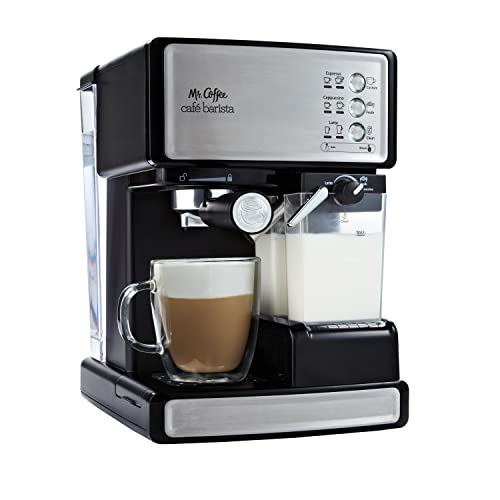
Mr. Coffee offers a budget-friendly entry point with a 15-bar pump and a semi-automatic interface that enables precise shot timing. The machine supports cappuccino and latte options and includes an automated milk frother to simplify foam creation, making it accessible for staff new to espresso service. While it may not handle extreme volumes as efficiently as higher-end models, it provides reliable performance for small-volume operations or as a starter option for new cafes. Routine cleaning and routine milk system maintenance help preserve flavor and froth quality.
For venues that prioritize simple operation and predictable results, Mr. Coffee can be a dependable workhorse. It is particularly suitable where staff training time is limited and where a compact footprint is essential. As with any machine in this category, regular descaling and wand cleaning are recommended to maintain consistent extraction and foam texture across daily service.
Buying Guide
Key purchase considerations for small cafes
- Footprint and layout: Measure counter space and consider a machine that leaves room for a grinder, milk pitcher, and cups within easy reach. A compact footprint that doesn’t sacrifice accessibility speeds up service during peak hours.
- Throughput needs: Estimate daily shots and milk-based drinks. Semi-automatic machines with robust boilers and reliable pumps suit higher volumes, while all-in-one or integrated grinders reduce equipment counts for smaller menus.
- Brewing control: Decide between full manual control (semi-automatic) and automated options (touchscreen, self-cleaning). Semi-automatic models offer flexibility for baristas but require training, whereas automated units provide consistency with faster service.
- Milk frothing capability: Milk texture matters for latte art and customer perception. Wand-based frothers offer flexibility, while integrated or auto-frothing systems provide speed and uniform microfoam but may limit creative control.
- Water and energy management: Look for removable water tanks that minimize refilling interruptions and boilers with efficient heating profiles. Auto shutoff helps conserve energy during slower periods.
- Maintenance and durability: Stainless steel housings and commercial-grade components improve longevity. Check ease of cleaning, frequency of descaling, and availability of replacement parts or service centers.
- Cost of ownership: Consider initial cost, expected maintenance, and consumables (filters, gaskets, burrs). A model with a longer service life and better warranty can yield lower long-term expenses for a busy cafe.
How to choose among the five models
- Integrated grinder and 3-in-1 capabilities (Ninja ES601) are ideal for venues prioritizing space savings and a diverse menu with minimal equipment.
- 20-bar machines with a separate frother and a removable water tank (CASABREWS CM5418, SHARDOR) suit cafes that want strong, traditional espresso with reliable milk texturing and quick heat-up.
- Commercial-style 20-bar pumps with durability-focused design (Gevi) are well-suited for consistent service and long-term reliability in a busy counter setup.
- Budget-friendly, semi-automatic options (Mr. Coffee) provide straightforward use and dependable performance for small volumes or as a starter setup for new cafés.
In practice, cafe owners should weigh the desire for an all-in-one solution against the benefits of dedicated espresso performance and serviceability. A compact, reliable machine that aligns with drink menus and staff training will typically yield the best return for a small cafe’s daily workflow. Visiting local distributors or reading up-to-date user reviews can also help validate long-term reliability before purchasing.