Answer: A digital and analog wall clock setup offers precise time-readability with optional temperature or date readouts, making it ideal for classrooms, offices, bedrooms, and kids’ spaces. This guide highlights five versatile picks that balance easy time-telling, reliability, and kid-friendly learning features. The top picks suit: classrooms and study areas seeking clear LED or LCD displays; kids’ rooms needing educational wording; and common living spaces that benefit from both digital and analog displays. Below is a quick comparison table of the selected models to help you decide at a glance.
| Product | Key Benefit | Best For |
|---|---|---|
| Foxtop 12 Inch Digital & Analog Learning Clock | Educational labeling and color-coded minutes | Kids’ rooms and classrooms |
| JALL Digital Wall Clock With Big LED Numbers | Large LED display and color options | Classrooms and bedrooms needing high visibility |
| JALL 10″ Large Digital Wall Clock | Remote control, DST, countdown timer | Dorms, offices, study spaces |
| La Crosse Technology Wall/Tablet Clock | Integrated temperature readout | Bedroom desks and living areas |
| Foxtop Digital & Analog Learning Clock (12 Inch) | Educational labels and long battery life | Children’s playrooms and classrooms |
Foxtop 12 Inch Digital & Analog Learning Clock

Features include an LCD display showing time, day of the week, and indoor temperature in Fahrenheit or Celsius. It teaches time with clear terms like “hour,” “minute,” “o’clock,” and phrases such as “quarter past” and “half past.” Colored numbers highlight all 60 minutes for quick reading. It runs on a single AA alkaline battery, offering quiet operation for up to two years, depending on battery quality and temperature. This model is best for parents and teachers seeking a kid-friendly clock with teaching prompts and a simple battery setup.
Best for: Children’s rooms, classrooms, and learning corners where visible time cues plus educational words support time-telling practice.
Caution: Battery performance can vary with temperature and brand; expect different lifespans in extreme conditions.
JALL Big LED Digital Wall Clock
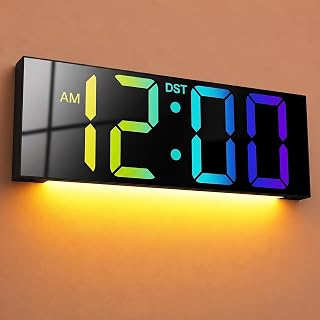
Remote control support, RGB color options, and automatic daylight saving time (DST) are notable features. Best for: Classrooms or bedrooms needing large, bright digits for quick visibility. Choose this if you prefer high-contrast numbers and color customization. Limitation: LED brightness may consume more power than basic clocks.
JALL 10″ Large Digital Wall Clock

Key aspects include a large LED display with adjustable features such as a countdown timer, DST support, and temperature display. It is designed for rooms where precise timing and environmental readings help daily routines. Best for: Dorms, study spaces, and multi-use areas requiring timer functions. Better for: users who want a quick timer in addition to the time. Caution: Digital clocks can be more sensitive to power interruptions; ensure stable placement or power backup if needed.
La Crosse Technology Wall Clock

Highlights a built-in temperature display and a compact 6.61 x 11.1 x 1.14-inch footprint. Best for: Medium-sized desks and walls in living rooms or bedrooms where ambient temperature data adds value. Limitations: Some users may prefer clocks with additional date or humidity metrics for broader environmental awareness.

Features include an LCD display that shows time, day of the week, and indoor temperature, with easy-to-read labels for hours and minutes. It is powered by a single AA alkaline battery and designed for long, quiet operation. This model suits parents and teachers wanting a larger learning clock with clear teaching prompts and a simple battery setup. Caution: Non-ticking operation depends on battery performance; ensure a fresh battery for best quietness and accuracy.
Buying Guide: Key Considerations For Digital And Analog Wall Clocks
What size should you choose? Larger displays improve readability from a distance, especially in classrooms or living rooms. For kids or bedrooms, 10–12 inch clocks balance visibility with wall space. Do you need extra features? Temperature readouts, date displays, DST, and countdown timers add utility in homes and offices. What display type suits you? Digital displays offer quick readings and extra metrics; analog looks classic and can be easier to read at a glance for some users. Connectivity and power? Alkaline battery operation reduces maintenance compared with wired clocks, but consider if you need a constant power source or a back-up battery. Durability and setup? Look for kid-friendly designs with clear language labels and safe, sturdy housings. Compatibility with room décor matters; choose a color and style that complements walls and furniture. For classrooms, prioritize clocks with large digits and legible wording; for bedrooms, soft backlight and DST can be helpful.>
Frequently Asked Questions
- What is the main difference between digital and analog wall clocks?
Digital clocks display time with digits and may include extra data like temperature or date. Analog clocks show hands on a dial, offering a traditional time-telling experience. - Which clock is best for kids learning to tell time?
Clocks with labeled phrases (hour, minute, o’clock, quarter past) and color-coded minutes are best for teaching time concepts. - Do digital clocks consume more power?
Digital clocks with backlights or LEDs may use more power than simple analog clocks, but many models run on a single AA battery. - Can these clocks display temperature?
Some models include an indoor thermometer display to show current room temperature. - Is DST supported by these clocks?
Several listed models offer automatic or manual DST settings for easier time maintenance. - Are these clocks suitable for classrooms or offices?
Yes. Large digits, clear labels, and durable housings make them well suited for both environments.