Upgrading a ceiling fan with a remote control kit brings convenience, energy efficiency, and modern control to everyday spaces. The following five options cover a range of needs—from basic 3-speed remotes with light dimming to smart, Wi‑Fi enabled controllers that work with voice assistants. Each selection emphasizes compatibility with common American brands and straightforward installation, helping you choose a kit that fits your fan and your lifestyle.
| Product | Type | Key Benefit | Compatibility |
|---|---|---|---|
| LPHUMEX 3-in-1 Universal Ceiling Fan Remote | 3-in-1 Remote Kit | Easy install, strong signal across rooms | Hunter, Harbor Breeze, Westinghouse, Honeywell, and more |
| CENMING Universal Ceiling Fan Remote Kit Replacement | 3-Speed With FAN28R Receiver | Broad compatibility, straightforward replacement | Harbor Breeze, Hampton Bay, Hunter, Litex, others |
| FEKOTS Universal Ceiling Fan Remote Kit | 3-Speed With Light Dimmer | Wide compatibility with popular fans | Hampton Bay, Home Decorators, Harbor Breeze, Hunter, Honeywell |
| Aubric 2-Pack Universal Ceiling Fan Remote Kit | Two Remotes With Dimmer | Great replacement option and value | Hunter, Harbor Breeze, Westinghouse, Honeywell, others |
| 53T Smart Wi-Fi Ceiling Fan Remote Kit | Wi‑Fi Remote With App/Voice Control | Smart control, schedules, and voice integration | Broad compatibility with standard fans |
LPHUMEX 3-in-1 Universal Ceiling Fan Remote
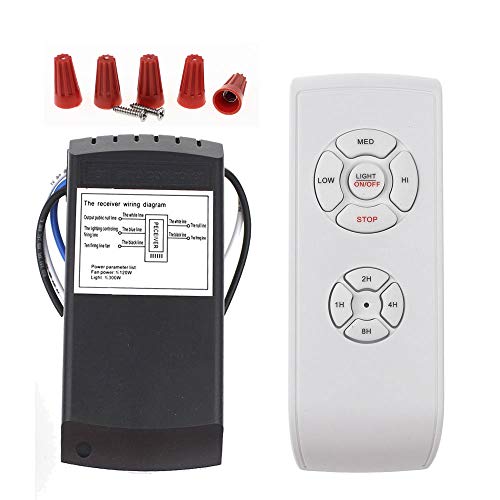
The LPHUMEX kit is designed for quick, no-fuss installation. It supports three functions—fan speed, light dimming, and a timer—with a simple five‑wire hookup that avoids removing the light kit or blades. The included receiver fits standard canopy spaces, making it suitable for many common ceiling fans. Its broad compatibility includes Hunter, Harbor Breeze, Westinghouse, and Honeywell, giving homeowners a practical upgrade path for older or mismatched remotes. The user experience emphasizes reliability, often delivering stable signals from another room thanks to a strong, dedicated frequency.
From an installation perspective, the kit minimizes disruption. Instructions emphasize a straightforward canopy access, with two wires to power the transmitter and three wires into the fan control. The design prioritizes a clean look and compatibility across brands, so you can upgrade multiple fans without buying new remotes for each room. If you’re replacing a non-working remote, this option often provides an affordable, versatile solution that restores full control over lighting and fan speed.
CENMING Universal Ceiling Fan Remote Kit Replacement
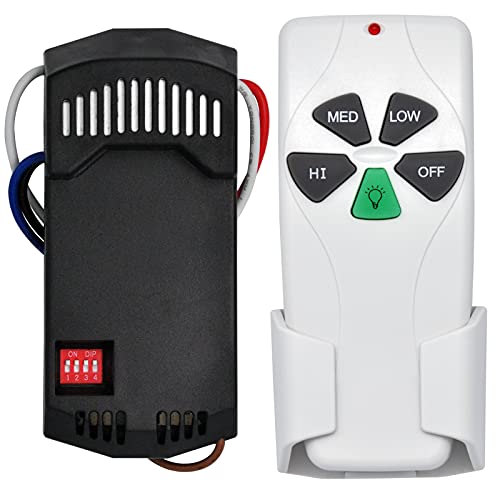
The CENMING remote control kit targets broad compatibility with 110V, 3-speed AC fans. It’s designed to replace or upgrade existing remotes for Harbor Breeze, Hampton Bay, Hunter, Litex, and other downrod fans. The package typically includes a FAN28R receiver and a remote with High/Medium/Low speeds plus an ON/OFF light control. Note that this model does not include a reverse function, and the LED dimming is best suited for compatible bulbs—LEDs and CFLs may flicker if dimmed. Not for DC motors, standing fans, or wall-mounted setups.
In practice, pairing is straightforward: match the remote’s DIP code to the receiver’s DIP setting to ensure the two communicate correctly. The green backlit button helps locate the remote in dim rooms, and the dimming feature provides a gentle way to set mood lighting without needing separate dimmers. For homeowners upgrading older remotes, CENMING offers a reliable, budget-friendly route with broad fan compatibility.
FEKOTS Universal Ceiling Fan Remote Kit Replacement
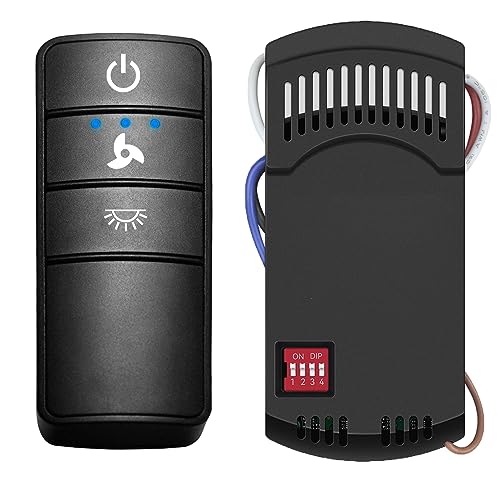
The FEKOTS remote kit emphasizes compatibility with a wide range of 110V AC fans, including Hampton Bay, Home Decorators Collection, Harbor Breeze, Hunter, and similar brands. It supports the classic three-speed fan control along with a light dimmer, making it a solid choice for upgrading older units that lack modern lighting control. The installation is designed to be straightforward, with a 5-wire hookup and clear guidance to align color wires and labeling. The kit’s emphasis on 5-wire wiring ensures a clean canopy setup and reliable operation of both fan and light features.
One notable feature is its emphasis on compatibility with various bulbs, including some dimmable LEDs. However, dimming performance can vary by bulb type. The remote also includes a walk-through approach to wiring, reducing guesswork for homeowners. While not all LED configurations will dim smoothly, the product provides reliable speed control and light management for most common ceiling fan setups, delivering consistent performance across brands.
Aubric 2-Pack Universal Ceiling Fan Remote Kit

The Aubric two-pack provides a cost-effective option for households with multiple fans. These universal remotes are designed to work with a wide range of brands—including Hunter, Harbor Breeze, Westinghouse, and Honeywell—and feature a light dimmer along with three-speed fan control. A key note is that the included receivers do not provide a reverse function, so fans with reverse switches still require a fan that supports reversing on its own. Pairing is straightforward: remote and receiver share a DIP code, typically starting from 0000 and adjustable to minimize cross-room interference.
Installation remains straightforward with a five-wire setup and included wire nuts. The two-pack approach means you can upgrade several rooms without purchasing multiple individual remotes. The Aubric kits emphasize practical replacement capability and scalable coverage for homes with multiple ceiling fans, making them a strong value choice for broad upgrades.
53T Smart Wi-Fi Ceiling Fan Remote Kit

The 53T Smart Wi-Fi kit represents a step into connected control. It offers three fan speeds and a light dimmer, with remote access via the Smart Life app. Users can control the fan and lights from anywhere and integrate voice commands with Alexa or Google Assistant. The receiver is designed to be smaller, supporting a broader range of downrod fans, and the system includes scheduling features to turn lights or fans on or off at set times. It’s advertised as broadly compatible with many regular ceiling fans, expanding smart home capabilities across existing hardware.
Smart features bring additional considerations. The setup typically requires configuring the app and linking to a compatible voice assistant, which adds a step beyond traditional remotes but unlocks remote control from mobile devices and routines. While requiring Wi-Fi connectivity, this option provides convenient scheduling, remote control, and voice-enabled operation, making it suitable for homeowners seeking a future-ready upgrade to their ceiling fans.
Buying Guide
When selecting a ceiling fan remote kit, consider motor type, compatibility, and installation effort. Most universal remotes are designed for 110V AC motors; they generally do not work with DC motors, so verify your fan model first. Check brand compatibility beyond the obvious names—claims of broad compatibility can still exclude certain models or reverse-speed options. If your fan relies on a reverse feature, confirm whether the remote provides a dedicated reverse control or if your fan’s own reverse switch is required.
Evaluate the remote features you need. A basic kit with three speeds and light dimming covers everyday use, while thermostatic or timer features add convenience for bedrooms or living rooms. If you value automation, a Wi‑Fi or app-enabled kit unlocks schedules and voice control but requires setup through a mobile app and a stable network. Pairing methods vary; many kits use DIP codes, so make sure you know how to reprogram codes to prevent interference with other rooms.
Installation considerations matter. Some kits remain within the canopy with minimal wiring, while others may require more involved wiring. Ensure the receiver fits within your canopy space and that the wires match color labeling to avoid miswiring. For older fans, the ability to replace a failing remote without swapping hardware can save time and preserve original light kits. If you plan to upgrade multiple fans, a multi-pack kit offers good value and uniform control across rooms.
Smart features bring advantages and potential drawbacks. Wi‑Fi controllers enable scheduling and remote access but depend on your home network and app ecosystem. Consider your privacy and data preferences, as well as the reliability of voice assistant integrations. For basic control, non‑smart remotes provide dependable performance without network dependencies. A balanced choice weighs convenience, compatibility, and your willingness to manage apps or routines.
In sum, choose a kit that aligns with your fans’ motor type and wiring, offers the controls you’ll actually use (speed, light, timer, reverse), and fits your installation space. If you’re aiming for smart home integration, prioritize Wi‑Fi models with solid app support and compatibility with your preferred voice assistants. For multiple rooms, look for a kit that includes a multi-pack or easy cross-room pairing to maintain consistent operation across your home.