Well water often carries sediments, minerals, and odors that carbon-based filtration can address. Carbon blocks and CTO cartridges excel at reducing chlorine, improving taste, and removing many common contaminants that affect everyday drinking water. For well owners, the challenge is balancing filtration strength with capacity and maintenance, especially where heavier sediment or iron is present. This guide highlights five top carbon-filter options and systems, focusing on certification, filtration efficiency, and practical replacement schedules. Each choice is compatible with common housings and designed to keep whole-house water clean, safe, and pleasant to use.
Below is a quick summary of the five picks to help you compare at a glance.
| Product | Brand | Key Benefit |
|---|---|---|
| IcePure 1 Micron 2.5″ x 10″ CTO Filter | ICEPURE | High-clarity carbon block with 1 micron filtration; strong chlorine reduction |
| PurePlus 1 Micron 2.5″ x 10″ CTO Filter (4Pack) | PUREPLUS | Authoritative certifications and long life; broad compatibility |
| PurePlus 5 Micron 10″ x 4.5″ CTO Filter (2Pack) | PUREPLUS | Multi-layer carbon block with higher sediment tolerance |
| Waterdrop 5-Stage Whole House Filter System | Waterdrop | Iron, manganese, and chlorine reduction with a staged approach |
| ICEPURE | Certified chlorine reduction with a larger cartridge format |
IcePure 1 Micron 2.5″ x 10″ Whole House CTO Filter
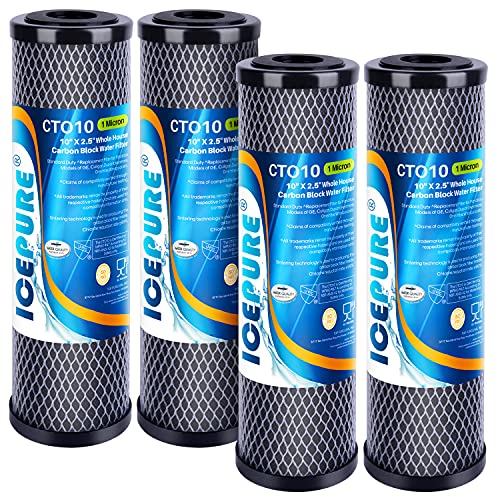
This IcePure cartridge fits standard 10×2.5 inch housings and uses a 1-micron CTO carbon block to reduce chlorine taste and odor while improving overall water flavor. It is NSF/ANSI 42 certified, reinforcing its filtration claims and reliability for residential use. The manufacturer notes that well water with significant mud or sand can clog a carbon block more quickly, so it’s wise to pair this cartridge with a pre-filter if your supply contains heavy sediment. The filter is designed to deliver cleaner water throughout the home and supports a sizable replacement interval when water quality is favorable.
- NSF/ANSI 42 certified for chlorine, taste, and odor reduction
- 1 micron carbon block with sintering technology
- Approximate life up to 13,000 gallons; replace about every 6 months with typical use
- Compatible with many 10″ x 2.5″ housings and common DuPont/Whirlpool models
PurePlus 1 Micron 2.5″ x 10″ CTO Carbon Filter (4Pack)

The PurePlus CTO cartridge is NSF/ANSI 42 certified through IAPMO, delivering 99% chlorine removal and meaningful improvements in water taste and odor. It’s designed for long life, with a capacity up to about 13,000 gallons depending on water quality, making the 3-to-6 month replacement window a practical guideline for most households. This filter is widely compatible with standard 10″ x 2.5″ housings and fits DuPont WFPFC8002/9001, SCWH-5, and other common models, simplifying retrofits in well-water systems. For well water, combining with a pre-filter can help extend cartridge life.
- NSF/ANSI 42 certification; 99% chlorine removal
- High-capacity up to 13,000 gallons; replace every 3–6 months
- Compatible with standard 10″ x 2.5″ housings and many DuPont/GE/Culligan models
- Certified for multiple regions including Europe and Australia; BPA-free
PurePlus 5 Micron 10″ x 4.5″ CTO Filter (2Pack)

This 5-micron CTO cartridge combines multi-layer density polypropylene with coconut shell activated carbon to remove a broad spectrum of contaminants, including chlorine, sand, rust, and other sediments. Its higher micron rating offers more robust sediment filtration, which can be advantageous for well water with visible particulates while still delivering meaningful taste improvements. The filter is designed for up to about 30,000 gallons of service life, with a recommended replacement window of 3–6 months depending on water quality. If your well water carries heavy sediment, plan for more frequent changes or a pre-filter stage.
- Multi-layer density design with coconut shell carbon
- Reduces chlorine, sand, rust, and sediment; improves taste
- Up to about 30,000 gallons; replace every 3–6 months
- Broad compatibility with 10″ x 4.5″ housings and common brands
Waterdrop Five-Stage Whole House Filter System

This Waterdrop system combines a dedicated iron and manganese reducing stage with a carbon block and GAC filtration, delivering a five-stage filtration process designed to improve taste and remove impurities from well water. The GAC stage uses natural coconut shell carbon to further reduce odors and chlorine. Capable of handling common US pressures, the unit is engineered for a robust lifespan with a typical replacement horizon of up to six months for the iron/manganese filter and the carbon stages. It provides a compact, integrated solution for whole-house filtration with straightforward installation.
- Five-stage filtration to target sediments, iron, manganese, and chlorine
- GAC stage from natural coconut shell carbon for improved taste and odor
- Longer service life with six-month replacement intervals (varies by use)
- 1″ inlet/outlet; tested for common residential water pressures
IcePure 10″ x 4.5″ 1 Micron CTO Filter

This 10″ x 4.5″ carbon block cartridge delivers 1-micron filtration with NSF/ANSI 42 certification for chlorine reduction. It is designed to fit standard housings and has European EC1935-2004 and Australian Water Mark certifications, with BPA-free construction. Claimed life is up to about 30,000 gallons or six months of use, depending on water quality. It’s well-suited for households needing stronger chlorine control, but those with heavy sediment should pair this with a pre-filter or opt for a lower micron rating for finer sediment removal before carbon stages.
- NSF/ANSI 42 certified; 99% chlorine reduction claims
- Long service life up to 30,000 gallons or 6 months
- European and Australian certifications; BPA-free
- Compatible with common 10″ x 4.5″ housings
Buying Guide
When choosing a carbon filter for well water, several factors influence long-term satisfaction and water quality. Start with the micron rating. A 1-micron cartridge captures finer particles and provides stronger chlorine taste and odor reduction, but may clog sooner if your water carries heavy sediment. A 5-micron or multi-layer design can handle larger particulates more effectively, potentially extending life in sediment-rich supplies. In many cases, a combination approach works best: a pre-filter to remove grit and sediment before a carbon cartridge protects the carbon block and maintains flow rate.
Filtration stage matters. Simple CTO cartridges focus on taste and odor, while multi-stage systems address iron, manganese, and sediment in addition to chlorine. For wells that struggle with metallic tastes or odors, systems that pair carbon with GAC or specialized iron-reduction stages can offer noticeable improvements. If iron or manganese is a concern, look for products that explicitly mention reduction of these contaminants or that are part of a staged filtration setup.
Certifications provide verification. NSF/ANSI 42 is the baseline for chlorine taste and odor reduction, while 53 covers health-related contaminants (not all carbon products carry 53). European EC1935-2004 compliance and local marks (Australian Water Mark, CSA) add assurance about materials and safety. BPA-free construction is a plus for drinking water appliances, especially for households on well water where contact with plastics is more frequent.
Capacity and replacement intervals shape maintenance costs and convenience. Higher-capacity cartridges keep replacements infrequent, but you must weigh the water quality and household usage. In general, expect 3–6 month replacement windows for typical families, and longer if your water is soft and clean. For higher sediment loads, plan for more frequent changes or install a pre-filter to extend cartridge life and protect the carbon block.
System versus cartridge. A cartridge-in-housing approach is common and affordable, suitable for upgrades to existing setups. Whole-house filtration systems combine multiple stages into one unit, offering streamlined maintenance but higher upfront costs. Both approaches can be effective for well water; the choice depends on water quality, installation constraints, and your desired level of purification across all running taps and appliances.
Installation considerations include housing compatibility, flow rate, and space. Most 10″ cartridges fit standard housings, but always verify dimensions (10″ length, 2.5″ or 4.5″ diameter) and the unit’s maximum flow rate to prevent pressure drops in the home. For well systems with significant sediment or iron, a pre-filter or a staging solution may be needed to maintain pressure and extend the life of carbon cartridges.
Cost and maintenance balance. Carbon cartridges vary in price, with multi-pack options offering savings for larger households. Factor in replacement costs over time, especially if frequent changes are required due to sediment load. A well-planned maintenance schedule ensures consistent water quality and a predictable budget for replacements.
Water testing remains essential. A home test or local water-quality report helps determine whether you need stronger filtration for chlorine, sediments, iron, or manganese. Use test results to select a cartridge with the appropriate micron rating and to decide if a pre-filter should be added before the carbon stage.
Bottom line: for well water, the best approach often combines a sediment-prep step with a carbon filtration stage to tackle tastes, odors, and dissolved contaminants. Certifications, capacity, and compatibility with your existing plumbing will guide the optimal choice. The five options reviewed here provide a spectrum of carbon-based solutions—from straightforward CTO cartridges to comprehensive multi-stage systems—so you can tailor filtration to your well water’s specific challenges.