Choosing the right bread knife for crusty loaves means balancing serration, blade length, and grip comfort. A sharp, well-designed blade should glide through a crust without tearing the soft crumb inside, and it should feel balanced in your hand for steady, confident slicing. The five knives below come from trusted brands and are built to handle crusty artisan loaves, sourdough, bagels, and more. They emphasize durable steel, ergonomic handles, and precise serration—ideal for every kitchen that bakes or serves crusty breads regularly. Use the quick table to compare key specs at a glance.
| Product | Brand | Blade Length | Notable Feature |
|---|---|---|---|
| Mercer Millennia 10-Inch | Mercer Culinary | 10-Inch | One-piece high-carbon Japanese steel; ergonomic grip; wavy edge handles crusts well |
| Orblue 8-Inch Serrated | Orblue | 8-Inch | Ultra-sharp serration; 5-Inch handle; rubber safety tip guard |
| Uprichya Sourdough Knife | Uprichya | Not specified | Right-handed design; thicker, sharper serrated blade; replaceable blade option |
| imarku 10-Inch Bread Knife | imarku | 10-Inch | German high-carbon stainless steel; independent serrated edges; left-hand friendly |
| Albert&Grace 10.5-Inch | Albert&Grace | 10.5-Inch | Rustproof 7Cr17MoV steel; wider blade with thinner edge for cleaner cuts |
Introduction to the five picks highlights how blade length, steel composition, and handle ergonomics influence performance. Shorter blades are nimble for smaller loaves and quick tasks, while longer blades excel with crusty, long baguettes. Serration type and blade thickness affect how cleanly you slice through tough crusts and delicate interiors. An ergonomic handle reduces fatigue during routine use, and durable steel supports edge retention across daily baking sessions. The following sections dive into each knife, with practical notes on when and why you might choose one over another.
Mercer Culinary Millennia 10-Inch Bread Knife
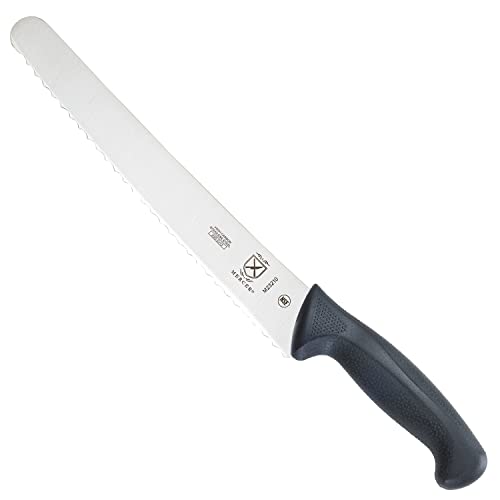
The Mercer Culinary M23210 Millennia bread knife pairs a one-piece high-carbon Japanese steel blade with an ergonomic, textured handle designed for a non-slip grip. The wide, wavy edge excels at slicing crusty bread without tearing the crumb, making it suitable for artisan loaves, angel food cake, meats, fruits, and even tomatoes. The all-in-one blade construction is known for edge retention and ease of maintenance, which helps the knife stay sharp longer with ordinary home use. Users often appreciate the balance and sustained performance in daily bakery tasks.
In practice, this knife offers confident control through thick crusts and dense bread. The textured grip remains comfortable during long slicing sessions, reducing hand fatigue. The blade’s wavy edge allows smoother separation of slices, especially on crusty loaves that resist simple, flat-edge cuts. Maintenance is straightforward: hand wash and dry to preserve the steel’s properties. Overall, this knife is a reliable, mid-to-long blade option for households that bake frequently and value lasting sharpness.
Consider this Mercer knife if you regularly slice homemade or bakery crusty breads, want predictable performance with minimal maintenance, and value a secure grip. It’s well suited for users who prefer a traditional, sturdy bread knife that can double for slicing softer foods without excessive tearing. For those seeking lighter weight or a shorter blade, other options in this guide may be a better fit.
Orblue 8-Inch Serrated Bread Knife

The Orblue Serrated Bread Knife features an 8-inch blade with an upgraded design intended for smooth, effortless slicing of crusty loaves. The ultra-sharp serrated edge grips tough crusts and delivers clean cuts in a single motion, reducing crumbling and tearing. The knife is built with high-quality stainless steel, providing durability for daily kitchen use. A rubber safety guard at the blade tip adds an extra layer of safety during storage and handling, which can be beneficial when maneuvering near fingers and countertops during busy cooking sessions.
Ergonomics play a notable role in this model. The handle shape and balance are designed to fit a comfortable grip, helping users maintain precise control even when slicing large loaves or bagels. While the blade length is shorter than some others in this guide, it remains a strong choice for smaller kitchens or for households that prefer a lighter, more maneuverable knife. It’s also a solid secondary knife for households with limited space or where a dedicated bread knife is not frequently used.
For buyers prioritizing a compact, easy-to-store knife with reliable serration and a safety feature, the Orblue 8-Inch model offers a practical balance of performance and value. It pairs well with a larger kitchen set or as a starter bread knife for new cooks who want dependable crust-cutting results without a heavy, longer blade.
Uprichya Sourdough Bread Knife

Uprichya’s Sourdough Bread Knife is designed with right-handed use in mind. Its wooden handle features a camber design meant to deliver an ergonomic grip, which can improve slicing precision during long sessions. The blade is described as thicker, wider, and sharper with a serrated edge, aimed at delivering more control when cutting crusty loaves and its extension to other baking tasks. Durability comes from high-quality stainless steel that helps resist corrosion and maintain sharpness over time. A notable feature is the embedded screws at both ends of the wooden handle, enabling blade changes and even replacement blades without damaging the wood.
While the product emphasizes durability and ease of blade replacement, potential buyers should note that it is optimized for right-handed users, which may influence comfort for left-handed cooks. The combination of a robust blade and replaceable edge makes this knife an appealing option for households that want a knife capable of handling frequent crusty loaves and occasional replacement blades as part of routine maintenance. It adds versatility for kitchens that value adaptability and long-term cost efficiency.
In summary, Uprichya’s model suits cooks who want a replaceable blade solution with a sturdy serrated edge and a wood handle designed to minimize fatigue. It’s a compelling choice for those who bake sourdough and other crusty breads regularly and appreciate blade-upgrade flexibility as part of ongoing kitchen maintenance.
imarku Bread Knife

imarku’s 10-Inch Bread Knife uses German high-carbon stainless steel and features a serrated edge designed for crusty bread, cake layers, and other soft foods. The knife’s blade geometry depends on independent serrated edges, which can enhance cutting performance against crusty loaves while minimizing the crumb dispersion. The handle is ergonomically shaped to improve grip comfort during extended slicing tasks, and the knife is marketed as left-hand friendly, broadening its suitability for a wider range of users. The combination of durable steel and thoughtful handle design supports reliable daily use in a busy kitchen.
For buyers focused on edge retention and rust resistance, this model offers a practical option. It balances sharpness with comfort, making it a solid fit for households that prepare both crusty breads and softer pastries. The left-hand friendly feature adds a layer of inclusivity for different users, which can be meaningful in family kitchens or shared spaces. If you need a dependable, straightforward 10-inch knife with solid steel and ergonomic handling, imarku presents a compelling choice.
Albert&Grace 10.5-Inch Serrated Bread Knife

The Albert&Grace 10.5-Inch Ultra Sharp Serrated Bread Slicer emphasizes a broader blade for enhanced control and cleaner cuts. It uses rustproof 7Cr17MoV high-carbon stainless steel combined with a full tang and a pakkawood handle for balance and comfort. The design features a wider blade that reduces friction and crumb dispersion, which is particularly advantageous when slicing crusty loaves like sourdough and artisanal breads. The blade is described as thinner, aiding precision slicing and maintaining a smooth crumb with each pass. This knife is positioned as a versatile tool for daily bread tasks and more complex slicing jobs.
In practice, the blade’s wider profile can be advantageous for controlling slice thickness and producing uniform slices. The thinner edge helps prevent tearing and supports cleaner cuts through tougher crusts. The full-tang build enhances balance, which improves control during longer slicing sessions and reduces hand fatigue. For households that bake frequently and want a knife capable of handling various bread types with consistent results, Albert&Grace offers a strong option that emphasizes edge geometry and grip comfort.
Buying Guide
When choosing a bread knife for crusty bread, several purchase considerations help align a tool with your baking habits and kitchen setup. Here are key factors to weigh, followed by practical comparisons across the options above.
- Blade length and loaf size: A longer blade (10–12 inches) handles long baguettes and large sourdough rounds with fewer passes, while shorter blades (8 inches) feel more maneuverable for daily, smaller loaves. Consider the typical bread shapes you bake to pick the right length.
- Edge design and serration: Serrated edges vary from standard to more aggressive serrations. A well-maintained serrated blade slices crusts cleanly with less tearing, but it requires regular maintenance to retain sharpness. Some models feature independent serrations or thicker blades for heavy-duty cutting.
- Material and durability: High-carbon stainless steel offers good edge retention and corrosion resistance. Stainless varieties tend to be easier to maintain, while some models emphasize rust resistance and thicker blades for durability in busy kitchens.
- Handle ergonomics and balance: An ergonomic handle reduces fatigue, especially during long slicing sessions. Full tang construction and balanced weight distribution improve control, which matters when working with crusty loaves that require stable, deliberate cuts.
- Left-handed vs right-handed design: Some knives emphasize left-hand or right-hand friendliness. If you or others in your kitchen have a preferred dominant hand, choose a model that accommodates that orientation for comfortable use.
- Maintenance and care: Most bread knives perform best with hand washing and thorough drying to preserve the blade’s finish and edge. Some blades are dishwasher safe, but hand washing is generally recommended for longevity.
- Versatility and maintenance options: Consider whether you want a knife that can handle other tasks (tomatoes, bagels, or even cake) beyond bread slicing. Some models offer blade replacement or easy-edge maintenance options, which can extend the tool’s lifespan.
- Price-to-value balance and warranty: The best knife for crusty bread isn’t always the most expensive. Compare edge retention, handle comfort, and blade longevity relative to the price, and look for warranty coverage that backs up performance expectations.
In summary, the five knives presented here cover a range of blade lengths, steel types, and handle designs to suit different kitchens. For those who bake crusty, crust-heavy loaves regularly, a longer blade with a durable serrated edge and a comfortable grip tends to produce cleaner slices with less crumb dispersion. If a compact, lighter option is preferred, the 8-inch Orblue model provides solid performance with practical safety features. For bread enthusiasts who value replaceable blades, two-handed ergonomic design, or wider blades for stability, the Uprichya, imarku, and Albert&Grace options offer compelling trade-offs. Selecting the right knife ultimately comes down to loaf size, user handedness, and how often you slice crusts versus soft interiors.