Baseboard electric heaters offer a slim, unobtrusive approach to warming rooms without altering decor. This guide highlights five dependable models from Cadet, KING, EZ-HEAT, and Comfort Zone, covering a range of wattages and voltages to fit small-to-medium spaces. Carefully compare output, wiring needs, and safety features to select a unit that heats evenly, operates quietly, and complements your room design. The selection below emphasizes reliability, simple installation, and practical controls for American homes.
| Product | Brand | Power | Voltage | Key Feature |
|---|---|---|---|---|
| Cadet F Series 3F750-1W | Cadet | 750 W | 120 V | All metal finish; Requires thermostat; Powder-coated |
| Cadet F Series 4F1000W | Cadet | 1000 W | 240/208 V | Universal wiring; Pre-punched knockouts; Safety shutoff |
| KING 4K1210BW | KING | 1000 W | 120 V | Hard-wired; Aluminum Ribbon Fin Element; Full-length safety cutout |
| EZ-HEAT CZ600 | EZ-HEAT | 1500 W | 120 V | Adjustable thermostat; Tip-over and overheat protection; Stay-cool body |
| Comfort Zone CZ650B | Comfort Zone | 1500 W | Not specified | Digital thermostat; Dent-proof end panels; Overheat protection |
Cadet F Series 36-Inch Baseboard Heater
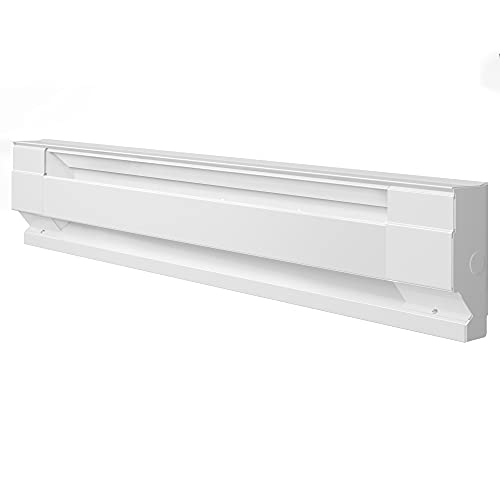
The Cadet F Series 3F750-1W delivers 750 watts at 120 volts, producing about 2560 BTU for small to medium rooms. Its 36-inch form fits standard wall space, and the unit’s construction emphasizes durability with a 25-gauge steel shell and a powder-coated finish. It requires a compatible thermostat to regulate heat, aligning with typical residential setups where zoning control is preferred. The model’s all-metal build supports steady performance over time, with straightforward integration into existing circuits.
With a focus on reliable, zone-specific heating, this Cadet heater suits bedrooms, home offices, or dens where a low-profile heat source is desirable. The absence of integrated convection fans means quiet operation, while the powder-coated exterior helps resist wear in high-traffic areas. Pairing it with a properly rated thermostat lets you maintain comfortable temperatures without overheating or energy waste.
Cadet F Series 48-Inch Baseboard Heater
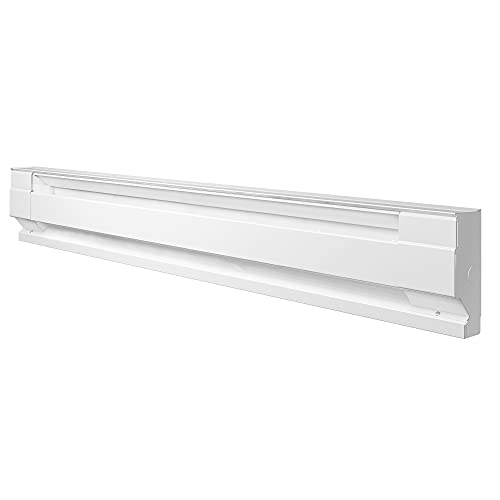
The Cadet 4F1000W model provides 1000 watts of heat at 240/208 volts, offering strong performance for small to medium rooms. Its design supports universal wiring and includes pre-punched knockouts at 1-inch intervals to simplify floor or wall installation, helping keep installation costs lower. A high-temperature safety shutoff protects occupants by preventing overheating, contributing to safer operation in family spaces and home offices.
With dual-voltage compatibility, this Cadet unit adapts to different wiring configurations, reducing the number of separate SKUs needed for the same room footprint. This versatility makes it suitable for homes with varying electrical setups or planned renovations where wiring might change. The combination of robust heating capacity, ease of installation, and built-in safety features supports dependable, energy-conscious space heating.
KING 4K1210BW K Series Baseboard Heater

The KING 4K1210BW offers 1000 watts at 120 volts and is designed as a hard-wired installation rather than plug-in use, making it a solid choice for permanent heating solutions. Its aluminum ribbon fin element promotes efficient heat distribution along the length of the heater, helping maintain comfortable temperatures across a room. A full-length safety cutout adds protection, reducing the risk of overheating during extended use.
Hard-wired baseboard heaters like this model are popular where a neater wiring footprint is desired, and where a fixed installation is preferable to a plug-in unit. The long, continuous heating element supports steady heat output, which can help minimize hot spots and maintain uniform room temperature. This KING unit is well-suited to living rooms or studios that require reliable, low-profile heating without visible control clutter.
EZ-HEAT 1,500 Watt Baseboard Heater CZ600

The CZ600 from EZ-HEAT delivers 1500 watts of heating power at 120 volts, making it suitable for medium-sized rooms. It features two heat settings and an adjustable thermostat, enabling users to tailor warmth to comfort preferences. Safety features include a tip-over switch, stay-cool body, and overheat protection sensor, which work together to reduce risk during daily use and in households with children or pets. The design emphasizes quiet operation, so it won’t disrupt activities such as watching TV or working from home.
Installation considerations for the CZ600 include straightforward floor or wall placement, with the option to adapt to existing wiring. The unit’s dual heat settings and thermostat provide a flexible range of temperatures, supporting energy-efficient operation when daytime temperatures are mild or when spaces only require intermittent heating. The combination of safety features and quiet performance makes it a practical choice for bedrooms and living spaces alike.
Comfort Zone CZ650B Baseboard Heater With Digital Thermostat

The CZ650B model combines 1500 watts of heating power with a digital thermostat for precise temperature control. Though voltage isn’t specified in the provided data, this unit is designed for comfortable, configurable heating in medium-sized spaces. Safety features mirror other Comfort Zone models, including overheat protection, a tip-over switch, and a stay-cool exterior to minimize burn risk during operation. Dent-proof end panels help extend the unit’s lifespan in busy rooms and high-traffic environments.
Digital thermostats offer straightforward control and visibility of room temperature, helping maintain consistent comfort with minimal manual adjustments. The CZ650B’s design emphasizes quiet operation and dependable performance, making it a solid option for bedrooms, home offices, and living rooms where predictable heat and modern controls matter.
Buying Guide
Choosing the right baseboard heater depends on room size, wiring readiness, and how you want to control comfort. Start by estimating heat needs in BTU per square foot and translating that into wattage (roughly 10–30 BTU per square foot for common spaces, depending on climate and insulation).
- Room size and heat output: For smaller spaces, 750–1000 W units can suffice; larger rooms may require 1500 W or more. Match BTU estimates to the heater’s wattage for balanced warmth.
- Voltage and installation: 120 V units are common for single-room heating and plug-in setups; 240/208 V models suit wired installations and higher heat demand. Decide between plug-in convenience and hard-wired permanence based on your electrical system and remodeling plans.
- Thermostat type and controls: Digital thermostats offer precise control and ease of use, while analog or basic thermostats can be simple and reliable. Consider smart thermostat compatibility for seasonal automation.
- Safety features: Look for tip-over switches, overheat protection, stay-cool casings, and durable end panels. These features help prevent accidents and extend unit life in households with kids and pets.
- Heat distribution and noise: Baseboard heaters operate via convection and are typically quiet. If you need silent operation for a bedroom or study, prioritize units marketed as whisper-quiet or fanless.
- Durability and maintenance: Powder-coated finishes resist scratches and rust; solid metal housings improve longevity. Check for warranty coverage and ease of replacement parts or thermostats.
- Installation and aesthetics: Slim profiles minimize visual impact, but mounting location matters. Ensure clearance for air intake and outlets, and plan for safe cord or conduit routing in living areas.
- Cost of ownership: While prices vary, energy efficiency and thermostat scheduling influence running costs. Pair a capable unit with a well-insulated room for best value over time.
Across these options, choose a heater with a suitable power rating for your room, a compatible voltage, and reliable safety features. For zones like bedrooms or offices, a model with a digital thermostat and quiet operation will typically offer the best balance of comfort and energy efficiency. For permanent installations, a hard-wired unit with a robust safety cutout can provide consistent warmth with fewer device interruptions.