Educators and parents can boost time-telling skills with hands-on, color-coded analog clocks designed for classrooms and homes. The following selections emphasize clear visuals, durable construction, and engaging activities that align with common time-telling milestones. This guide highlights five top options, each with features that support both teacher-led lessons and independent practice, making it easier to build confident time-reading abilities in kids.
A quick summary of chosen products:
| Product | Brand | Key Benefit |
|---|---|---|
| Learning Resources Big Time Mini Clock | Learning Resources | Hands-on time skills with hidden gears for accurate movement |
| Large Dry Erase Magnetic Teaching Demonstration Clock | WISE HEDGEHOG | Demonstrates both analog and digital time; reusable with dry-erase surface |
| Carson Dellosa Judy Clock | Judy Instructo | Color-coded hands and large display for easy classroom use |
| Learning Resources Time Activity Set | Learning Resources | Comprehensive, multi-sensory time-telling system |
| hand2mind Plastic Mini Geared Clock | hand2mind | Durable classroom kit with color-coded hands for quick practice |
Learning Resources Big Time Mini Clock

The Learning Resources Big Time Mini Clock is designed to support early time-skills development. Its hands move with hidden gears to maintain correct time as students spin them, reducing friction during practice. The clock’s color-coded hands align with hour and minute markings to reinforce the relationship between numbers and time. This tactile approach can help children connect the visual cues of a clock to the actual passage of time. Teachers can use it for guided lessons or individual work in small groups.
Large Dry Erase Magnetic Teaching Demonstration Clock

This large teaching clock emphasizes analog and digital time together. Its 10.7 x 10.7 inch face is easy for students to view from a distance, and the surface supports writing the digital time underneath the analog display for quick checks. The design is bright and engaging for learners of all ages, helping reduce distractions during instruction. A free eBook included with the purchase provides additional guidance for teachers and parents to help children read time faster and more accurately.
Carson Dellosa Judy Clock (13″ x 12″)
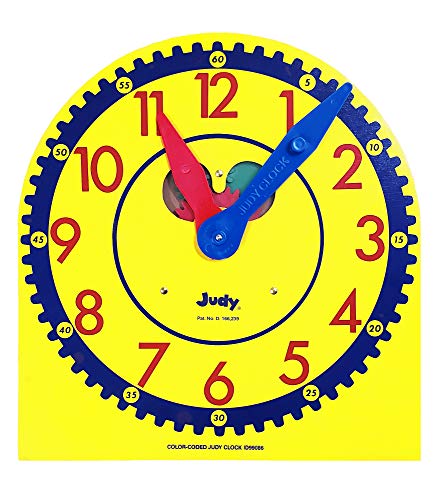
The Judy Clock offers a classic, color-coded clock face with clearly marked numerals and tick marks. Its 13 x 12 inch footprint is well-suited for classroom walls or desks, supporting hands-on practice and guided lessons. The colorized hour and minute hands simplify the process of teaching time to the hour and minute, complementing various teaching strategies from direct instruction to interactive play-based learning.
Learning Resources Time Activity Set
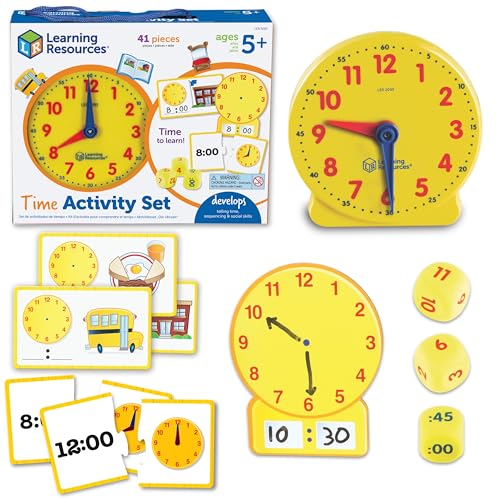
This time activity set provides a comprehensive teaching system with a durable clock, double-sided activity cards, dry-erase board, puzzles, dice, and foam components. The multi-sensory approach supports diverse learners by combining visual, tactile, and cognitive tasks. Students practice with synchronized hour and minute hands that mimic real-time movement, reinforcing concepts through repeated, varied activities and games.
hand2mind Plastic Mini Geared Clock
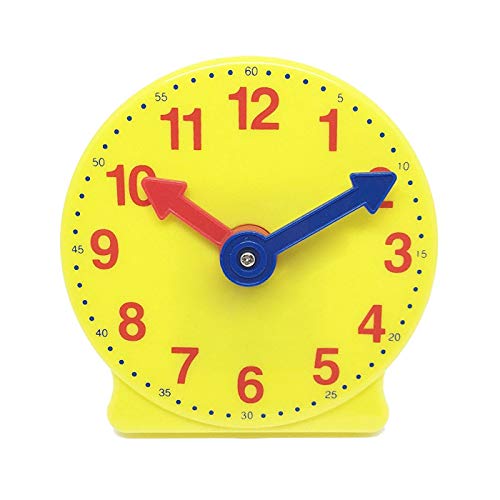
This geared clock from hand2mind is a compact, durable option for small-group work or individual practice. Its large, easy-to-read face and color-coded movable hands help students visualize the correlation between hours and minutes. The set is particularly useful for early learners who benefit from manipulating the clock to demonstrate time-telling concepts in a concrete, hands-on way.
Buying Guide: Key Considerations For Selecting Analog Clocks For Teaching
- Age and skill level: Choose clocks with large numerals, color-coded hands, and tactile features for early learners or students needing visual reinforcement.
- Durability and classroom suitability: Look for sturdy materials, wipe-clean surfaces, and gear mechanisms that stay accurate with repeated use.
- Movement and accuracy: Clocks with smooth gear movement and synchronized hour/minute hands help prevent confusion during lessons.
- Display size and visibility: Larger clocks or wall-mounted models reduce eye strain and support whole-class demonstrations.
- Support materials: Supplemental guides, activity cards, and digital time options can extend learning beyond rote practice.
- Handedness and accessibility: Color contrast and the ability to label hands or add digital-readouts can assist students with diverse learning needs.
- Portability and storage: Compact clocks or kit-based sets are useful for flexibly arranging groups or transporting between rooms.
- Cost and longevity: Durable, reusable resources with multiple activities tend to offer better long-term value in classrooms and homeschool settings.
When selecting an analog clock for teaching, consider how it will fit into daily routines, stations, or rotation activities. A mix of individual practice clocks and larger group demonstration models often yields the best balance of independent mastery and collaborative learning. For classrooms, a set that includes both a durable clock and engaging activity components can sustain interest while reinforcing core concepts of telling time.