Choosing the right tile adhesive is essential for a durable floor installation. Whether you’re laying ceramic, porcelain, vinyl, or stone-backed tiles, the adhesive must bond reliably, tolerate substrate variations, and resist moisture. This guide reviews five top-rated tile adhesives available on Amazon, highlighting where they excel, suitable substrates, and practical application tips. Each product section includes concise features to help homeowners, DIY enthusiasts, and professionals identify the best option for their project. The goal is to provide objective, actionable information that supports a solid flooring result.
Summary Of Chosen Products
| Product | Brand | Type | Ideal For | Notes |
|---|---|---|---|---|
| DAP 00141 Multi-Purpose Floor Adhesive | DAP | Multi-Purpose Floor Adhesive | Tile, vinyl, and related floor substrates | General purpose; planning tips noted on packaging |
| Red Devil Tile Paste | Red Devil | Tile Paste / Adhesive | Ceramic & porcelain tiles | Easy application and good tooling |
| Roberts 2057-1 VCT Adhesive | ROBERTS | Vinyl Composition Tile Adhesive | Vinyl tile installations | Quick dry time; enhanced grab |
| Roberts Universal Resilient Flooring Adhesive | ROBERTS | Universal Resilient Flooring Adhesive | LVT, LVP, VCT, vinyl-backed carpet tile | Solvent-free acrylic latex |
| Globalcom Heavy Duty Tile Adhesive | Globalcom | Construction Adhesive | Tile, stone, and related substrates | Waterproof; gap filling |
DAP 00141 Multi-Purpose Floor Adhesive
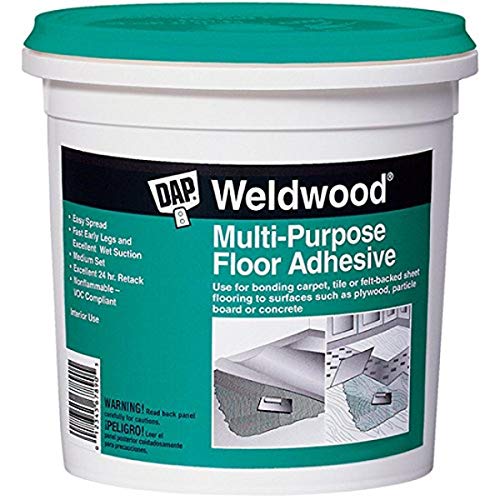
This versatile adhesive is positioned for a range of interior floor projects. It provides a convenient option for DIYers who need a single product for bonding tile, vinyl, and similar substrates. The packaging highlights practical guidance, including planning steps for a successful install and the importance of permits where required. While not limited to one tile type, its flexibility makes it a reasonable starting point for mixed-floor renovations. It is best used where a general-purpose bond is suitable and substrate conditions are well-prepared.
- Tips for a good project: Think ahead.
- Permits are important to consider for certain installations.
Application considerations include surface cleanliness, even substrate, and adequate cure time. This product is suitable for projects where a straightforward, all-purpose bond is preferred over a specialized adhesive. For small to medium jobs, it can simplify material inventory while delivering a dependable initial bond. Always follow manufacturer directions for surface prep and open time for best results.
Red Devil Tile Paste Adhesive

Red Devil Tile Paste is designed for ceramic and porcelain tile installations where a smooth, consistent paste bond is desirable. Its features emphasize easy application and workable tooling, which can help maintain levelness and alignment during setting. The paste consistency is noted as ideal for controlling spread and squeeze-out, making it a practical choice for DIY tile projects and professional renovators who value predictable handling and clean joints. Proper surface prep remains essential for optimal adhesion.
- Easy application and tooling.
- Ideal paste consistency.
- Excellent adhesion to many tiles.
For best results, apply to a clean, dry substrate and back-butter joints for irregular tile edges if needed. The product is suitable where a traditional tile paste is preferred over pre-mixed mortars, particularly when you want more working time and control during setting. Adherence to cure times and environmental conditions will influence final bond strength and tile stability.
Roberts 2057-1 VCT Adhesive

Roberts 2057-1 Vinyl Composition Tile adhesive is a solvent-free option featuring SBR latex for increased grab and a quick dry time. It’s designed for vinyl composition tile installations, including tile-over-tile and direct bond methods on concrete, primed gypsum, and compatible substrates. The formulation supports a strong initial bond, making it suitable for projects where VCT or vinyl-backed floors are involved. The product aligns with quieter environments where fast setting helps to reduce downtime between installation steps.
- SBR latex; solvent-free adhesive.
- Quick dry time and enhanced grab.
- For vinyl composition tile installations and related configurations.
While primarily intended for vinyl tiles, this adhesive can also accommodate challenging substrates that have minor residual coverings or occasionally aged components (per ASTM guidelines). Always ensure substrates are properly prepared to maximize bond strength and prevent tile lift or edge debonding over time.
Roberts Universal Resilient Flooring Adhesive

This acrylic latex adhesive is solvent-free and designed for high initial strength, with a focus on resilient flooring options such as LVT, LVP, VCT, vinyl-backed carpet tile, and related substrates. The solvent-free formula is environmentally friendlier and reduces odors during installation. It bonds well to properly prepared concrete and engineered subfloors, offering a balance of strong initial grab and flexibility to accommodate floor movement and thermal expansion common in modern interiors.
- Acrylic latex, solvent-free.
- High initial strength for resilient floors.
- Ideal for LVT, LVP, VCT, and vinyl-backed carpet tile.
Key considerations include ensuring subfloor conditions meet substrate recommendations and that radiant heating systems, if present, fall within recommended temperature limits. This adhesive is well-suited for projects prioritizing lower VOCs and indoor air quality while delivering dependable performance on a variety of vinyl-based floor coverings.
Globalcom Heavy Duty Tile Adhesive

Globalcom Heavy Duty Tile Adhesive is described as a versatile construction adhesive formulated for tile, stone, marble, granite, and other substrates. The product emphasizes strong bonding and gap-filling capabilities, along with waterproof performance after curing. It is suitable for a wide range of surfaces, including damp or challenging environments where a robust bond is required. Its polyether-based formulation aims to deliver durable adhesion across multiple materials while offering resistance to moisture and solvents in typical interior applications.
- Strong bonding for tile, stone, and related substrates.
- Waterproof after solidification; gap-filling capability.
- Multi-surface compatibility, including damp environments.
Applications should consider surface prep, temperature and humidity conditions, and substrate compatibility with tile types and stone that may require specific bonding solutions. While not a traditional thin-set mortar, Globalcom provides a broad adhesive option for mixed-material installations where a single adhesive one-step approach is preferred for speed or practicality on complex jobs.
Buying Guide
Choosing the right tile adhesive involves matching the product to tile type, substrate, and environmental conditions. Here are key purchase considerations and how the featured products stack up across common scenarios.
- Tile type and substrate compatibility: Ceramic and porcelain tiles often require strong, stable bonds with low moisture sensitivity, while vinyl-backed tiles benefit from adhesives designed for vinyl composition or resilient flooring. Roberts 2057-1 and Roberts Universal are solid choices for vinyl-based installations; Red Devil and DAP provide versatile options for mixed substrates; Globalcom offers a broader, gap-filling solution suitable for uneven or multi-material substrates.
- Open time and cure dynamics: Quick-dry formulas help minimize downtime but may require careful substrate prep to avoid premature skinning. The Roberts VCT adhesive emphasizes fast set with strong grab, which is beneficial on busy sites. For small DIY projects, a general-purpose option like DAP may offer convenient handling while still delivering a reliable bond when used correctly.
- Subfloor preparation and moisture considerations: Ensure the subfloor is clean, dry, and structurally sound. In moisture-prone areas or radiant-heated floors, select adhesives that are explicitly rated for such conditions. Acrylic latex and solvent-free formulas reduce odor and VOC exposure while maintaining performance on modern substrates.
- Environmental and safety factors: Solvent-free options tend to have lower odor and fewer volatile organic compounds (VOCs), which matters for indoor air quality. Roberts Universal and Roberts 2057-1 highlight solvent-free formulations, aligning with projects prioritizing indoor environment considerations.
- Application method and tools: Some products come ready-to-use as pastes, while others are squeeze-tube adhesives designed for precise application. For larger installations, traditional trowel-applied mortars or premixed products may be preferred, depending on tile size, substrate irregularities, and working time requirements.
- Budget and project scale: General-purpose options (like DAP) may offer cost-effective flexibility for smaller projects or mixed-material flooring. For dedicated vinyl or resilient flooring installs, targeted adhesives from Roberts provide optimized performance for those substrates, potentially reducing call-backs from improper adhesion.
In summary, the best adhesive for floor tiles depends on tile type, substrate preparation, environmental conditions, and project scale. A balanced selection, such as pairing a vinyl-focused adhesive with a versatile general-purpose option, can cover most residential or light commercial installations. Always follow manufacturer guidelines for surface prep, open time, cure, and environmental conditions to ensure a durable, long-lasting floor.