Selecting a gas water heater that fits your home’s hot-water needs is essential for comfort and efficiency. This guide reviews five top options that cover a traditional 75-gallon storage model and robust gas-powered tankless systems. Each entry highlights capacity, efficiency, and safety features to help American homeowners compare performance at a glance.
| Product | Brand | Type | Capacity | Notable Feature |
|---|---|---|---|---|
| Reliance 6 75 XRRS | Reliance | Storage | 75 gallons | 6-year warranty; 75,100 BTU/hr input |
| Rheem RTG-70XLN-3 | Rheem | Tankless | 7.0 GPM | Outdoor; non-condensing |
| Rinnai V75IN | Rinnai | Tankless | 7.5 GPM | Indoor installation; up to 7.5 GPM |
| Orbek 100k BTU Tankless | Orbek | Tankless | 4.3 GPM | CSA certified; 100,000 BTU; safety features |
| Ranein GEN II 3.6 GPM | Ranein | Tankless | 3.6 GPM | LED temperature control |
Reliance 75 Gallon Gas Water Heater

The Reliance 75-gallon storage heater targets households with high simultaneous hot-water needs. It operates on natural gas and delivers a substantial 75,100 BTU/hr input, which supports rapid heating to reduce recovery time after multiple draws. The model’s 75-gallon tank provides a reliable reservoir to meet morning showers, laundry, and dishwashing without frequent shortages. A six-year warranty adds long-term assurance for homeowners prioritizing reliability in colder seasons. Proper venting and gas supply are essential to optimize performance and ensure safe operation.
- 75 gallon short tank
- 6 year warranty
- Natural gas
- 75,100 BTU/hr input
Rheem Outdoor Tankless Gas Water Heater

Rheem’s RTG-70XLN-3 is a high-efficiency outdoor tankless gas water heater designed for continuous hot water across the home. By heating water on demand, it avoids standby losses common to storage heaters and only uses energy when needed. This model supports multiple simultaneous applications while maintaining responsive temperature control. A key benefit is water conservation; the unit’s design reduces unnecessary water waste compared to traditional storage systems, with a focus on durability in outdoor installations.
- Continuous hot water for multiple applications
- Energy-efficient, only runs when needed
- Water-saving potential up to 1,100 gallons per year
Rinnai V75IN Tankless Gas Water Heater
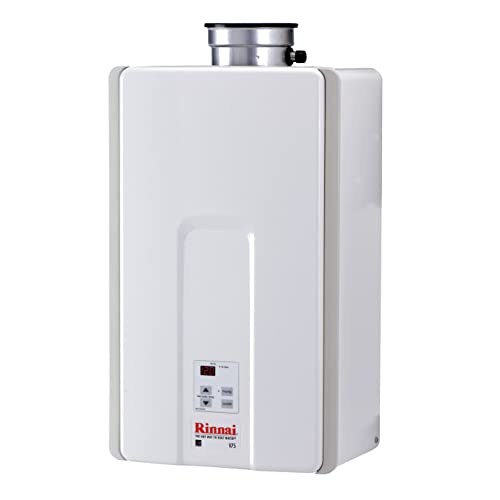
The Rinnai V75IN delivers endless hot water with a substantial flow capacity, up to 7.5 GPM, making it suitable for homes with several simultaneous hot-water demands. Its compact internal design saves space and enhances installation flexibility. The unit emphasizes energy efficiency by heating only when needed and includes features to minimize scale-related damage. Enhanced pressure support helps sustain a reliable stream across multiple fixtures, ensuring consistent performance during peak usage.
- Endless hot water up to 7.5 GPM
- Energy and space efficient
- Enhanced scale detection; high flow supports up to 5 appliances
Orbek 100k BTU Tankless Gas Water Heater

Orbek’s gas-fired tankless heater provides up to 4.3 GPM with 100,000 BTU input, suitable for mid-sized homes where multiple outlets may draw hot water. The unit carries CSA certification and built-in safety protections such as dry- combustion protection and overheat safeguards. With a copper heat exchanger, it emphasizes efficient heat transfer and corrosion resistance, while its multi-mode heating adapts to seasonal hot-water needs to save energy across the year.
- Endless on-demand hot water up to 4.3 GPM
- CSA certified; multiple safety protections
- Copper heat exchanger; three heating modes
Ranein GEN II Natural Gas Tankless
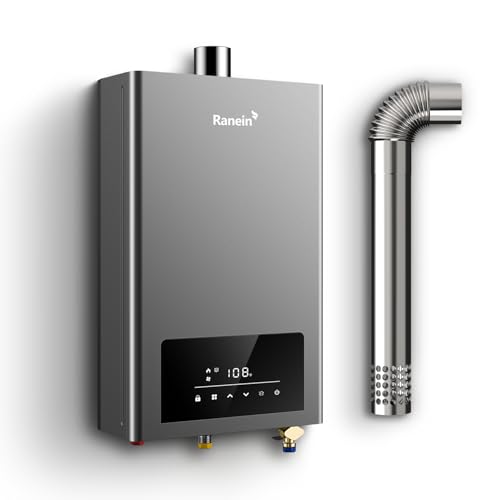
The 2025 GEN II Ranein model offers up to 3.6 GPM with an 80,000 BTU input for dependable on-demand hot water. It features an LED temperature control panel for precise adjustments and is designed for indoor installation with venting considerations. This unit targets households needing efficient, compact tankless water heating with straightforward user controls and reliable performance for 2-3 simultaneous fixtures.
- Max 3.6 GPM; 80,000 BTU
- Indoor installation with LED temperature control
- On-demand heating reduces standby energy waste
Buying Guide
Key purchase considerations
When selecting between a 75-gallon storage model and tankless gas options, consider your peak hot-water demand, available space, and venting requirements. A large family may benefit from a storage heater’s reservoir, while tankless models excel in space efficiency and reduced standby energy. Gas supply stability, venting type (natural gas vs propane), and local code approvals influence installation complexity and costs. Warranty length and service availability matter for long-term reliability, especially for outdoor units exposed to weather.
Capacity and flow versus storage
A 75-gallon storage heater provides ample reserve for high usage periods but can experience longer recovery times after multi-person showers. Tankless units deliver limitless supply if the flow rate matches demand, but extremely high simultaneous draws may require higher-GPM capacity or multiple units. For households with frequent peak loads, a mixed approach—one storage heater for base load and select tankless units for peak demand—can offer balanced performance.
Gas type, venting, and installation
Natural gas units require proper gas lines and venting; propane models need venting too, with adjustments for pressure and emissions. Indoor installations require safe, code-compliant venting paths and clearance around the unit. Outdoor models simplify venting but must be protected from weather and installed with appropriate clearances. Always verify local regulations and obtain any necessary permits before installation.
Efficiency, safety, and maintenance
Efficiency is reflected in both storage and tankless designs. Tankless water heaters typically reduce energy use by heating water on demand, while storage models incur standby losses. Safety features to look for include anti-scald control, high-limit temperature protection, dry-fire protection, flame failure protection, and overheat protection. Routine maintenance such as periodic flushing (for storage units) and gas-dryer vent checks (for tankless units) helps sustain performance and prolong life.
Warranty, service, and total cost of ownership
Verify warranty coverage on major components (tank, heat exchanger, burner, and electronics) and assess the availability of certified technicians in your area. While initial cost is a consideration, long-term operating costs and maintenance frequency often determine total ownership cost. A model with a solid warranty and accessible service network can provide lower lifetime expenses and less downtime during repairs or replacements.
Comparative snapshot
| Option Type | Ideal For | Strengths | Considerations |
|---|---|---|---|
| 75-gallon storage | Large households with high base demand | High hot-water reserve; robust for simultaneous uses | Higher standby losses; larger footprint |
| Outdoor tankless (Gas) | Homes with outdoor installation ability | Compact footprint; endless hot water on demand | Outdoor exposure; sizing for peak loads |
| Indoor tankless (Gas) | Urban homes with limited space | Indoor installation compatibility; precise control | Vent requirements; potential higher upfront cost |
| Mid-range tankless (Gas) | Smaller households or budget-conscious buyers | Good efficiency; scalable for 2-3 fixtures | May require careful sizing for simultaneous uses |