Choosing a 50-gallon gas water heater involves balancing recovery speed, energy efficiency, installation space, and long-term operating costs. This guide spotlights five gas-powered options—ranging from efficient batch-style tankless models to traditional storage-style units and practical installation accessories—to help American homeowners pick a reliable system. Each option prioritizes hot-water reliability, fuel efficiency, and simple installation considerations to suit varying home layouts and family hot-water needs.
Summary table of chosen products:
| Product | Type | Flow / Capacity (GPM) | BTU (if listed) | Installation |
|---|---|---|---|---|
| GASLAND Gasmart E 199000 BTU Tankless Water Heater | Tankless | Up to 7.6 | 199,000 | Indoor |
| Rheem RTG-95DVLN-3 High Efficiency Tankless Water Heater | Tankless | 9.5 | — | Indoor |
| Rheem RTG-70XLN-3 Tankless Outdoor Water Heater | Tankless | 7.0 | — | Outdoor |
| Orbek Natural Gas Tankless Water Heater | Tankless | Up to 4.3 | 100,000 | Indoor |
| Ranein 2025 GEN II Natural Gas Tankless | Tankless | 3.6 | 80,000 | Indoor |
GASLAND Gasmart E Tankless Water Heater
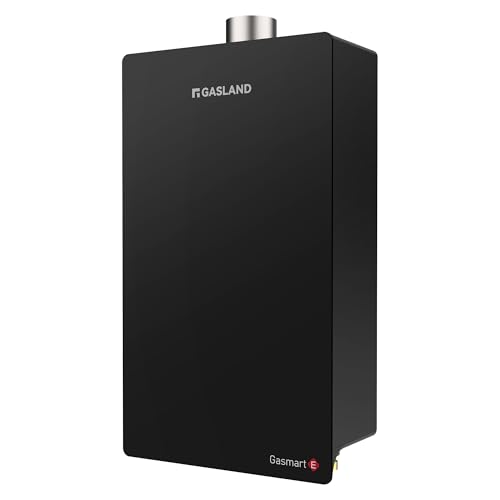
The GASLAND Gasmart E model provides unlimited hot water on demand, a key benefit of tankless gas systems. With an industry-leading UEF of 0.8, this unit is designed to be about 34% more energy-efficient than a typical 50-gallon tank heater, reducing propane or natural gas consumption while lowering NOx emissions by a meaningful margin. It is designed for indoor installation and compact enough to fit in narrow closets or laundry rooms. When multiple taps are used, the unit maintains steady water temperature without the short-lived temperature swings common with older systems.
In practical terms, households that run showers, dishwashers, and laundry loads in quick succession can enjoy a continuous supply of hot water. The device is sized to deliver strong flow for moderate to larger homes, especially when together with properly sized venting and adequate fuel supply. While installation requires venting, its compact footprint helps to minimize the space needed for retrofit projects in basements or utility rooms. Its electronic controls and safety features provide predictable operation and easy temperature management for everyday use.
Rheem RTG-95DVLN-3 Tankless Water Heater

The Rheem RTG-95DVLN-3 is a high-efficiency indoor tankless natural gas water heater designed to deliver continuous hot water for households with several simultaneous uses. With a listed flow rate of 9.5 GPM, this unit is well-suited for medium-to-larger homes or busy families. It optimizes operating costs by cycling on only when hot water is needed, reducing standby energy waste. The model is positioned as a reliable, widely available option from a leading water-heating brand, known for robust components and service support. Installation should consider proper venting and service clearances for optimal performance.
Key advantages include consistent output across multiple fixtures and compatibility with standard natural gas supply lines. Similar to other tankless systems, the RTG-95DVLN-3 benefits from a compact footprint relative to storage water heaters, which can be advantageous in retrofit projects. Potential considerations include ensuring adequate gas supply capacity and compliant venting, especially in colder climates where water demand may spike during winter months.
Rheem RTG-70XLN-3 Tankless Outdoor Water Heater

The RTG-70XLN-3 is designed for outdoor installation, making it a practical choice where interior space is limited or venting indoors is impractical. With a 7.0 GPM flow rate, this model supports multiple simultaneous uses such as showers and a dishwasher, while keeping energy costs in check by operating only when hot water is needed. Outdoor placement necessitates attention to weatherproofing, frost protection in cold regions, and appropriate drainage around the unit. It combines reliable performance with a straightforward installation path for homes lacking a dedicated indoor mechanical room.
Users should consider the local climate, venting options, and potential need for a protective enclosure. Regular maintenance, including vent cleaning and periodic thermostat checks, helps preserve efficient operation. The model’s rugged construction and brand support from Rheem add to its long-term reliability, especially for homes seeking to avoid indoor space constraints.
Orbek Natural Gas Tankless Water Heater

The Orbek tankless gas water heater delivers up to 4.3 GPM at up to 100,000 BTU, providing on-demand hot water for 2-3 fixtures such as a shower, sink, and dishwasher in typical homes. CSA certified, it emphasizes safety features including dry combustion protection and overheat prevention, making it a solid option for family homes seeking dependable hot water without maintaining a large storage tank. The unit offers three heating modes to adapt to seasonal demand, which can help curb energy use while ensuring comfort during peak usage times.
Indoor installation makes it suitable for utility rooms or laundry closets. Prospective buyers should evaluate whether 4.3 GPM aligns with their household hot-water profile, especially in larger households where simultaneous hot water usage might exceed this rate. Venting requirements and professional installation are necessary to achieve safe and efficient operation.
Ranein 2025 GEN II Natural Gas Tankless
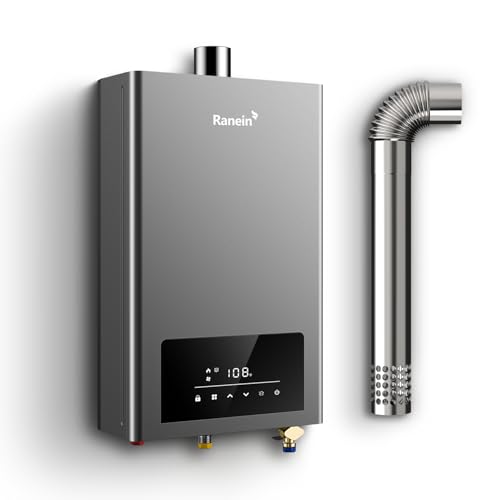
The Ranein GEN II model emphasizes a compact indoor footprint with a practical 3.6 GPM flow and 80,000 BTU input. It includes an LED temperature control panel for precise water temperature adjustments and a vent pipe for safe exhaust ventilation. Designed for households that prioritize on-demand hot water while controlling gas usage, this unit targets efficient operation without requiring a large storage tank. The model’s contemporary controls and CSA/UL-compliant features contribute to straightforward operation and safer long-term use.
Consider this option if you want a modern entry in the tankless category with simple digital controls and a focus on stable output across typical daily tasks. It’s well-suited for smaller to mid-sized homes or individual suites where the demand pattern aligns with 3-4 hot-water fixtures simultaneously, such as a couple of showers plus some laundry usage.
Buying Guide
When selecting a gas water heater, buyers should evaluate capacity, efficiency, installation constraints, and long-term operating costs. The following considerations help compare tankless and storage-style options while aligning choices with typical American homes.
1) Tankless vs. Storage (Tank) Models
- Tankless systems provide on-demand hot water and can improve energy efficiency when sized to match peak demand. They require proper venting and sometimes higher upfront costs but save space and reduce standby heat loss.
- Storage models (50-gallon or larger) deliver a reliable reservoir of hot water, useful for high simultaneous demand, but they incur standby energy losses and occupy more space.
- For households with consistent high usage, a hybrid approach or a larger storage tank combined with efficient gas burner technology can be advantageous.
2) Sizing, Flow, And BTU
- GPM and BTU ratings indicate how much hot water you can draw at once. Tankless units show GPM ratings; storage models show gallon capacity. Match the unit to your household’s peak demand (showers, baths, laundry, dishwasher).
- Consider your climate and incoming water temperature. Colder climates reduce available hot-water output, so a higher BTU rating may be necessary.
- In larger homes, multiple units or a staged system may be needed to ensure adequate supply during peak hours.
3) Energy Efficiency And Operating Costs
- Look for efficiency metrics (UEF for gas models) and annual energy cost estimates. Tankless units typically reduce standby losses, while correctly sized storage tanks minimize reheat cycles.
- LP and natural gas costs affect operating expenses. A more efficient model can justify higher upfront costs over time through lower fuel use.
4) Indoor vs Outdoor Installation
- Indoor units often require venting and space near existing utilities; outdoor units simplify ventilation but demand weather resistance and frost protection in cold regions.
- In colder climates, protect outdoor units with protective housings and ensure proper drainage to avoid ice buildup around exhaust paths.
5) Venting, Safety, And Compliance
- Gas water heaters require proper venting to exhaust combustion gases safely. Ensure compliance with local codes and that vent material, diameter, and route meet manufacturer specs.
- CSA/UL certification, dry-combustion protection, flame failure safety, and anti-leak protections are key safety features to review.
6) Installation Space, Accessibility, And Maintenance
- Measure the available installation space and access for maintenance. Tankless systems save space, but professional installation is essential for proper venting and gas connections.
- Maintenance tasks typically include periodic vent cleaning, gas line checks, and thermostat calibration to maintain efficiency.
7) Price Of Ownership And Warranties
- Upfront cost is only part of the equation. Compare warranties, service availability, and expected operating costs over 5–15 years to gauge total cost of ownership.
8) Quick Compare Snapshot
| Product | Type | Best For | GPM / BTU | Indoor / Outdoor |
|---|---|---|---|---|
| GASLAND Gasmart E | Tankless | Homes needing high flow | 7.6 GPM / 199,000 BTU | Indoor |
| Rheem RTG-95DVLN-3 | Tankless | Large households | 9.5 GPM | Indoor |
| Rheem RTG-70XLN-3 | Tankless | Outdoor install, compact spaces | 7.0 GPM | Outdoor |
| Orbek | Tankless | 2-3 fixtures, compact homes | 4.3 GPM / 100,000 BTU | Indoor |
| Ranein 2025 GEN II | Tankless | Eco-friendly modern controls | 3.6 GPM / 80,000 BTU | Indoor |
In summary, tankless models excel where space is at a premium and you want on-demand hot water with lower standby losses, while storage tanks can offer immediate hot-water availability for larger household demand. The best choice depends on your home’s layout, climate, and typical daily hot-water loads. For many homes, a compact tankless unit with robust venting and proper gas supply will deliver the best balance of efficiency and reliability, while an appropriately sized storage tank can serve households with simultaneous high-demand activity.