Choosing a 50 gallon electric water heater means weighing daily hot-water demand, space, and long-term operating costs. A larger tank can support households with multiple bathrooms or heavy kitchen use, while compact options or alternatives may fit tighter spaces. This guide highlights five electric options that balance capacity, reliability, and installation practicality. From a classic 50-gallon Rheem to compact plug-and-play and efficient tankless configurations, these selections illustrate practical approaches for American homes.
The following table summarizes the chosen products, including brand, capacity or type, and a key benefit for quick comparison.
| Product | Brand | Capacity / Type | Key Benefit |
|---|---|---|---|
| Rheem PROE50 M2 RH95 | Rheem | 50-Gallon Electric | Space-saving design with reliable performance |
| GE Appliances 18 Gallon Plug-and-Play Electric Water Heater | GE Appliances | 18-Gallon Electric | Compact, easy installation for small spaces |
| Rheem 18kW Tankless Electric Water Heater | Rheem | Tankless Electric | Self-modulating power for continuous hot water |
| BOSCH Mini-Tank Tronic 3000 T 2.5-Gallon | BOSCH | 2.5-Gallon Mini-Tank | Point-of-use for under-sink hot water |
| Alltemp Electric Water Heater Tune-Up Kit | Alltemp | Maintenance Kit | Extend life of electric water heaters |
Rheem 50-Gallon Electric Water Heater PROE50 M2

This 50-gallon model from Rheem is designed for households of three to five people or homes with multiple bathrooms. The tank’s 50-gallon capacity provides a dependable hot-water supply while its storage footprint fits retrofit projects in tighter utility rooms. It operates at 18.75 amps and uses an automatic thermostat to regulate temperature, helping to prevent temperature swings during peak demand. An anode rod protects the tank from corrosion, and the enhanced-flow brass drain valve simplifies routine maintenance and flushes.
Rheem emphasizes long-term reliability and easy service for this unit. Its compatibility with standard plumbing fittings and common electrical configurations makes it a practical upgrade from older electric tanks. The 50-gallon capacity supports daily routines such as showers, laundry, and dishwashing without frequent replenishment of heated water. For homes replacing older, larger tanks, this model offers a familiar footprint with modern conveniences and durable Rheem engineering behind it.
GE Appliances 18-Gallon Plug-and-Play Electric Water Heater

This GE appliance is designed to provide hot water flexibility for smaller spaces or specific zones in a home. The 18-gallon capacity makes it suitable for single-hookups, small houses, condos, or apartments where a full-size tank would be impractical. Easy installation is a key feature, as it uses standard 3/4-inch NPT connections and connects to any 120-volt supply. Its compact design is ideal for kitchens, bathrooms, laundry rooms, cabins, RVs, garages, or sheds where space is at a premium.
In practice, the plug-and-play setup minimizes retrofit complexity and reduces the need for specialized electrical work. The GE unit is designed to deliver reliable hot water for light-to-moderate demand, making it a sensible supplement to larger systems or a primary heater in smaller residences. For renters or seasonal properties, its portability and straightforward installation are notable advantages.
Rheem 18kW Tankless Electric Water Heater
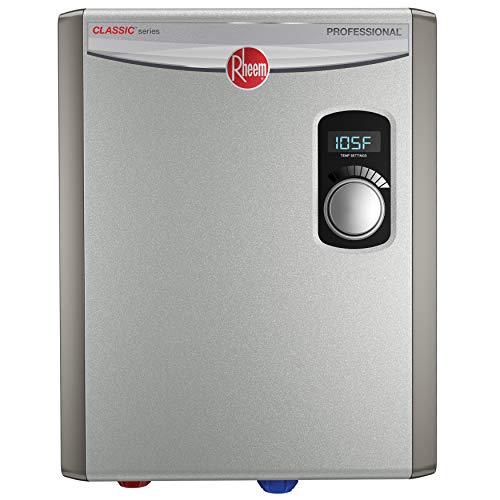
This Rheem tankless unit delivers continuous hot water on demand, with a maximum flow rate up to 4.4 GPM. It uses an external digital thermostatic control with an LED display, providing precise temperature management. The system features advanced self-modulation to adjust power during usage, improving energy efficiency in real-time. Copper immersion elements are field serviceable, supporting durability and easier maintenance in the field. Note that tankless electric systems typically require a robust electrical service, and performance can vary with incoming water temperature and flow demands.
Tankless configurations are ideal where storage-tank capacity is a constraint or where space savings matter. They can offer substantial energy efficiency benefits by heating water only when needed. For homes with higher hot-water usage, selecting a unit with a suitable GPM rating and ensuring the electrical service is adequate are crucial steps. The Rheem model provides a strong reference point for modern, on-demand hot water in sturdily built homes.
BOSCH Mini-Tank Tronic 3000 T 2.5-Gallon
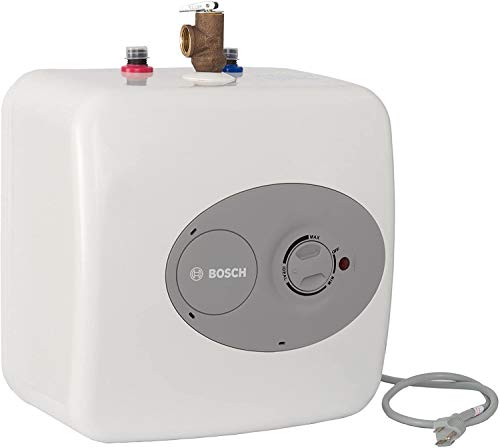
The BOSCH 2.5-gallon mini-tank offers a point-of-use solution that fits under a sink to deliver hot water exactly where it’s needed. Thermal efficiency is high at about 98%, helping to minimize standby heat losses. Its compact dimensions are a notable advantage for tight spaces, measuring roughly 13.75 inches wide by 13.75 inches high with a 10.75-inch depth. This unit runs on 120 volts and draws about 12 amps, making it suitable for independent installation or inline with a larger hot-water source in a bathroom, kitchen, or utility area.
Point-of-use heaters like this BOSCH model are often used to reduce wait times for hot water and improve overall efficiency in homes where a full-size storage tank would be excessive. The compact form factor and reliable 120V design make it a practical addition to multi-bath homes seeking targeted hot-water delivery without major remodeling.
Alltemp Electric Water Heater Tune-Up Kit

This tune-up kit is designed to extend the life of electric water heaters by providing essential components for maintenance. It includes two 4500W, 240V elements, along with upper and lower thermostats and protective covers, plus gaskets and a wrench. The kit supports compatibility with most electric water heaters and is suitable for a proactive maintenance approach. Temperature adjustments in the kit’s components accommodate a range of standard operating needs, and the included parts facilitate timely servicing to preserve efficiency and performance.
Maintenance kits like this offer a practical pathway to reducing downtime and the likelihood of unexpected malfunctions. For homeowners with older electric systems, periodic tune-ups can help maintain performance while potentially extending the tank’s service life. The kit’s TOD-style thermostats and wide voltage compatibility reflect a focus on versatility and long-term usability across many setups.
Buying Guide
Key purchase considerations help align a heater choice with real-world conditions. First, assess daily hot-water demand. Families with multiple bathrooms or heavy appliance use typically benefit from a larger storage tank, while smaller households may be well-served by compact tanks or tankless options that save space. For a 50-gallon target, evaluate whether a storage tank fits your utility room’s dimensions and how often you expect to draw hot water during peak times.
Energy efficiency matters for operating costs over time. Storage tanks have uniform energy usage, while tankless systems heat on demand, which can reduce standby losses but may require more powerful electrical service. Compare energy-performance metrics such as energy factor (EF) or uniform energy factor (UEF) where available, and consider a unit with high-quality insulation to minimize heat loss. In households with hard water, corrosion protection (anode rods or equivalent) helps extend tank life.
- Space and location: measure the footprint and consider whether you’ll place the heater in a basement, closet, garage, or utility room. Ensure there is adequate ventilation and access for maintenance.
- Electrical requirements: confirm voltage (120V vs 240V), circuit capacity, and whether your panel can support additional load, especially for tankless models that often require higher amperage and dedicated circuits.
- Installation and retrofit: some units are easier to install with existing plumbing, while others may require professional modification or wiring upgrades.
- Maintenance and warranties: check the availability of replacement parts, flush kits, and anode-rod life. Longer warranties can reflect manufacturer confidence and provide peace of mind.
- Cost of ownership: consider initial cost, installation, energy use, and potential maintenance. Tankless models may incur higher upfront costs but can yield energy savings, while storage tanks deliver simple, proven performance.
When choosing, balance immediate needs with long-term costs. A 50-gallon storage unit like the Rheem PROE50 M2 provides straightforward capacity for larger households. For space-limited homes, a compact unit such as the GE 18-gallon or BOSCH mini-tank can fill a niche without sacrificing reliability. If you prefer on-demand hot water and have the electrical service to support it, a tankless option from Rheem offers continuous supply and high efficiency, though it requires careful sizing and electrical planning. Maintenance kits add a practical path to preserve system health over time.