A 30-amp tankless water heater offers on-demand hot water without a bulky storage tank, making it a practical choice for apartments, small homes, and point-of-use installations. This guide highlights five electric models that are compatible with or close to a 30-amp electrical setup, focusing on efficiency, installation flexibility, and reliable performance. Each option balances compact design with adequate flow to meet everyday hot water needs. Whether you are retrofitting a small kitchen sink or upgrading a single bathroom, these units illustrate how 30-amp capable heaters can deliver steady hot water without excessive electrical changes.
| Product | Brand | Model | Voltage | Typical Amps |
|---|---|---|---|---|
| ThermoMate 6000W | ThermoMate | 6000W 240V | 240V | 25A |
| ECOTINYMACH 3000W | ECOTINYMACH | 110V 3000W | 110V | 27A |
| Titan Electric Tankless | LAOSEP | Titan Electric Tankless | 220V | 54A (max) |
| Rheem 18kW 240V | Rheem | 18kW 240V | 240V | ~75A |
| EcoSmart ECO 11 | EcoSmart | ECO 11 | 240V | ~54A |
ThermoMate 6000W 240V Point‑Of‑Use Heater

The ThermoMate 6000W is a compact, point‑of‑use electric heater designed for under-sink installations. Operating at 240V with a 25A draw, it delivers rapid hot water for sinks and small outlets. Its self‑modulating power ensures the heater increases or decreases output to meet demand, helping to conserve energy when hot water use is intermittent. The unit provides a typical 1.0 GPM at a 50°F rise, with a temperature range from about 85°F to 131°F, making it suitable for small hands-free hot water needs. Its copper immersion heating elements and SUS 304 stainless steel water tube contribute to durability in compact spaces.
Installation focus centers on a dedicated 240V circuit, with 1/2-inch NPT connections and straightforward mounting. The device is field serviceable, which can simplify maintenance for in-sink setups. Because it is designed as a point‑of‑use heater, it works best when used to supplement a larger hot-water system or where space is at a premium. Users should verify local electrical code requirements and ensure proper clearances behind cabinets or under sinks before mounting.
EcoSmart ECO 11 Electric Tankless Water Heater

The EcoSmart ECO 11 is a compact, wall‑mountable 13 kW electric tankless heater designed for efficiency and space savings. With a 240V supply and a typical 54A draw, it delivers dependable on‑demand hot water for smaller homes or single fixtures. Its patented self‑modulating technology adjusts heat output to match demand, which helps limit energy loss by ensuring the unit only heats water as needed. EcoSmart emphasizes a space‑saving footprint—nearly 90% smaller than traditional tank heaters—and a compact design that can install in tight hallways or closets. It operates with high thermal efficiency and reduced standby losses, contributing to long‑term energy savings.
As a 240V model, this heater is well‑suited to homes with upgradeable electrical panels or existing 240V circuits. Pros include consistent temperature control and a straightforward installation process, while potential trade‑offs involve ensuring adequate upstream water pressure and matching the unit’s capacity to your maximum hot water flow needs. For households with modest demand, the ECO 11 provides a reliable balance of performance and efficiency.
Titan Electric Tankless Water Heater

The Titan Electric Tankless Water Heater from LAOSEP operates at 220V and is rated for up to 54 amps, indicating strong capacity for higher-demand setups. This unit targets households or multi-fixture applications that require a steady supply of hot water without the lag associated with storage tanks. The 54‑amp maximum rating suggests robust heating elements designed to handle more significant flow, though actual performance depends on incoming water temperature and desired outlet temperature. It’s compatible with standard 1/2-inch water connections and can be integrated into existing 220V circuits with proper electrical provisions.
Owners should consider panel capacity, wire gauge, and permissible run lengths to avoid voltage drop. Proper venting is not a factor for electric models, simplifying installation in some renovations. Field serviceability is a plus for homeowners who prefer to perform routine checks themselves. As with any high‑demand device, pairing this unit with a competent electrician ensures safety and reliable operation across seasonal temperature changes.
Rheem 18kW 240V Tankless Electric Water Heater
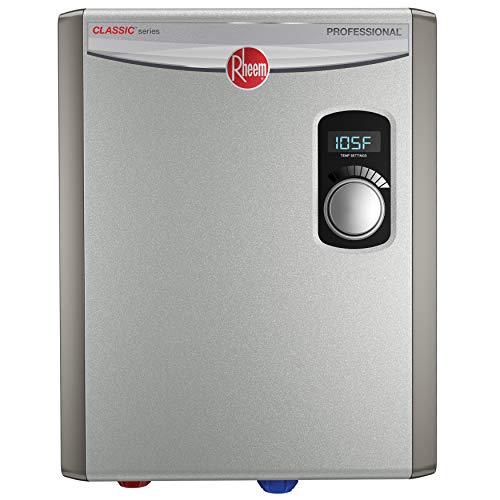
The Rheem 18kW 240V model is designed for reliable, wider-flow hot water at higher demand. It features external digital thermostatic control with an LED display and precise +/- 1 degree temperature accuracy, enabling fine-tuning for consistent comfort. Its dual copper immersion elements provide durable heating capacity, and the self-modulating power control helps adapt output to actual demand. Installation is aided by included 1/2 NPT adapters and side 1/2 inch compression water connections, making it straightforward to integrate into typical 240V wiring setups. This unit is best suited for homes needing higher overall hot water capacity while maintaining efficient operation.
While the 18kW rating translates to substantial hot water potential, it also implies higher electrical requirements and careful circuit planning. Homeowners should assess whether their electrical panel and wiring can handle sustained 75A draws and ensure compliance with local electrical codes. For those upgrading to electric tankless from a storage tank, this Rheem model offers strong performance, though it may exceed the capacity of smaller electrical setups without panel upgrades.
EcoSmart ECO 11 Electric Tankless Water Heater
The EcoSmart ECO 11 is a compact, efficient option designed for smaller households or point‑of‑use needs. With 13 kW at 240V, it draws about 54A and uses self‑modulating technology to adjust energy use based on demand. The headline advantage is a small footprint—EcoSmart explains the unit is roughly 90% smaller than traditional tank heaters—making it suitable for apartments or closets with limited space. Its energy‑saving design minimizes standby heat and only heats water when called, which translates to lower operating costs over time, especially in homes with intermittent hot water use.
Potential considerations include ensuring adequate electrical capacity in the panel and confirming that the unit’s flow rate aligns with the number of fixtures you expect to serve simultaneously. For homes with low incoming water temperatures, the ECO 11 may need to be paired with additional units or alternative heating strategies to meet higher demand, but for many single‑bath or small‑apartment setups, it offers dependable on‑demand performance with straightforward installation.
Buying Guide
Choosing a 30-amp tankless heater involves balancing electrical capacity, expected hot water demand, and installation constraints. Start by evaluating your home’s electrical panel and existing wiring to determine whether a 30A circuit suffices or if a larger upgrade is required. Consider both the volume of hot water you need and the temperature rise you require at peak usage. Self‑modulating models can save energy by adjusting output to demand, but you must still ensure adequate headroom for simultaneous fixtures.
Key purchase considerations include voltage (110V vs 240V), flow rates (GPM), and the maximum amperage the unit draws. Point‑of‑use units are excellent for under-sink uses or single fixtures, while higher‑capacity models are better suited for multi‑fixture apartments or small homes. Installation location matters: 110V units offer flexibility in more spaces, but 240V models typically provide higher throughput. Durability features such as copper heating elements and stainless steel components improve longevity and resistance to mineral buildup in hard-water areas.
Practical comparisons show a trade‑off between compact size and maximum flow. For tight spaces, the 110V and 240V 25–27A options provide a good balance of installability and performance. If you anticipate higher simultaneous hot water use, ensure the electrical system can support higher amperage requirements or consider a staged approach with multiple point‑of‑use units. Finally, verify warranties and service options to minimize downtime and ensure access to parts and professional support when needed.