Choosing a 220-volt tankless water heater can boost energy efficiency and deliver on-demand hot water without bulky tanks. This guide reviews five top models that run on common home electrical service. Each model is described with its core specs, notable features, and ideal use cases. Whether you’re upgrading a small apartment, condo, or a busy household, these electric tankless heaters offer reliable hot water with space-saving design. Read on to compare performance, installation needs, and how to pick the right unit for your home.
| Product | Brand | Voltage/Power | Notable Feature |
|---|---|---|---|
| Titan Electric Tankless Water Heater | LAOSEP | 220 V, 54 Max Amps | Compact, higher amperage for on-demand heating |
| ECOTINYMACH 3500W Tankless Heater | ECOTINYMACH | 220 V, 3500 W | Instant hot water, under-sink design |
| ECOTINYMACH 6000W Tankless Heater | ECOTINYMACH | 220 V, 6000 W | Remote control, dual temperature scales |
| Titan N-85 Tankless Water Heater | Titan | 220 V, 38 Max Amps | Compact, straightforward hot water |
| Stiebel Eltron Mini 4 Tankless | Stiebel Eltron | 220-240 V, 3.5 kW | Extremely compact, energy savings |
Titan Electric Tankless Water Heater

The Titan Electric Tankless Water Heater from LAOSEP operates on 220 V with up to 54 max amps. This configuration supports rapid heating for on-demand hot water, offering a space-saving alternative to storage tanks. The higher amperage capacity compared with smaller units can benefit households that require quicker response times for one or two fixtures at a time. Its compact form is well-suited to apartments, cabins, or under-sink installations where floor space is limited.
Installation should follow standard electrical codes, including a dedicated 220 V circuit capable of handling high current. A professional electrician is recommended to ensure safe wiring and proper grounding. Maintenance is typically minimal for tankless devices, but water hardness can impact mineral buildup over time, so periodic screening and descaling in hard-water regions may be advised. Warranty terms should be reviewed to confirm coverage and service options from LAOSEP.
ECOTINYMACH 3500W 220V Tankless Heater
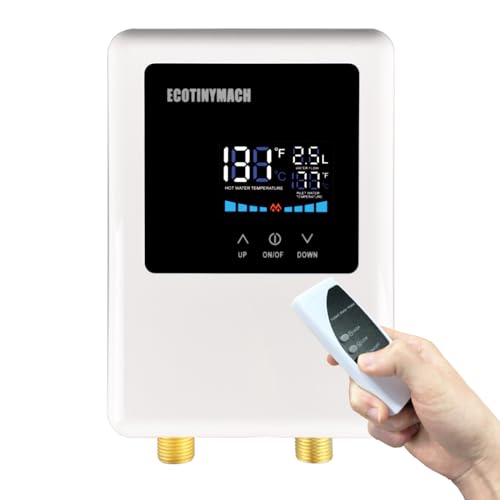
The ECOTINYMACH 3500W 220V tankless heater uses advanced technology to heat water on demand, delivering instant hot water at the turn of a tap. Its 3500W rating aligns with typical 220V circuits, making it a balanced option for smaller loads, under-sink setups, or compact living spaces. This model emphasizes rapid heating and efficiency, reducing wait times without a bulky unit.
Its compact design enhances suitability for apartments, RVs, or counter-mounted installations where space is at a premium. The unit’s emphasis on quick response and energy efficiency supports daily hot-water needs in kitchens or bathrooms with limited space. When planning installation, verify circuit capacity and ensure proper venting or clearance per local electrical codes. Maintenance remains straightforward, with attention to mineral buildup in hard water regions.
ECOTINYMACH 6000W 220V Tankless Heater

The ECOTINYMACH 6000W 220V tankless heater increases heating capacity to 6000W, expanding potential hot-water flow compared with lower-wattage units. It includes a built-in remote control for adjusting settings from a distance and dual temperature scales (Fahrenheit and Celsius) for precise comfort. This model is designed for modern kitchens, bathrooms, or utility rooms where wall space is at a premium but higher water demand is present.
Remote operation and dual-temperature capability offer flexibility for households with varied daily routines. Its compact footprint supports discreet installation, even in tight utility spaces. When selecting this model, consider the electrical service, circuit breaker capacity, and proximity to hot-water outlets. Routine maintenance remains light, with attention to mineral buildup in hard-water areas and ensuring the remote control remains responsive over time.
Titan N-85 Tankless Water Heater

The Titan N-85 is a 220V tankless option rated at 38 max amps, providing a compact, straightforward solution for moderate hot-water needs. This model caters to smaller households or point-of-use applications where space and electrical capacity are critical constraints. Its electrical requirements should be evaluated against your home’s service panel to ensure a dedicated circuit can handle sustained operation without overloading circuits.
Like other electric tankless units, maintenance is generally minimal. Consider water hardness and sediment buildup in the heat exchanger, especially in older plumbing systems. Warranty details from Titan should be reviewed to understand coverage and service options. This unit is well-suited for users prioritizing a simple install with reliable performance for smaller-scale hot-water demands.
Stiebel Eltron Mini 4 Tankless Heater
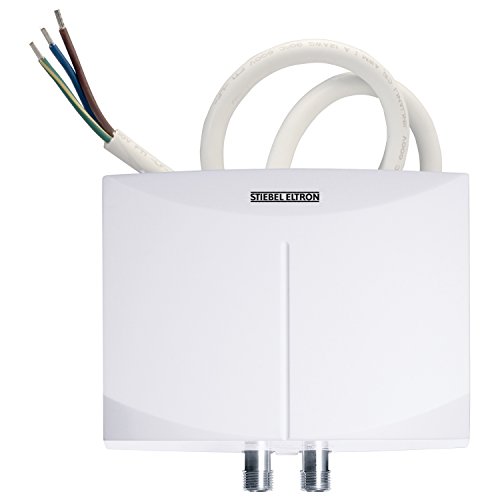
The Stiebel Eltron Mini 4 is a 220-240 Volt electric tankless water heater rated at 3.5 kW, focusing on an extremely compact design that saves space while delivering efficient hot water. Its form factor makes it a strong candidate for retrofit projects, apartments, or other tight spaces where a larger heater would not fit. Performance depends on incoming water temperature and flow; in colder climates or higher flow requirements, matching with a higher-capacity model may be beneficial.
Stiebel Eltron emphasizes energy savings through efficient operation and compact hardware. Installation should comply with local electrical codes and manufacturer guidelines. The Mini 4’s small footprint can simplify mounting in cramped utility rooms or under-sink installations. Regular maintenance involves simple checks for mineral buildup and ensuring the unit remains securely mounted. Warranty terms should be reviewed to confirm coverage and service options.
Buying Guide
Key Considerations When Choosing a 220-Volt Tankless Heater
- Voltage and amperage: Most 220-volt units require a dedicated circuit capable of handling significant current. Verify your electrical panel can support the unit’s amperage, and consult a licensed electrician during installation.
- Flow rate and heating capacity: Real-world performance depends on incoming water temperature and desired outlet temperature. Higher-wattage models typically deliver greater flow and faster heating, but energy use and circuit load increase accordingly.
- Space and installation: Smaller, under-sink or wall-mounted models excel in apartments or retrofit projects. If space is limited, prioritize compact designs and consider whether venting or specialized clearances are needed by the model.
- Temperature control: Some units offer remote control, digital displays, and dual temperature scales. Consider how you prefer to manage hot-water temperature and whether remote operation adds value for your home.
- Maintenance and water quality: Hard water can cause mineral buildup that reduces efficiency and flow. Check whether descaling or filtration support is recommended for your area and plan for regular maintenance.
- Energy efficiency and self-modulation: Self-modulating models adjust power usage based on demand, reducing standby losses. Look for energy-saving features and warranty coverage as indicators of reliability.
- Installation footprint and routing: Evaluate where the heater will live and how hot water will be piped to fixtures. Long pipe runs can affect performance, so layout planning matters.
How to Compare Models Quickly
- Best for small spaces: Models with the smallest footprint and under-sink orientation (for example, compact mini units) usually fit limited areas without compromising essential hot-water delivery.
- Best for higher demand: Higher wattage units (6000W or more) support more simultaneous outlets and higher flow, suitable for households with multiple outlets in use.
- Best with convenience features: Remote controls and dual temperature scales offer enhanced usability for households with variable hot-water needs or accessibility considerations.
- Best value for basic needs: Lower-amp or mid-range models can provide reliable hot water for single fixtures or small households with modest demand.
Considerations by Use Case
- Apartment living or single-bath homes: Prioritize compact designs, 220V compatibility, and quieter operation. A 3500W or 3800W model may be sufficient for light usage.
- Family homes with multiple fixtures: Look for higher wattage options and the possibility of running more than one outlet simultaneously. Remote control features can help manage temperature across rooms.
- Cold climates or hard water regions: Factor in descaling needs, larger heating capacity, and potential water-treatment solutions to maintain efficiency over time.
Choosing the right 220-volt tankless water heater involves balancing space, electrical capacity, and expected hot-water demand. The models reviewed here cover a range of needs—from ultra-compact units ideal for tight spaces to higher-wattage options designed for busier households. Always verify electrical compatibility, consult installation professionals, and review manufacturer warranties to ensure a reliable, energy-efficient hot-water solution for your home.